
How to Become a Ramen Chef: Hong Kong and Japan Training Paths
Plan a route towards ramen cooking through supervised practice, training options and realistic workplace expectations.
How to Become a Ramen Chef: A Hong Kong Training Route
Becoming a ramen chef requires safe preparation, repeatable recipes and reliable service, not only enthusiasm for eating ramen. A beginner-friendly shop vacancy can provide a starting point, but independent responsibility for broth and service must be earned through supervised practice. This guide is written for Hong Kong readers comparing practical options, with research checked on 6 October 2026.
This page helps readers separate useful evidence from advertising and identify what must be confirmed directly. Start with ramen career routes in Hong Kong for the wider context. Ramen.hk is an independent information site, not a recruiter, course provider, retailer or professional adviser.
The practice rule. Build hygiene and station reliability before chasing a signature recipe. Training, shift experience and feedback serve different purposes.
🍜 1. Build a supervised skills sequence
Start with cleaning, ingredient identification, portioning and safe storage. Move to repeatable topping preparation and then supervised noodle timing and bowl assembly. Broth production and recipe adjustment require their own instruction. Keep a learning record showing what you can perform consistently, rather than claiming mastery from one successful home batch.
Use Ichiran vacancy listings on Jobsdb to identify employer-named opportunities, then confirm availability directly. Listings can expire or aggregate unrelated roles. For salary research, record the observation date, actual duties and hours before drawing any conclusion; a small set of adverts cannot establish a reliable market average.
📝 2. Check the offer and roster
Ask for the legal employer name, work location, guaranteed pay, paid and unpaid breaks, shift pattern, allowances and probation terms. Clarify whether opening preparation and closing cleaning form part of the roster. Compare the whole arrangement, including travel after a late shift, rather than relying on the advertised monthly maximum.
According to Labour Department minimum-wage information, statutory minimum wage is HK$43.1 per hour from 1 May 2026. This legal floor is not a typical chef wage. The Labour Department explains that minimum wages are assessed against hours worked in the wage period; use its guidance for calculations rather than dividing a headline monthly salary by a guessed schedule.
⚖️ 3. Understand status and protections
Employee and self-employed arrangements are not interchangeable. Ask who controls the schedule and provides the workplace, and consult the Labour Department if status is unclear. Labour Department rest-day guidance states that employees under a continuous contract receive at least one rest day in every seven days; a rest day is at least 24 continuous hours. Whether it is paid depends on agreement.
According to MPFA contribution guidance, employer and employee mandatory contributions are generally each 5% of relevant income, subject to income limits and the applicable rules. MPFA distinguishes regular employees from casual employees in catering, so do not assume every short restaurant engagement follows the same 60-day enrolment arrangements. Consult MPFA Industry Scheme guidance about the correct category and enrolment deadline.
Check the Employment Ordinance through Labour Department materials and e-Legislation for current eligibility conditions. For non-residents, Immigration Department visitor conditions says visitors cannot take paid or unpaid employment. Do not interpret an interview invitation or course certificate as work authorisation. This is general information, not legal advice.
🎓 4. Plan training and progression
The VTC Japanese Cuisine programme page describes general Japanese-cuisine study with food hygiene and operative-level career possibilities. The Yamato Ramen School course page describes ramen-specific instruction. These are examples of provider-published curricula, not endorsements. Check attendance, assessment, total fees and whether training fits the job you want before enrolling.
Suggested next steps are to compare entry-role duties, pay and workplace expectations and training pathways. For the rights checklist, use Hong Kong restaurant labour rights.
For focused skill development, read the components of a ramen bowl and ramen food-safety considerations. Keep applications honest about what you have practised at home versus performed in a commercial kitchen; promotion depends on employer requirements and demonstrated work, not a fixed timetable.
A course is not a job guarantee. Course completion does not establish work permission, secure employment or prove readiness to run a busy kitchen alone.
❓ 5. FAQ
Does this guide promise a job or salary? No. Duties and offers vary, and a listing is not a placement or salary guarantee.
What is the verified statutory minimum wage? The Labour Department lists HK$43.1 per hour from 1 May 2026. Check for subsequent changes before accepting an offer.
Can a visitor take an unpaid trial shift? Visitors cannot take paid or unpaid employment without the appropriate permission. Check directly with Immigration before participating.
Does a ramen course guarantee promotion? No. Confirm its curriculum and assessment; progression depends on the employer and demonstrated workplace skills.
ramen jobs Hong Kong ramen chef job ramen chef salary Hong Kong how to become a ramen chef Ichiran jobs ramen kitchen helper job Japanese restaurant jobs Hong Kong ramen school ramen apprenticeship
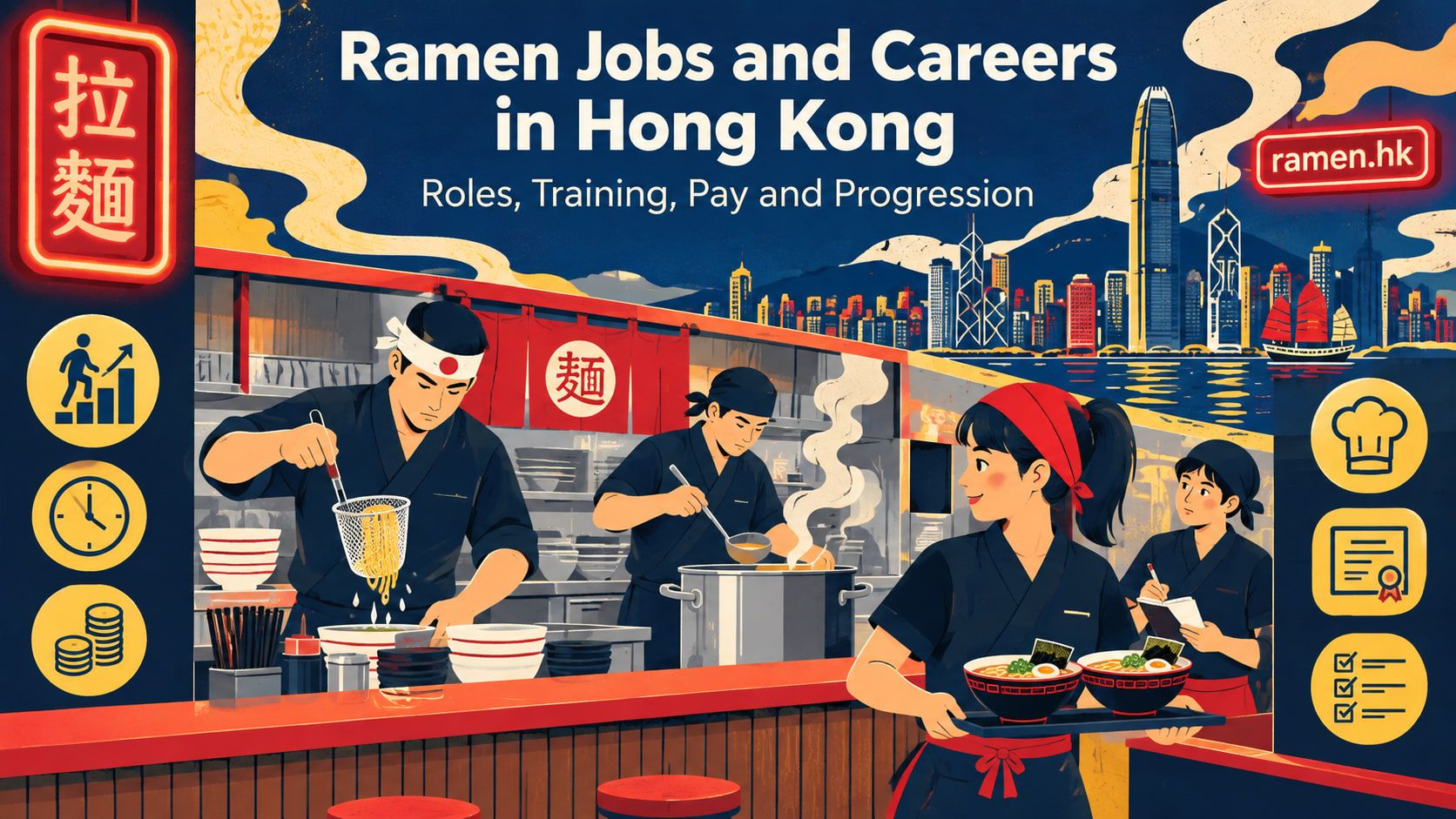
Move beyond job listings with realistic guidance on ramen-kitchen roles, training, pay factors, working conditions and progression.
Explore ramen jobs in Hong Kong through actual duties, work locations and the terms to confirm before applying.
Compare ramen chef pay offers through basic wages, allowances, hours and responsibilities rather than an invented average.
Understand ramen kitchen helper roles through duties, training, safe equipment use and the questions to ask an employer.
Compare Japanese restaurant jobs in Hong Kong through specialisms, language needs, working arrangements and work permission.
Compare ramen schools and training through curricula, practical time, teaching language and what completion actually demonstrates.
Understand working at a ramen shop through stations, shifts, physical demands, training and agreed employment terms.
Check Hong Kong restaurant labour rights through current official guidance on wages, leave, MPF and dispute support.

求職前了解職責與更表,揀工作更有把握