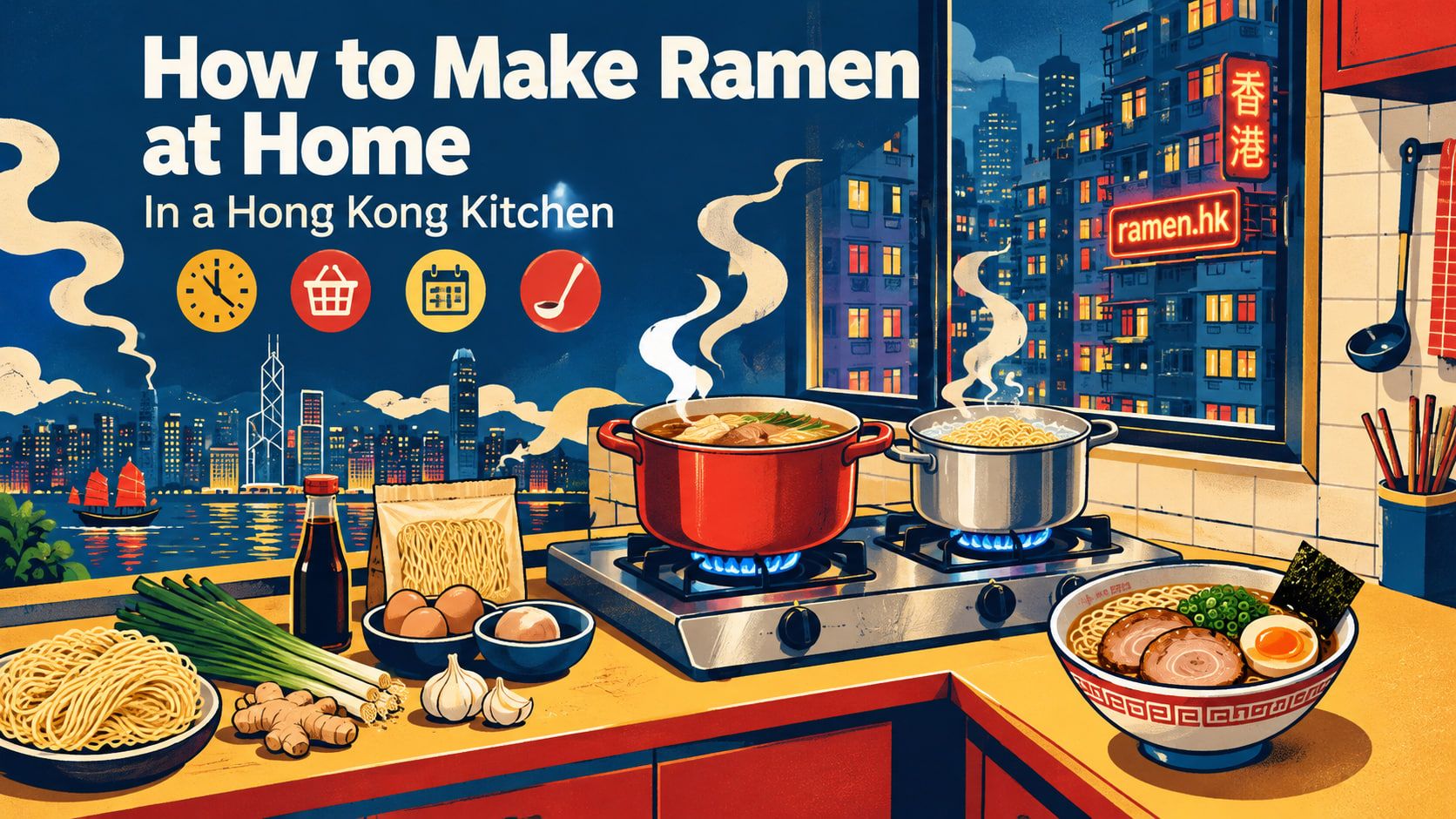
How to Make Ramen at Home in a Hong Kong Kitchen
Build convincing ramen at home with small-kitchen methods, locally available ingredients and realistic weekday timings.
Make Ramen at Home in Hong Kong: Small-Kitchen Methods, Ingredients and Preparation
Build a satisfying bowl with manageable components, realistic preparation and the kitchen space you already have.
Home ramen does not need to begin with handmade noodles and a stockpot running all day. Start with purchased noodles, a prepared broth or soup base, and one or two toppings; learn the assembly before making every component from scratch.
This hub helps Hong Kong home cooks match a method to hob space, pan capacity, fridge storage and available time. It links to recipes, ingredient guides and safety information. It does not promise a fixed completion time for every kitchen, publish untested universal ratios or claim that a retailer has every ingredient in stock.
Choose your starting point:
Weekday meal → bought noodles, prepared soup and ready toppings.
Want to improve one component → make an egg, tare or topping separately.
Weekend project → choose a full broth or noodle recipe and read it before shopping.
One hob or a small fridge → keep the batch small and plan the order of work.
Cooking extra → confirm you can cool, store and reheat it safely.
🏠 1. Choose a method that fits the evening
| Approach | What you prepare | What to check first |
|---|---|---|
| Assembly-first | Purchased noodles, prepared soup and simple cooked toppings. | Pack instructions, portions and whether seasoning is included. |
| One homemade component | Make an egg, tare or topping while buying the rest. | Advance preparation, marinating and storage requirements. |
| Full cooking project | Broth, seasoning, noodles and toppings from separate recipes. | Total time, pan capacity, ventilation and cooling space. |
For weekday planning, calculate preparation + heating or thawing + noodle cooking + assembly. A short final cook does not include stock-making, overnight marinating or shopping. Read the entire method before deciding it fits tonight.
🛒 2. Ingredients and equipment: fill the gaps, not the cupboards
Plan around noodles, broth, seasoning, oil and toppings, but check whether your kit already combines them. Concentrates, ready-to-use soups and plain stocks need different handling; adding a complete tare on top of an already seasoned soup may make the bowl too salty.
- Noodles: check fresh, dried or instant format and its own cooking directions.
- Soup: confirm dilution and whether tare or oil is already included.
- Toppings: begin with a small number you can prepare and store safely.
- Equipment: use suitable pans, a strainer, measuring tools and a bowl that holds your actual portion.
- Space: reserve a clean area for cooked food and enough room for any leftovers.
Hong Kong shopping routes: buying noodles · ramen kits · Don Don Donki shopping · ramen bowls. These are buying guides, not live stock guarantees.
🍜 3. Prepare the soup and toppings before cooking the noodles
- Read the recipe and every product instruction, including water quantities and storage requirements.
- Prepare toppings and complete any raw-meat or egg cooking safely.
- Heat or prepare the soup as directed. Do not add extra seasoning automatically.
- Set out bowls, utensils and any measured tare or oil the recipe requires.
- Cook noodles last according to their own instructions; drain separately where required.
- Assemble and serve promptly rather than leaving cooked noodles waiting in soup.
With one hob, select a recipe or kit whose heating steps you can sequence without leaving cooked food standing for long periods. With two hobs, soup and noodle water can be prepared alongside each other. Neither setup requires restaurant equipment.
Do not borrow one product’s noodle time for another, cook raw toppings only in residual soup heat, or heat a sealed sachet unless the manufacturer permits that method.
📖 4. Choose a recipe or learn one component
First bowls and alternative formats
Easy shoyu ramen · Miso ramen · Vegan ramen · Tantanmen · Mazesoba · Hiyashi chuka
Broth and seasoning projects
Tonkotsu broth · Chicken paitan · Ramen tare · Lower-sodium recipe planning
Toppings, noodles and packet upgrades
Ramen eggs · Chashu · Homemade noodles · Baking-soda noodle methods · Instant ramen upgrades
For an external recipe collection, Serious Eats’ ramen recipes includes broth, noodle and topping projects. Check the individual recipe’s timing and safety instructions rather than treating the collection as one method.
🧰 5. Fix flavour and texture problems one change at a time
- Soggy noodles: check cooking time and whether the noodles waited while other components were prepared.
- Over-salty soup: check whether the soup base already included seasoning before additional tare was added.
- Weak flavour: confirm dilution and measurements before adding several unrelated seasonings.
- Greasy finish: check whether the broth or kit already included oil before adding more.
- Chaotic assembly: simplify the toppings and have bowls ready before cooking noodles.
Record the products and quantities that worked, then change one element next time. Texture troubleshooting is separate from food safety: food with an uncertain storage history is not a recipe-adjustment problem. Read common home ramen mistakes.
🧊 6. Cook extra only when you can cool and store it safely
The Hong Kong Centre for Food Safety advises cooling leftovers promptly and refrigerating them within two hours. Smaller portions and shallow containers help cooling; food intended for a later meal can be portioned into a clean container before dining to reduce contamination.
- Keep cooked food out of prolonged room-temperature storage.
- Discard food left at room temperature for more than four hours.
- Reheat refrigerated leftovers thoroughly and no more than once.
- Discard leftovers refrigerated for more than three days; consume them as soon as possible.
These are general leftover rules, not a guarantee that food handled unsafely will remain acceptable for three days. Product instructions may be more restrictive. Plan storage before making a large pot of soup, not after discovering the fridge is full.
Detailed guides: freezing ramen broth · reheating ramen · food safety.
❓ 7. FAQ and sources
Can I make good ramen without homemade stock?
Yes. A prepared stock or kit can support a satisfying bowl when dilution, seasoning, noodles and toppings are handled carefully. Making every component is optional.
How long will a weekday bowl take?
Use the selected product and recipe timings, including preparation, thawing and topping work. This hub does not promise one universal completion time.
Should I buy a noodle machine first?
Not for an assembly-first bowl. Begin with purchased noodles and existing cookware, then decide which tools would solve a genuine problem.
Can I leave the soup on the cooker overnight and boil it again?
No. Follow prompt cooling and refrigeration guidance. Reheating should not be treated as a way to rescue food stored unsafely.
Kitchen sequencing and shopping checklists are general planning suggestions, not a personally tested recipe. Component background follows Serious Eats; leftover advice follows Hong Kong CFS guidance. Follow the exact product and recipe instructions, and check ingredients for allergies or other dietary restrictions. No current retail stock or fixed cooking-time guarantee is claimed.
Next: Shopping for ingredients and tools · Understanding bowl components · Ramen in Hong Kong
"