
How to Reheat Ramen Without Ruining the Noodles
Reheat ramen with attention to safe storage, thorough heating and when uncertain leftovers should be discarded.
How to Reheat Ramen: Safe Storage and Better Texture
Reheat ramen only if it was stored safely, heating it thoroughly rather than merely warming the bowl. Hong Kong CFS advises refrigerating leftovers within two hours, reheating to at least 75°C at the core, and not reheating more than once. Separate broth and noodles where possible to limit further softening.
This page is for Hong Kong households reheating home-cooked or takeaway ramen on a hob or in a microwave. Start with ramen storage and preparation questions for the wider subject. This page answers one focused question rather than repeating every detail of that guide.
The one-line answer. Safe storage comes first; thorough reheating cannot replace it.
❄️ 1. Storage determines whether reheating is appropriate
Hong Kong Centre for Food Safety leftover guidance says leftovers should be cooled promptly and refrigerated within two hours, consumed as soon as possible and reheated thoroughly no more than once. For Hong Kong takeaway ramen, include the journey and time on the table when considering how long the food has been outside temperature control.Keep cold food at or below 4°C, as stated in CFS guidance. Divide large quantities into smaller containers for prompt cooling rather than leaving a stockpot on the hob. ramen food-safety guidance is the fuller next page; freezing ramen broth covers a different storage question.
🔥 2. Use temperature, not a guessed microwave time
CFS reheating guidance specifies at least 75°C at the core and bringing soups, sauces and gravies to the boil. A hot bowl edge or steaming patch does not show that all the food has reached the target. Stir and use a food thermometer to check the thickest or coolest parts.A stove and microwave can both heat food unevenly if the portion is crowded or not stirred. Follow the appliance and container instructions; do not put metal or an unapproved takeaway container into a microwave. No universal reheating time is given because portion size, starting temperature and appliance output vary.
🍜 3. A practical reheating sequence
- First decide whether storage was safe; do not start by assuming heat will rescue mishandled leftovers.
- If components were stored separately, heat the broth in a saucepan, stirring and bringing it to the boil.
- Reheat meat and other cooked toppings thoroughly; check the core rather than warming only the surface.
- Add stored cooked noodles and heat them through, recognising that they will soften further.
- If microwaving, use a suitable container, stir during heating and check temperature throughout.
- Serve promptly and do not refrigerate the reheated remains for another reheating cycle.
The texture trade-off follows the components explained in ramen bowl anatomy. Reheating is not the same as cooking fresh noodles, and a delivery bowl left soaking in soup cannot be restored to its original texture.
🧭 4. Know when to discard it
CFS’s two-hour/four-hour guidance identifies 4–60°C as the danger zone. Food outside control for less than two hours can be refrigerated; between two and four hours it should be consumed immediately rather than refrigerated for later; more than four hours means discard. Count cumulative exposure, not only the latest period.For a new takeaway order, ramen delivery planning helps reduce unnecessary travel time. For home preparation, home ramen cooking and common home-ramen mistakes explain why storing components separately is useful.
Pregnant people, older adults, children and people with weakened immunity should take particular care with leftovers and seek professional advice where needed. Uncertain storage history is a reason to choose another meal, not to extend the heating time. Do not taste questionable food to decide whether it is safe.
What to check. Discard food held outside temperature control for more than four hours, following CFS guidance. If storage history is uncertain, do not assume boiling makes it safe. This is general food-safety information, not medical advice.
❓ 5. FAQ
Can I microwave ramen? Yes with an appropriate container and thorough, even heating; stir and verify at least 75°C at the core.
Can I reheat ramen twice? CFS advises against reheating leftovers more than once.
Can I refrigerate ramen left out for three hours? Under CFS’s rule, food exposed for two to four hours should be consumed immediately, not stored for later.
Will the noodles be as firm as fresh ones? Usually not. Cooked noodles soften further; separate storage limits soaking but cannot reverse it.
what is ramen what is tonkotsu ramen ramen vs ramyeon ramen Japanese or Chinese how spicy is Buldak ramen price Hong Kong ramen storage reheat ramen narutomaki kansui
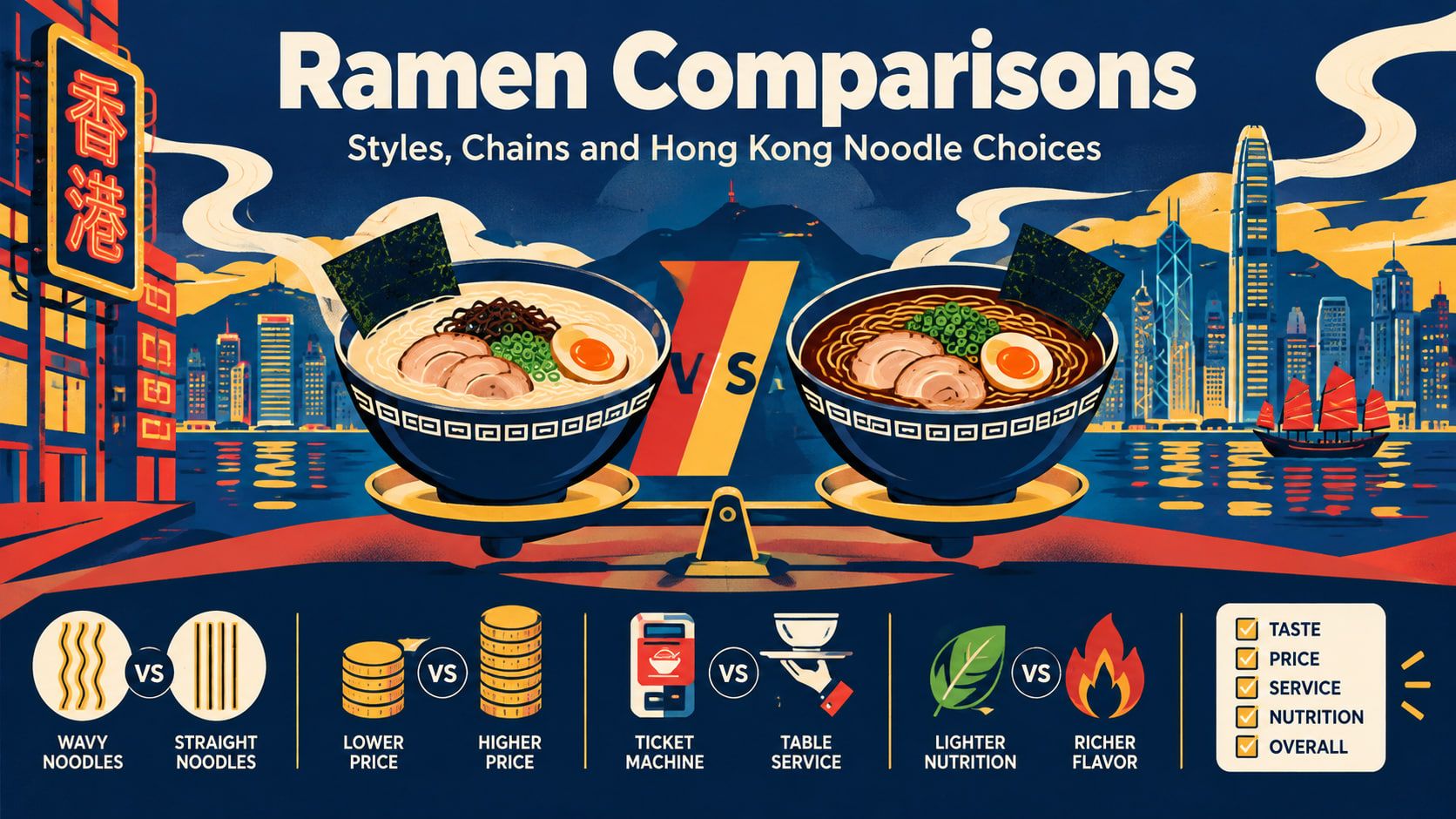
Choose with honest side-by-side trade-offs in broth, noodles, price tier, service format and nutrition—not a subjective winner.
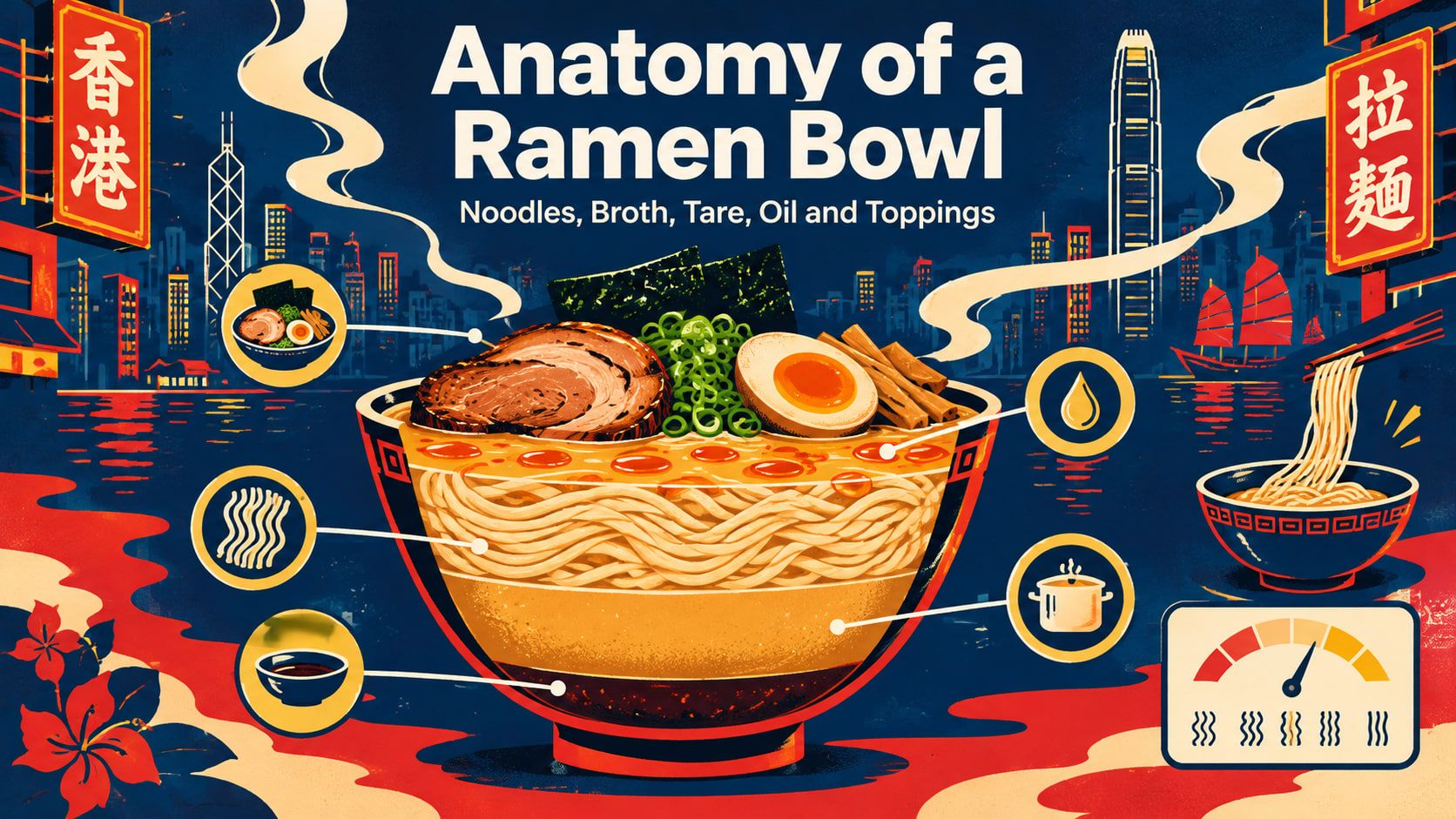
Understand the technical parts of a bowl so menu terms like chintan, paitan, kaedama and barikata become useful rather than confusing.

Follow new shops, closures, seasonal bowls and price changes through dated updates rather than stale evergreen claims.

Get the direct answer first, then follow links to the deeper guide on ingredients, culture, calories or cooking.
Compare Ichiran, Ippudo and Butao through published menus, customisation, seating and ordering logistics without a winner.
Compare ramen, udon and soba through noodle ingredients, serving formats and the dietary questions worth checking.
Compare ramen and pho through noodles, broth, toppings and eating format rather than declaring one superior.
Compare ramen and Lanzhou lamian through preparation, noodles, broth and the context behind their names.
Explore ramen and Hong Kong wonton noodles through their ingredients, serving styles and practical meal differences.
Compare ramyeon and ramen through product formats, cooking methods and what the names commonly describe.