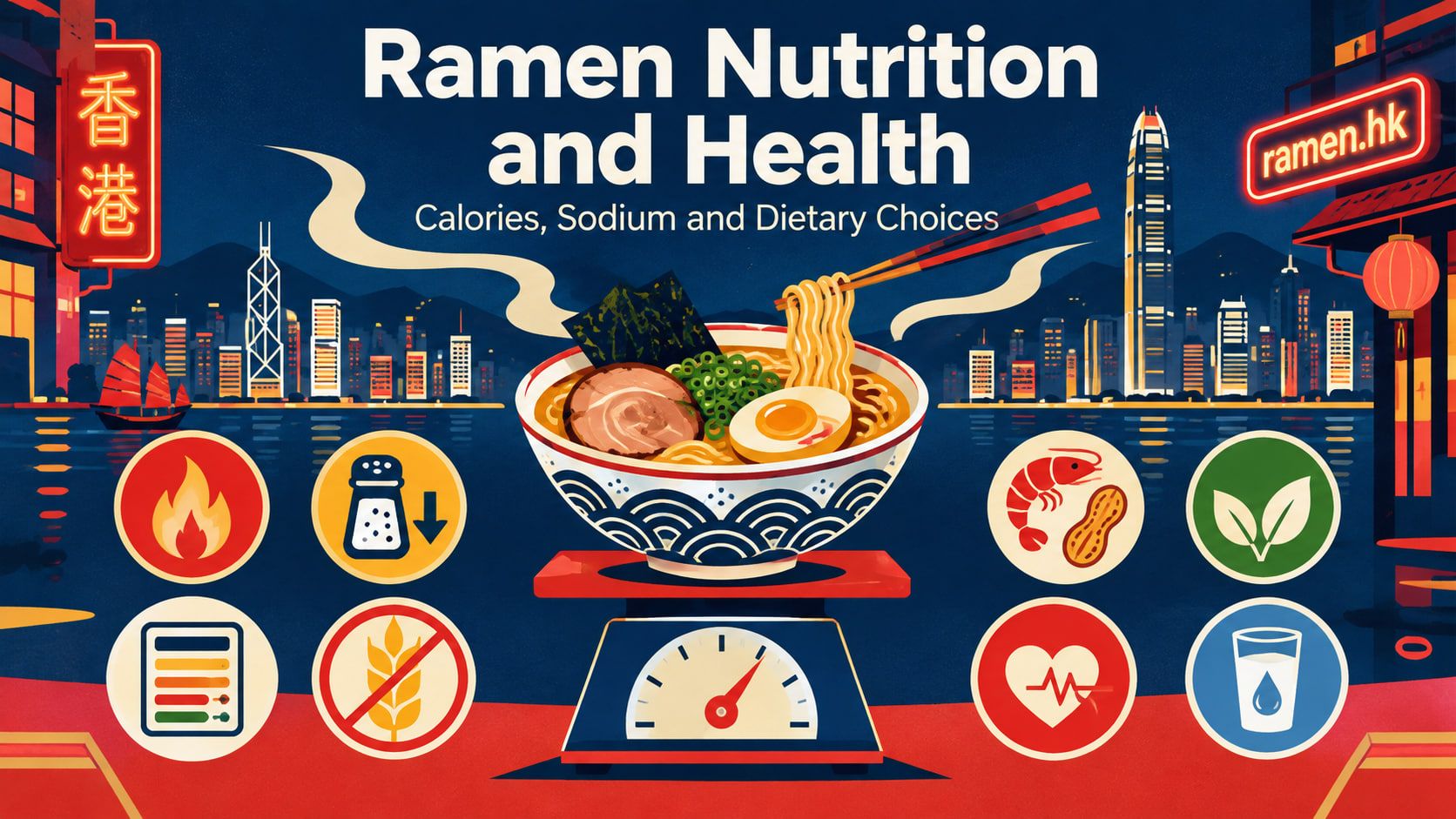
Ramen Nutrition and Health: Calories, Sodium and Dietary Choices
Get useful nutrition context on calories, sodium, allergens and special diets before the bowl arrives.
Ramen Nutrition and Health: Calories, Sodium, Allergens and Dietary Requirements
Understand the portion, recipe and soup you consume before deciding what a bowl means for your diet.
Ramen nutrition depends on the whole meal: noodles, stock, seasoning, oil, toppings and how much you eat or drink. Clear soup, chicken stock, vegetable toppings and a soupless format do not establish low sodium, low calories or allergen safety.
This hub separates general nutrition, food allergies, dietary requirements and questions needing individual clinical advice. It links to focused guides without assigning one calorie figure to every bowl or declaring a healthiest brand. For the wider site, see Ramen in Hong Kong.
Start with your question:
Calories → check portion and what the figure includes.
Sodium → check soup, seasoning and the amount consumed.
Allergy → confirm every component and cross-contact arrangements.
Vegan, gluten-free or halal → use the specific verification route.
Pregnancy or a medical condition → follow personal advice, not a generic ramen category.
🍜 1. Calories: establish the portion before using the number
A useful calorie figure identifies the recipe or product, serving size and included components. Ask whether it covers the full soup, toppings, seasoning and oil, or only the noodles. Do not borrow a packet product’s figure for an unlabelled restaurant bowl.
Record what the number describes separately from how much you actually consumed. A photograph cannot provide a reliable precise calorie count, and leaving some soup does not permit an exact deduction without component data.
Ramen calories · Tonkotsu calorie questions · Is ramen healthy?
🧂 2. What the local sodium evidence actually says
The Centre for Food Safety’s March 2018 summary covers ten types of Asian-style noodle soup, including ramen, pho and laksa: 100 non-prepackaged samples in total. Across those samples, around half the sodium came from the soup, and more than two-thirds exceeded the WHO adult daily recommendation of 2,000 mg sodium.
These are historical results across mixed noodle dishes, not a current survey of 100 ramen bowls or every Hong Kong restaurant. The findings cannot rank today’s brands or establish an individual bowl’s exact sodium content.
CFS advises trying not to consume the soup, limiting added sauces and seasoning, tasting before adding condiments, and eating noodles promptly rather than leaving them to absorb more soup. Reducing soup consumption can reduce sodium intake, but does not remove sodium already in noodles and other ingredients.
Ramen sodium evidence · MSG questions · Packaged noodle labels
🧾 3. Allergens and special diets: check all five components
Ask separately about noodles, broth, tare, aroma oil and toppings. Check preparation arrangements as well as ingredients, particularly where an allergy or coeliac disease makes cross-contact important.
| Need | Do not assume | Focused guide |
|---|---|---|
| Food allergy | Removing a visible topping removes an allergen already mixed into the meal. | Allergen checks |
| Gluten-free | Changing the noodles confirms that sauces and shared cooking arrangements meet the requirement. | Gluten-free checks |
| Vegan | Vegetable toppings establish that stock, oil and seasoning contain no animal ingredients. | Vegan checks |
| Halal | A pork-free claim establishes halal certification or compliant sourcing and preparation. | Halal verification |
If the operator cannot confirm the relevant ingredients or handling, the answer remains uncertain. This hub does not certify meals or restaurants as safe, gluten-free, vegan or halal.
🩺 4. Pregnancy and medical conditions need individual advice
A general guide cannot decide a safe frequency, sodium allowance or portion for someone managing a medical condition. Explain the actual meal and eating pattern to your clinician or registered dietitian: portion, frequency, toppings and soup consumption, rather than simply saying “ramen”.
Use ramen and pregnancy, blood-pressure considerations and food safety to organise questions, not as personal approval to eat a particular bowl.
✅ 5. Practical changes without nutritional promises
- Ask about smaller portions or seasoning adjustments where available.
- Limit soup consumption and extra sauces rather than automatically finishing everything.
- At home, measure seasoning and check whether the stock is already seasoned.
- For packaged foods, compare the same label basis and count actual servings.
- Include snacks, drinks and extra toppings when considering the whole meal.
A useful record identifies the source, date, serving and included components. If a product formula changes, read its ingredients again. Do not assume a previous purchase permanently establishes suitability.
Lower-sodium home planning · Vegan home recipes · Better-informed packaged choices
❓ 6. FAQ and sources
Is clear soup healthier than creamy soup?
Appearance does not establish calories, fat, sodium or suitability. Check the recipe and portion rather than using clarity as a nutrition label.
Does less soup mean no sodium?
No. Noodles, seasoning and toppings still contribute sodium, and exact reductions need component data.
Does vegan or halal mean lower in calories?
No. Ingredient and religious requirements are separate from energy or sodium levels.
Local sodium context follows CFS’s March 2018 summary of its joint noodles-in-soup study. Historical findings are not current restaurant nutrition data. This page does not claim laboratory testing, medical review or individual dietary assessment. It provides general information, not diagnosis, treatment or a personal nutrition prescription.
"