Ramen Calories by Style: Tonkotsu, Shoyu, Shio, Miso and Tsukemen
Understand ramen calories through recipe, portion and soup consumption, with sourced figures kept in context.
Ramen Calories by Style: Tonkotsu, Shoyu, Shio, Miso and Tsukemen
A restaurant bowl of ramen in Hong Kong can land anywhere from roughly 450 to well over 1,000 kcal, and the style of broth is only one of four things that decide where. Noodle portion, fat in the broth, aroma oil and toppings move the total more than the shoyu-versus-shio label, which is why two bowls of the same style can differ by several hundred kilocalories. Published figures are estimates, not Hong Kong measurements, and this page treats them that way.
It is for diners who want a realistic sense of what a bowl contributes, people tracking intake on medical advice and anyone comparing styles before ordering. It sits under the hub on ramen nutrition and health and pairs with our ramen sodium page, because the two questions are usually asked together.
The four-lever rule. Energy in a bowl comes from noodles, broth fat, oil and toppings. Change the portion, ask for less oil, skip extra chashu and leave the soup, and the style label becomes almost irrelevant.
📊 1. What the published estimates say
No Hong Kong authority publishes calorie figures for restaurant ramen by style, and the Centre for Food Safety's ramen study focused on sodium. Secondary sources, including food writers and nutrition databases, give overlapping ranges for a standard bowl with typical toppings. Those ranges, which should be read as estimates from secondary sources rather than measured Hong Kong data, are roughly:
- Shio: about 400 to 600 kcal; clear broth, usually the leanest base.
- Shoyu: about 450 to 700 kcal; clear amber broth with a little more oil.
- Miso: about 500 to 850 kcal; miso paste, often butter or corn, and more fat.
- Tonkotsu: about 550 to 1,200 kcal; emulsified pork fat is the driver, and the top of the range reflects extra chashu and oil.
- Tsukemen: often comparable to or above tonkotsu, because the noodle portion is larger and the dip is concentrated.
The spread within each style is wider than the gap between styles. Some operators publish nutrition figures on their own websites or menus; where they do, those are the numbers to trust. See tonkotsu ramen calories and fat explained for the richest style in detail.
🍜 2. Lever one: noodles
A standard ramen noodle portion is often around 120 to 150 g cooked weight, contributing a substantial share of the bowl's energy before any broth is added. Kaedama, the extra noodle serving common at Hakata-style shops, and the large tsukemen portions roughly add that share again. The thickness and hydration differences are explained on our ramen noodles page.
🥣 3. Lever two: broth fat
Clear shio and shoyu broths carry little suspended fat, while tonkotsu and chicken paitan are emulsions of fat and collagen, which is why they are opaque. The broth is also where most diners can save: leaving half the soup leaves behind roughly half the broth fat and, according to the Centre for Food Safety, about half the sodium.
🧈 4. Lever three: aroma oil
The spoon of flavoured fat added to most bowls, whether chicken fat, black garlic oil, chilli oil or back fat, is small in volume but dense in energy. Asking for less oil (abura sukuname in Japanese, or simply less oil in Cantonese) is a normal request at many shops. The role of aroma oil is explained on its own page.
🥩 5. Lever four: toppings
- Chashu: each slice of pork belly adds meaningful fat; shoulder is leaner.
- Ajitama egg: modest energy, useful protein.
- Butter and corn on miso: a Sapporo tradition that adds fat and sugar.
- Fried toppings such as karaage or tempura: large additions.
- Vegetables, menma, nori and spring onion: negligible.
Topping choices are covered on our ramen toppings page.
❤️ 6. Putting it in context
A bowl of ramen is a full meal rather than a snack, and for many adults a single bowl is a reasonable lunch if the rest of the day is lighter. The concern raised by Hong Kong authorities is sodium more than energy; Hong Kong's Centre for Food Safety reported in January 2020 that its study of restaurant ramen found sodium of roughly 2,000 mg to 4,000 mg per bowl, with about half coming from the soup, so a single bowl with soup can exceed the World Health Organization's maximum of 2,000 mg per day. For whether ramen fits a healthy pattern overall, read is ramen healthy.
Treat calorie figures as estimates. The ranges above come from secondary sources and vary with portion, recipe and shop. They are not Hong Kong laboratory measurements. People managing weight, diabetes, heart or kidney disease on medical advice should rely on an operator's own published nutrition data where available and on guidance from a doctor or registered dietitian. This is general information, not medical advice.
❓ 7. FAQ
Which ramen style has the fewest calories? Shio and shoyu are usually the leanest bases, but a shio bowl with extra chashu and oil can exceed a plain tonkotsu. Toppings and portion matter more than the label.
Does leaving the soup reduce calories? Yes, in rich broths especially, because the fat is suspended in the soup. It also leaves behind about half the sodium according to the Centre for Food Safety.
Is tsukemen lighter because the soup is separate? Usually not. The noodle portion is larger and the dipping broth is concentrated; many diners also finish with soup-wari, diluting and drinking the dip.
Do Hong Kong ramen shops publish calories? A few operators publish nutrition information online or on menus; most do not. Where figures exist, use them over generic estimates.
Is a bowl of ramen too many calories for lunch? For most adults a standard bowl is within a normal meal range. The sodium is the larger concern; see our ramen sodium page.
ramen calories tonkotsu ramen calories is ramen healthy ramen sodium instant noodles calories ramen pregnancy vegan ramen Hong Kong gluten-free ramen Hong Kong low-calorie ramen ramen allergens
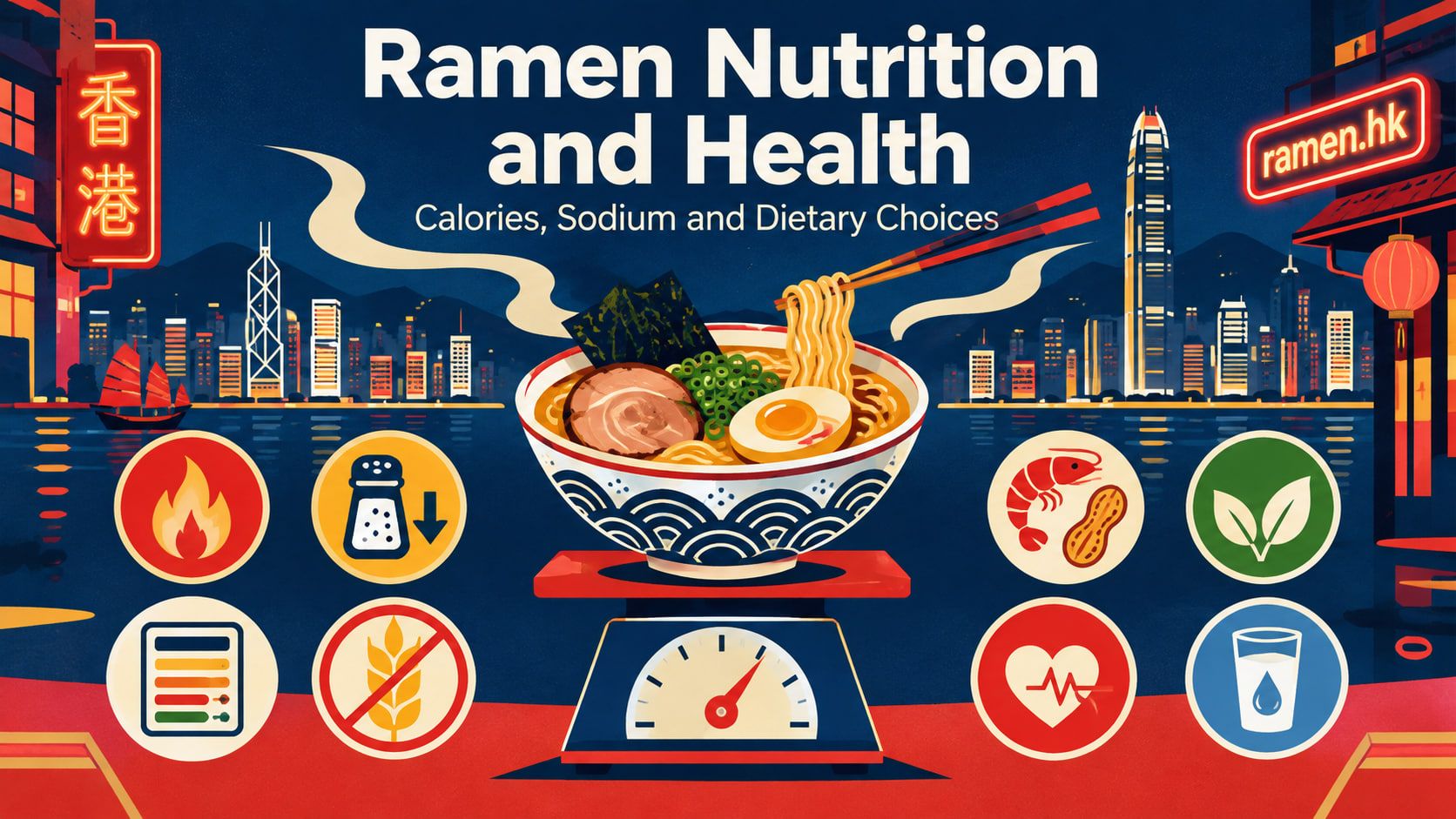
Get useful nutrition context on calories, sodium, allergens and special diets before the bowl arrives.
Read ramen sodium evidence through Hong Kong research, the role of soup and practical ways to ask about seasoning.
Assess whether ramen fits your eating pattern through ingredients, portions and evidence—not a blanket healthy or unhealthy label.
Explore ramen during pregnancy through ingredients, cooking and food-safety questions to discuss with a healthcare professional.
Understand ramen and blood-pressure concerns through sodium evidence and questions for your doctor or registered dietitian.
Investigate gluten-free ramen in Hong Kong through noodles, seasoning and cross-contact questions before ordering.
Check vegan ramen in Hong Kong by asking about every component rather than relying on a vegetable menu description.
Identify potential ramen allergens across noodles, broth, seasoning and toppings, with clear questions for the operator.
Understand tonkotsu ramen calories through the actual recipe, portion and amount of soup consumed.
Handle ramen safely through ingredient preparation, cold storage and official guidance on cooling and reheating.