Ramen Sodium: What the Hong Kong CFS Findings Mean
Read ramen sodium evidence through Hong Kong research, the role of soup and practical ways to ask about seasoning.
Ramen Sodium: What the Hong Kong CFS Findings Mean
Hong Kong's Centre for Food Safety has described Japanese ramen as a potential high-sodium trap, and its own study found roughly 2,000 mg to 4,000 mg of sodium per restaurant bowl. About half of that sodium sits in the soup, so a diner who eats the noodles and toppings but leaves most of the broth can roughly halve the intake from the same bowl. The World Health Organization's adult maximum is 2,000 mg a day, which a single bowl with soup can exceed on its own.
This page is for anyone who eats ramen regularly in Hong Kong and wants to understand the published numbers and what to do about them without giving the dish up. It sits under the hub on ramen nutrition and health and pairs with ramen calories by style.
The sodium rule. The soup is the lever. Eat the noodles promptly so they soak up less seasoned broth, treat the soup as a sauce rather than a drink, and ask for lighter seasoning where the shop offers it.
📋 1. What the CFS found
In its Food Safety Focus issue of January 2020, the Centre reported that its study of ramen found sodium content ranging from around 2,000 mg to 4,000 mg per bowl, with about half from the soup. It noted that soy sauce and other salt-rich condiments are central to ramen preparation, cited a Japanese study that correlated the prevalence of ramen restaurants with stroke mortality across prefectures, and advised the public to eat the noodles promptly and try not to consume the soup. It also urged the trade to reformulate and choose lower-salt ingredients. The correlation study is observational and does not show that ramen causes stroke; it is a population-level association.
🧂 2. Where the sodium comes from
- Tare: the concentrated seasoning, usually soy sauce, salt or miso based, is the main source.
- Broth: long-simmered stock contributes some sodium, more if seasoned during cooking.
- Noodles: alkaline noodles contain salt and kansui; a small but real share.
- Toppings: chashu braised in soy, menma, seasoned eggs and nori all add sodium.
- Table condiments: extra soy, pickled ginger and garlic paste add more.
Clear broth is not low salt. A pale shio bowl can carry as much sodium as a dark shoyu one, because the tare does the seasoning in both. The structure is explained on the anatomy of a ramen bowl.
🇭🇰 3. The Hong Kong context
The Department of Health's Population Health Survey 2020-22 found that people aged 15 to 84 consumed an average of about 8.4 g of salt, around 3,400 mg of sodium, a day, exceeding the WHO limit by more than 70 per cent, and that 29.5 per cent had hypertension, more than 40 per cent of whom were unaware before the survey examination. The Government cites Centre for Food Safety studies attributing nearly 70 per cent of local sodium intake to condiments and sauces, soup, and processed and cured meat. Ramen sits squarely in that pattern. Instant noodles are covered separately on instant noodle calories and sodium.
🥣 4. What to do in the shop
- Eat the noodles first and promptly; soaking noodles absorb seasoned soup.
- Leave most of the broth; this is the Centre's own advice.
- Choose shops that offer seasoning levels; some let you select lighter tare.
- Skip extra soy, salt or garlic paste at the table.
- Go easy on soy-braised toppings if you are already eating a full bowl.
- Balance the rest of the day with low-salt meals and vegetables rich in potassium.
For specific guidance when blood pressure is a concern, read ramen and high blood pressure. For a lower-salt bowl at home, see the low-sodium ramen recipe.
🏭 5. What the trade can do
The Centre urged reformulation. In practice that means lighter tare, unsalted stock, less soy in chashu braising liquid and offering a reduced-seasoning option. Some operators publish nutrition information; where they do, it is the best available source for a specific bowl. Shops in Hong Kong are not required to label sodium on restaurant menus. The wider question of whether the dish fits a healthy diet is on is ramen healthy.
Hypertension is common and often undiagnosed in Hong Kong. The Population Health Survey found more than 40 per cent of people with hypertension did not know they had it. If you eat ramen or other high-sodium meals regularly, a blood pressure check is sensible. People with diagnosed hypertension, heart or kidney disease, diabetes, those who are pregnant and older adults should discuss sodium limits with a doctor or registered dietitian. This is general information, not medical advice.
❓ 6. FAQ
How much sodium is in one bowl of ramen? The Centre for Food Safety's study found roughly 2,000 mg to 4,000 mg per bowl, with about half in the soup. Individual bowls vary with recipe and size.
Is shio ramen lower in sodium than shoyu? Not reliably. Both are seasoned with tare to a similar salt level; the colour tells you about soy content, not sodium.
Does leaving the soup really help? Yes. The Centre's figures put about half the sodium in the soup, and this is its own recommendation.
Is ramen worse than wonton noodles or pho for sodium? All are seasoned broth dishes and all can be high in sodium. The Centre's comparable surveys of other noodle soups suggest the issue is the format rather than the cuisine; compare specific bowls where data exists.
Can I ask for less salt at a Hong Kong ramen shop? Some operators offer seasoning levels or lighter options; many do not. Asking is reasonable, and leaving the soup works everywhere.
ramen calories tonkotsu ramen calories is ramen healthy ramen sodium instant noodles calories ramen pregnancy vegan ramen Hong Kong gluten-free ramen Hong Kong low-calorie ramen ramen allergens
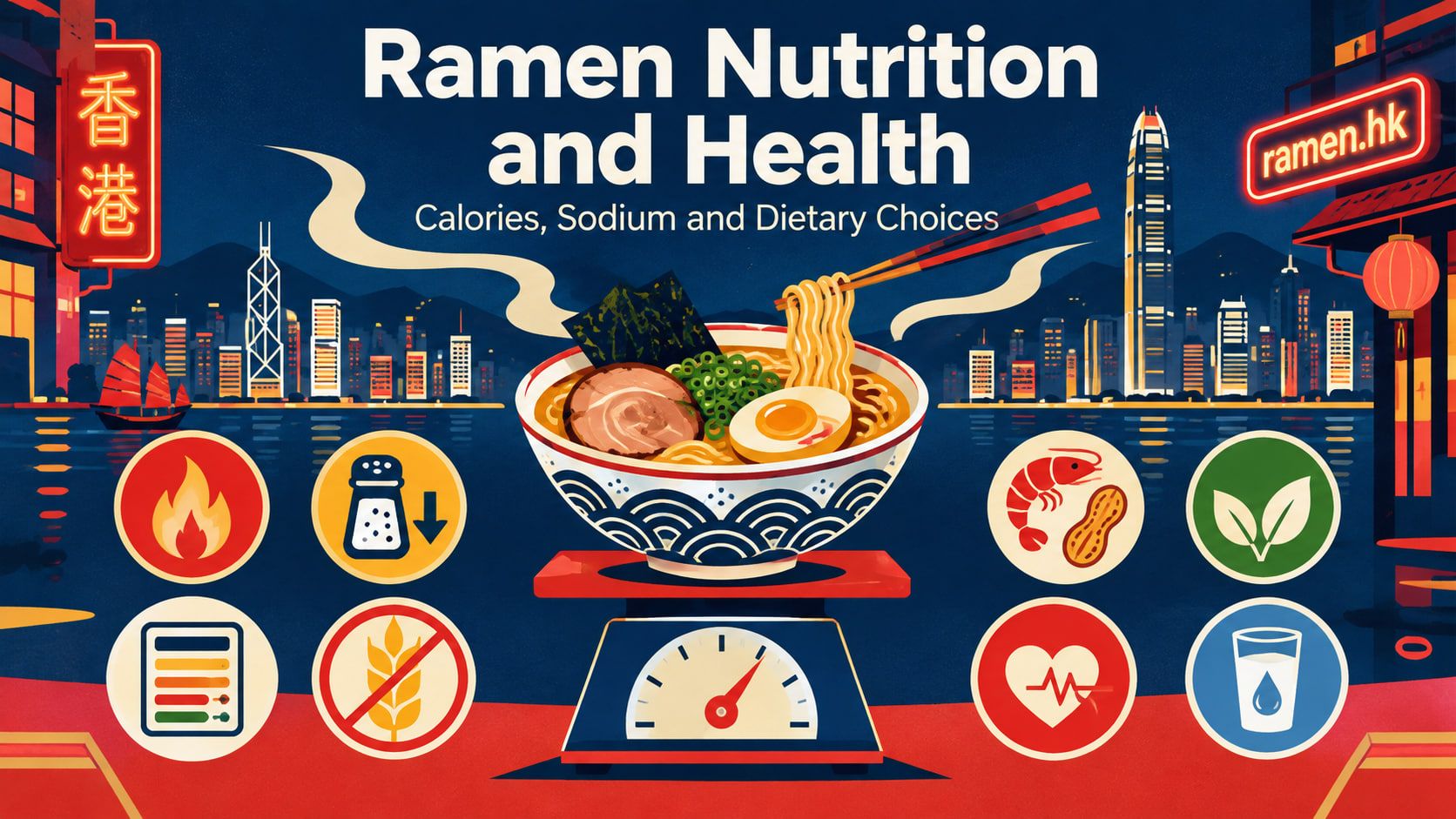
Get useful nutrition context on calories, sodium, allergens and special diets before the bowl arrives.
Understand ramen calories through recipe, portion and soup consumption, with sourced figures kept in context.
Assess whether ramen fits your eating pattern through ingredients, portions and evidence—not a blanket healthy or unhealthy label.
Explore ramen during pregnancy through ingredients, cooking and food-safety questions to discuss with a healthcare professional.
Understand ramen and blood-pressure concerns through sodium evidence and questions for your doctor or registered dietitian.
Investigate gluten-free ramen in Hong Kong through noodles, seasoning and cross-contact questions before ordering.
Check vegan ramen in Hong Kong by asking about every component rather than relying on a vegetable menu description.
Identify potential ramen allergens across noodles, broth, seasoning and toppings, with clear questions for the operator.
Understand tonkotsu ramen calories through the actual recipe, portion and amount of soup consumed.
Handle ramen safely through ingredient preparation, cold storage and official guidance on cooling and reheating.