
Ramen Souvenirs From Japan: What You Can Bring Back to Hong Kong
Choose ramen souvenirs from Japan by checking ingredients, storage and Hong Kong import requirements before buying.
Ramen Souvenirs from Japan: A Hong Kong Packing Guide
Choose ramen souvenirs by ingredients, storage instructions and Hong Kong import requirements, not simply by the shop name on the box. A 15 kg personal-baggage licensing exemption for chilled or frozen meat does not remove the official-certificate requirement. This guide is written for Hong Kong readers comparing practical options, with research checked on 6 October 2026.
This page helps readers separate useful evidence from advertising and identify what must be confirmed directly. Start with planning ramen travel in Japan for the wider context. Ramen.hk is an independent information site, not a recruiter, course provider, retailer or professional adviser.
The ingredient rule. Read the complete ingredient and storage labels before buying, and keep photographs of them. A dry noodle kit is not automatically meat-free.
🧳 1. Choose the product before the brand
Dry noodles, soup powders, liquid concentrates and chilled complete meals require different packing decisions. Read whether the kit needs refrigeration, how long it keeps and whether the contents include separate meat toppings. A branded box does not explain those differences on its own. Compare cup noodles with fresh restaurant kits rather than treating them as one product category.
For sightseeing purchases, Cup Noodles Museum Yokohama planning and Shin-Yokohama Ramen Museum planning help organise the visit. Do not join a restaurant queue simply to discover whether souvenir stock exists; check the operator’s shop information first.
🛃 2. Understand licence and certificate rules
According to Hong Kong Customs controlled-import guidance, frozen or chilled meat and poultry in personal baggage for personal consumption or gifts, in quantities not exceeding 15 kg, do not require the relevant import licence. However, an official certificate is still required. This is a licensing exemption, not blanket permission to import a kit.
The same Customs guidance says eggs need a health certificate and/or written permission from a FEHD health officer; fully cooked egg or egg forming an ingredient of compounded food is excluded under the stated definition. Do not apply this exclusion indiscriminately to every product containing egg. Ask the Centre for Food Safety about uncertain contents, including separate toppings and broth concentrates.
🏷️ 3. Read labels and transport instructions
Check the manufacturer, ingredient list, expiry date and preparation directions while you still have access to staff. If a translation is uncertain, keep a photograph and seek clarification rather than guessing. The ramen allergen checklist helps identify wheat, egg and other ingredients to discuss.
Plan luggage around the published storage conditions, not around the fact that the journey is short. Keep packaging intact and protect liquid pouches from punctures. Airline baggage, liquid and refrigeration arrangements are separate questions from food-import legality; verify both before paying. Avoid promising chilled products to friends unless the transport arrangement is realistic.
🍜 4. Choose something you can cook
For a Hong Kong flat with an induction hob, choose a kit whose instructions match your saucepan space and equipment. Check whether noodles and toppings cook separately, and whether extra ingredients are required. home ramen planning explains the components; ramen style differences helps select a familiar flavour without implying a quality ranking.
If you want a chain-branded souvenir, consult the operator directly rather than assuming every restaurant branch sells it. Ichiran visit planning in Japan is separate from retail availability. Station purchases can fit around travel, but leave time for shop opening hours and checkout rather than buying immediately before departure.
Packaging is not permission. Vacuum packing, refrigeration or a small gift quantity does not by itself make regulated food admissible. Consult Customs and the Centre for Food Safety for the exact product.
❓ 5. FAQ
Does the 15 kg exemption remove all meat-import rules? No. Customs distinguishes the import-licence exemption from the official-certificate requirement.
Are all dry ramen kits unrestricted? Do not assume so. Check the ingredients and any separate meat or egg components with the relevant authorities.
Should I queue at a restaurant to buy souvenirs? First confirm retail availability and opening arrangements; dining queues may serve a different purpose.
What should I keep after purchase? Retain the ingredient, storage and expiry labels and any required documents. Ask about uncertain products before travelling.
best ramen Tokyo best ramen Osaka Fukuoka ramen Sapporo ramen Tokyo Ramen Street Ichiran Tokyo ramen tour Japan Cup Noodles Museum Yokohama Ramen Museum ramen souvenirs Japan
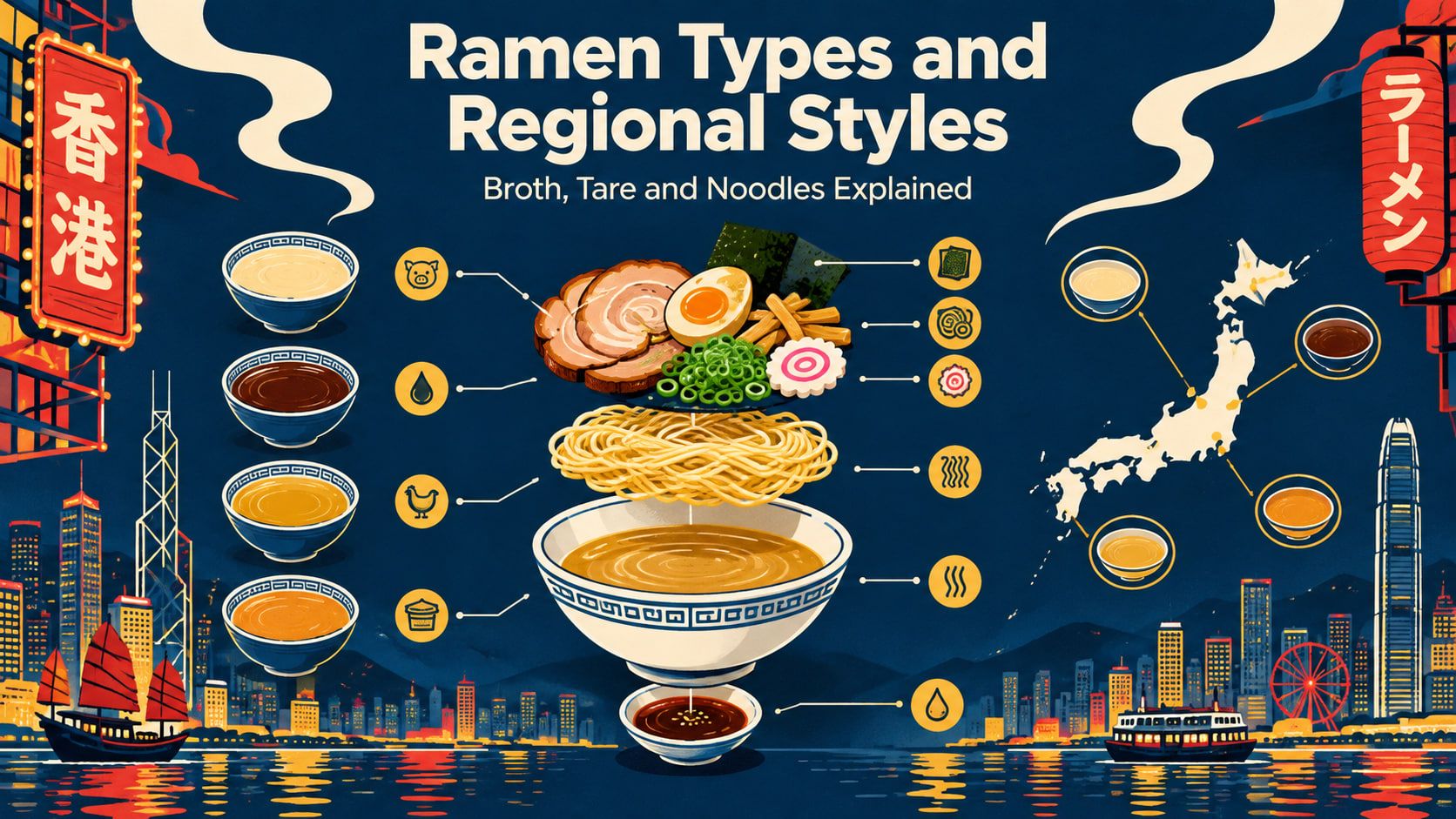
Learn to read any ramen menu confidently by understanding broth, tare, noodle texture, toppings and regional Japanese origins.

Plan a Japan ramen trip with city-specific styles, queues, museums and practical travel details.
Understand tonkotsu ramen through pork-bone broth, noodle options and the recipe details to ask about.
Explore shoyu ramen through soy-based seasoning, broth variations and the menu terms that help you choose.
Understand shio ramen through salt-based seasoning and broth choices without mistaking a clear appearance for low sodium.
Explore miso ramen through seasoning, noodle pairings and regional context before ordering or cooking it.
Understand tsukemen through its separate noodles and dipping broth, serving options and eating sequence.
Explore mazesoba through sauce, noodles and toppings, with practical guidance on mixing and ordering.
Understand abura soba through its soupless format, seasoning and the distinctions to check against mazesoba.
Explore tantanmen through sesame, chilli, recipe variations and the ingredient questions to ask before ordering.