

Ramen in Japan: Travel Guides for Hong Kong Visitors
Plan a Japan ramen trip with city-specific styles, queues, museums and practical travel details.
Ramen Travel in Japan: Cities, Museums, Ordering and Bringing Ramen Home
Plan a Japan ramen trip around city styles, queues, museums and practical travel details.
Highlight key: prices and tickets · practical actions · cautions and rules · locations and timing · ordering terms
A good ramen trip fits around the itinerary rather than risking a train connection for one bowl. Decide which city you are in, how much time you have and whether you want a single meal or a cultural visit, then check that venue’s current hours, last orders and payment methods.
This sub-hub covers Tokyo Station’s ramen cluster, the two Yokohama museums, Fukuoka’s yatai, ordering systems and Hong Kong’s rules on bringing food home. It is written for Hong Kong travellers. It does not predict queue times, take bookings or rank shops. For the site-wide overview, return to Ramen in Hong Kong.
Start here:
Changing trains at Tokyo Station → Tokyo Ramen Street is outside the ticket gates; allow time to exit and re-enter.
Want to compare regional bowls in one place → Shin-Yokohama Ramen Museum.
Want to make your own cup noodles → Cupnoodles Museum Yokohama, a different venue.
Visiting Fukuoka → plan fixed-shop meals and evening yatai separately.
Buying souvenirs → check meat and egg rules before you buy.
🗾 1. Choose a city-specific route
Start with the city guide that matches your itinerary before comparing distant shops. Regional styles are useful context, but transport, weather and available time decide what works.
- Tokyo: station clusters, neighbourhood shops and late options.
- Osaka: city routes and local styles.
- Fukuoka and Hakata: tonkotsu tradition, kaedama and yatai.
- Sapporo: miso ramen context and winter planning.
A famous station name does not establish a short walk, and a regional city does not serve only one broth style. Allow one or two ramen slots per day and keep the rest of the itinerary flexible for queues and closures.
🚉 2. Tokyo Ramen Street: in the station, outside the gates
The First Avenue Tokyo Station guide states that the arcade is outside the JR Tokyo Station ticket gates, reached through any Yaesu-side gate from the Shinkansen or conventional lines. Tokyo Ramen Street is on B1.
The guide lists Tokyo Ramen Street’s general hours as 10:30–23:00, last order 22:30, but notes that hours vary by shop; some shops in the listing open as early as 7:30. For breakfast or a late bowl, check the individual shop rather than the street’s general hours.
The guide states that barcode and QR-code payments are not available at Tokyo Ramen Street, and that some shops do not accept credit cards or e-money. Carry a fallback payment method. The same guide lists luggage storage and coin lockers.
For a connection, budget time to exit the gates, walk, queue, order, eat and re-enter. This guide does not know your train, luggage or the day’s crowd, so it does not promise that any fixed window is enough. Read Tokyo Ramen Street planning.
🏛️ 3. Two Yokohama museums, two different visits
The Shin-Yokohama Ramen Museum and the Cupnoodles Museum Yokohama are separate institutions in different parts of Yokohama. Decide whether you want to eat several regional bowls or make your own instant noodles.
| Detail | Shin-Yokohama Ramen Museum | Cupnoodles Museum Yokohama |
|---|---|---|
| Focus | Seven ramen shops in a 1958 streetscape, plus a history gallery. | Instant-noodle history and Momofuku Ando, plus hands-on workshops. |
| Access | About 5 minutes from Shin-Yokohama Station (JR); about 1 minute from Exit 10 (subway and Sotetsu/Tokyu). | 8 minutes from Minatomirai or Bashamichi Station; 12 minutes from Sakuragicho. |
| Hours | Weekdays 11:00–21:00; holidays 10:30–21:00. Ramen orders close 30 minutes before closing. | 10:00–18:00, last admission 17:00. Closed Tuesdays (or the next day if Tuesday is a holiday). |
| Admission | Adults ¥450; ages 6–18 ¥100; under 6 free. | Adults ¥500; high-school age and younger free. |
| Extra charges | Ramen is paid separately; the noodle-making class is paid and requires a reservation. | My CUPNOODLES Factory is paid and needs a numbered ticket; Chicken Ramen Factory is paid and requires a reservation. |
The Shin-Yokohama Ramen Museum states that visitors of junior-high age and older are expected to order at least one bowl at each ramen shop they enter, and shops do not take seat reservations. It offers vegetarian selections but says its menu is not halal-compatible.
The Cupnoodles Museum Yokohama announces ad-hoc closures, such as a private opening on Monday, 23 November 2026. Check the official calendar and workshop availability before travelling. Read the Shin-Yokohama museum guide and the Cupnoodles Museum guide.
🏮 4. Fukuoka: fixed shops and yatai as separate meals
Fukuoka is closely linked with Hakata tonkotsu ramen and kaedama noodle refills. Plan fixed restaurants for lunch or early dinner, and treat evening yatai street stalls as a separate experience.
Yatai are small open-air stalls with limited seating, and weather affects whether they open. Fukuoka City introduced real-time yatai status through its official LINE account. Check status before heading out, and keep a nearby fixed shop as a fallback. Prices and payment vary by stall; ask before sitting. See Fukuoka and Hakata ramen travel.
🎫 5. Ordering, payment and dietary needs
Japanese ramen shops may use ticket machines, written order sheets, table service or QR self-ordering. Ichiran’s system guide describes a vacant-seat panel, a written order sheet and a call button, but one chain’s system describes that chain, not every independent shop.
- Read button labels and prices before paying; ask staff if unsure.
- For kaedama, Ichiran asks diners to leave at least half of the soup.
- Carry more than one payment method and check what the machine accepts.
- Settle dietary questions before buying a ticket; photos do not show ingredients.
Read Ichiran in Japan, using a ticket machine and ordering vocabulary. For allergies, prepare a Japanese card listing what you must avoid; see ramen allergen questions.
🧭 6. Guided and self-guided days
For a paid tour, check whether bowls, transport and tasting portions are included, and compare cancellation terms and dietary arrangements before booking. For a self-guided day, space meals realistically and choose fallback shops in advance. Neither a guide nor an early arrival guarantees a queue-free visit or a particular bowl.
Several tasting bowls add up: consider the whole day’s portions and sodium, not just each stop. See ramen tour formats, counter etiquette, style planning and ramen sodium context.
🧳 7. Souvenirs: buying in Japan is not permission to bring home
Dried noodle kits, liquid concentrates and kits with chilled meat or egg toppings need different storage and import checks. Check the exact product, including any separate topping packs.
The Centre for Food Safety states that under the Imported Game, Meat, Poultry and Eggs Regulations (Cap. 132AK), bringing in game, meat, poultry or eggs without a health certificate from the place of origin and/or prior written permission from FEHD is an offence, with a maximum penalty of a HK$50,000 fine and six months’ imprisonment. A 2024 government press release adds that undercooked meat and egg products, and raw meat in any packaging, including vacuum or foil packs, are covered.
Hong Kong Customs notes that while frozen or chilled meat up to 15 kg in personal baggage needs no import licence, it still requires an official certificate under Cap. 132AK. Customs also notes that fully cooked egg, or egg as an ingredient of a compounded food, falls outside the egg rules. If unsure about a product, ask the CFS Food Import and Export Section before buying. Airline baggage rules are a separate check.
Read bringing ramen souvenirs to Hong Kong.
Before you go: Is the venue open today, and when are last orders or last admission? Which payment methods are accepted? Do workshops need reservations or numbered tickets? Is there enough time for your train? Does any souvenir contain meat, poultry or egg?
❓ 8. FAQ
Is Tokyo Ramen Street inside the ticket gates?
No. The official guide places First Avenue Tokyo Station outside the JR ticket gates, reached via the Yaesu-side gates. Tokyo Ramen Street is on B1.
Can I pay by QR code at Tokyo Ramen Street?
The official guide says barcode and QR-code payments are not available there, and some shops do not take credit cards or e-money.
Does Shin-Yokohama Ramen Museum admission include ramen?
No. Admission and ramen are charged separately, and visitors of junior-high age and older are expected to order at least one bowl per shop.
Are the two Yokohama museums the same place?
No. They have different addresses, stations, hours, closing days and charges.
Can I bring vacuum-packed chashu ramen back to Hong Kong?
Do not assume so. Meat, poultry and eggs are regulated under Cap. 132AK, and vacuum-packed undercooked or raw meat is covered. Check with the CFS before buying.
🔎 Sources and limitations
Tokyo Ramen Street details come from the First Avenue Tokyo Station guide; museum details from the Shin-Yokohama Ramen Museum and Cupnoodles Museum Yokohama English pages; ordering steps from Ichiran’s system guide. Import rules come from the Centre for Food Safety, Hong Kong Customs and a 2024 government press release. Yatai status information is reported by Fukuoka Now.
Ramen.hk is an independent information resource. This page does not claim personal visits, tastings, queue timing or booking confirmation. Hours, prices, payment methods and regulations can change; check official sources before travelling. It is general information, not legal advice.
"best ramen Tokyo best ramen Osaka Fukuoka ramen Sapporo ramen Tokyo Ramen Street Ichiran Tokyo ramen tour Japan Cup Noodles Museum Yokohama Ramen Museum ramen souvenirs Japan
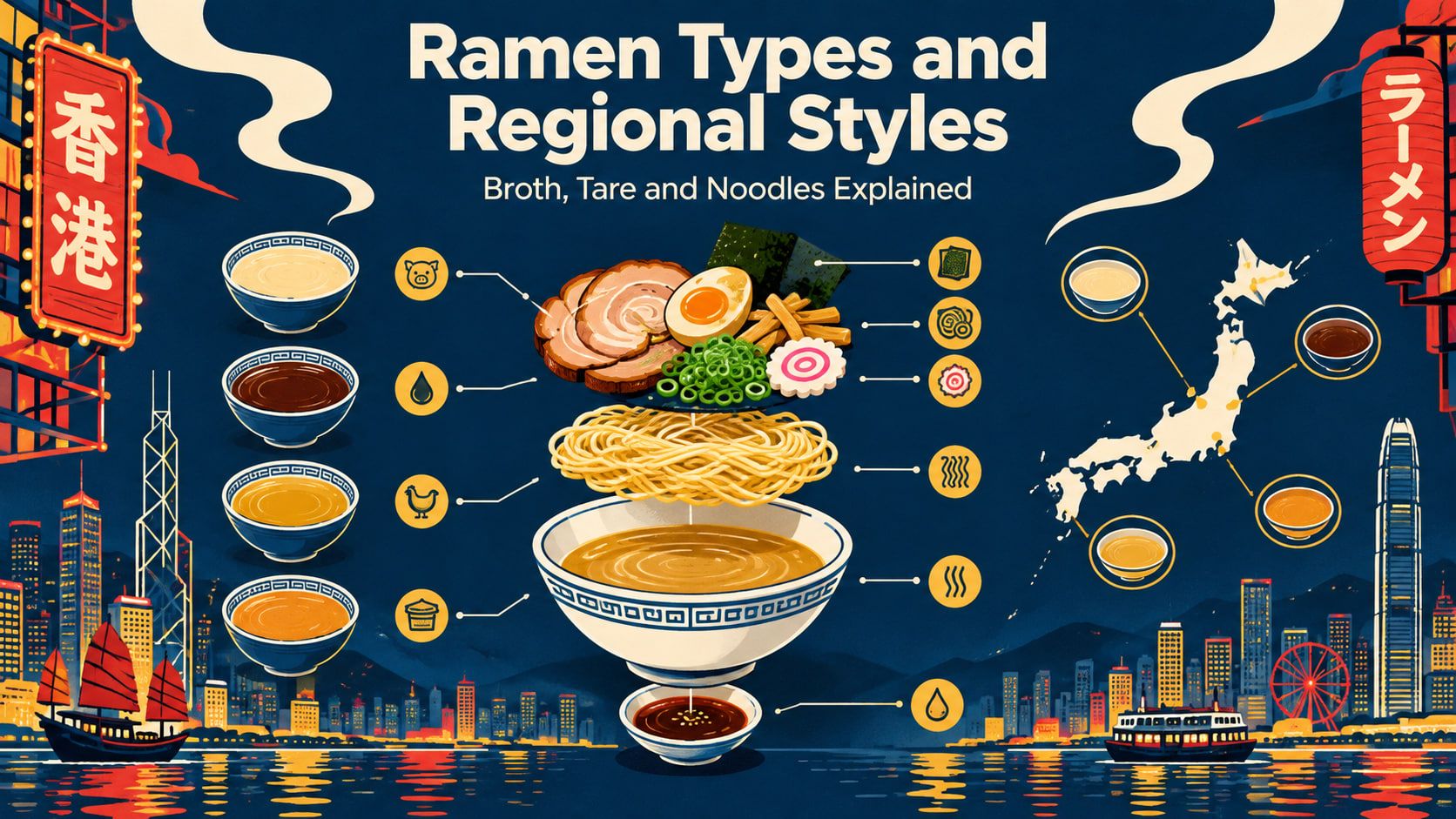
Learn to read any ramen menu confidently by understanding broth, tare, noodle texture, toppings and regional Japanese origins.
Understand tonkotsu ramen through pork-bone broth, noodle options and the recipe details to ask about.
Explore shoyu ramen through soy-based seasoning, broth variations and the menu terms that help you choose.
Understand shio ramen through salt-based seasoning and broth choices without mistaking a clear appearance for low sodium.
Explore miso ramen through seasoning, noodle pairings and regional context before ordering or cooking it.
Understand tsukemen through its separate noodles and dipping broth, serving options and eating sequence.
Explore mazesoba through sauce, noodles and toppings, with practical guidance on mixing and ordering.
Understand abura soba through its soupless format, seasoning and the distinctions to check against mazesoba.
Explore tantanmen through sesame, chilli, recipe variations and the ingredient questions to ask before ordering.
Understand chicken paitan through broth preparation and the checks needed before assuming a bowl is pork-free.