
Buldak Ramen: Flavours, Heat and How to Cook It
Understand Buldak noodles through exact flavours, sauced formats, heat descriptions and pack-specific preparation.
Buldak Ramen: Flavours, Heat and How to Cook It
Buldak Ramen (불닭볶음면), made by South Korea's Samyang Foods, is a dry stir-fried instant noodle finished with a liquid chilli-chicken sauce rather than a soup. The original packet is rated by Samyang at 4,404 Scoville Heat Units; the 2x Spicy version is roughly double, and the Carbonara and Jjajang flavours sit at about half the original. In Hong Kong it is stocked by Korean supermarkets, Don Don Donki, 7-Eleven, Circle K and most large supermarkets, usually in several flavours.
This page is for shoppers who want to know which flavour to pick, how hot each one really is and how to cook it so the sauce coats rather than pools. It sits under the hub on instant noodles in Hong Kong and links across to our detailed answer to how spicy Buldak is.
The drain rule. Buldak is not a soup noodle. Leave about eight tablespoons of cooking water in the pan before adding the sauce, then stir over heat for thirty seconds. Draining completely makes it harsh; leaving too much makes it watery.
🔥 1. What Buldak is
Samyang launched the original Hot Chicken Flavour Ramen in April 2012, according to the company's product history as compiled by the instant noodle reviewer The Ramen Rater. The company's own US site now groups the range under Buldak, with pouch, cup and big-bowl formats. Samyang is also Korea's oldest instant noodle maker, having produced the country's first packet in 1963; that wider story is on our Samyang noodles page. For how Korean ramyeon differs from Japanese ramen, see ramyeon versus ramen.
🌶️ 2. Flavours and heat, compared
Scoville figures below are Samyang's published or widely reported values; independent testers note that the sauce sachet alone is far hotter than the finished dish, so figures describe the mixed bowl. Availability in Hong Kong varies by shop.
- Original (red packet): about 4,404 SHU. Chilli-chicken sauce, sesame and seaweed flakes. The reference point.
- 2x Spicy (black packet with red): widely reported at about 8,700 to 10,000 SHU, with figures varying by production run and source. Same flavour profile, roughly double the capsaicin.
- 3x Spicy and limited editions: higher again; launched periodically and not always stocked in Hong Kong.
- Carbonara (pink packet): about 2,000 SHU. Includes a cream powder; see our Buldak Carbonara page.
- Cheese (yellow packet): heat between Original and Carbonara; a cheese powder sachet rounds the edges.
- Jjajang (black bean): about 2,000 SHU or lower; sweeter and less sharp.
- Habanero Lime, Quattro Cheese, Corn and others: rotating flavours; check the packet's own indicator.
- Cup and Big Bowl versions: same flavour families, slightly different noodle texture because they are rehydrated rather than boiled.
If you want a direct comparison with the most common Korean soup noodle, read Buldak versus Shin Ramyun. Milder Korean options are listed in our Korean instant noodle buying guide.
🍳 3. Cooking method for the packet
- Boil about 600 ml water in a pan wide enough to stir in later.
- Add the noodle block and cook for about five minutes, loosening after two.
- Drain, leaving roughly eight tablespoons (120 ml) of water in the pan.
- Return to low heat, add the liquid sauce and stir for thirty seconds until it clings.
- Turn off the heat, sprinkle the dry flake sachet, and add any extras.
For the cup, follow the fill line, wait four minutes with the lid closed, drain through the perforated lid and then add the sauce. Cups cannot be stirred over heat, so toss well and eat quickly before the sauce tightens.
🧀 4. Ways to tame or build the heat
- Use half the sauce sachet and taste; you can add more but not remove it.
- Add a slice of processed cheese or a spoon of cream cheese; dairy fat dulls capsaicin.
- Stir in a soft-fried egg or a spoon of mayonnaise.
- Add cabbage, bean sprouts or mushrooms to spread the sauce over more volume.
- Serve with cold milk or a yoghurt drink rather than water, which spreads the heat.
Readers who regularly cook Korean instant noodles may want our cheese ramen guide for the dairy route and instant ramen hacks for toppings that work with dry sauces.
❤️ 5. Sodium, fat and who should be careful
Buldak is a fried noodle with a concentrated sauce. Hong Kong's nutrition label on the packet gives sodium per serving; compare it with the Consumer Council's finding that all 19 instant noodles it tested in February 2024 exceeded recommended per-meal sodium when eaten whole. Because Buldak is dry, leaving the soup is not an option, so the sauce quantity is the main lever. See instant noodle calories and sodium for label reading.
Very hot food is not for everyone. Capsaicin at this level can cause stomach pain, reflux and, in some people, vomiting. Children, pregnant readers, people with reflux, ulcers, irritable bowel or inflammatory bowel conditions, and anyone unwell should avoid the 2x and 3x versions and approach the Original with caution. Several countries have at times restricted sale of the hottest editions on safety grounds. This is general information, not medical advice; seek a doctor's guidance if you have a digestive condition.
🛒 6. Hong Kong availability and price tier
Original and Carbonara are the most consistently stocked flavours. Korean supermarkets and Don Don Donki carry the widest range, including multi-packs and limited editions. Buldak sits in the middle price tier for instant noodles, above local brands and roughly level with other Korean imports. Prices change frequently; check the shelf. For store suggestions see the ramen shopping hub and our Don Don Donki ramen guide.
❓ 7. FAQ
Is Buldak a ramen or a ramyeon? It is a Korean ramyeon, specifically a stir-fried (bokkeummyeon) type with sauce, not soup. The English packaging uses the word ramen for export.
Which is the mildest Buldak? Carbonara and Jjajang are the mildest in the standard range at about 2,000 SHU, less than half the Original.
How much hotter is 2x Spicy than the Original? Samyang's figure is roughly double. Reported values range from about 8,700 to 10,000 SHU depending on the edition.
Can I make it as a soup? You can keep more water and add the sauce for a spicy broth, but the noodle and sauce are designed for the dry format and the result is thinner and sharper.
Does Buldak contain allergens? The sauce and flakes typically list wheat, soya and sesame, and some flavours contain milk. Read the Hong Kong label; see our ramen allergens guide for details.
instant noodles Hong Kong best instant noodles Hong Kong Nissin Demae Iccho Doll noodles Buldak ramen Shin Ramyun Samyang noodles Jin Ramen cup noodles instant noodles ranking instant noodles recipe instant noodle calories
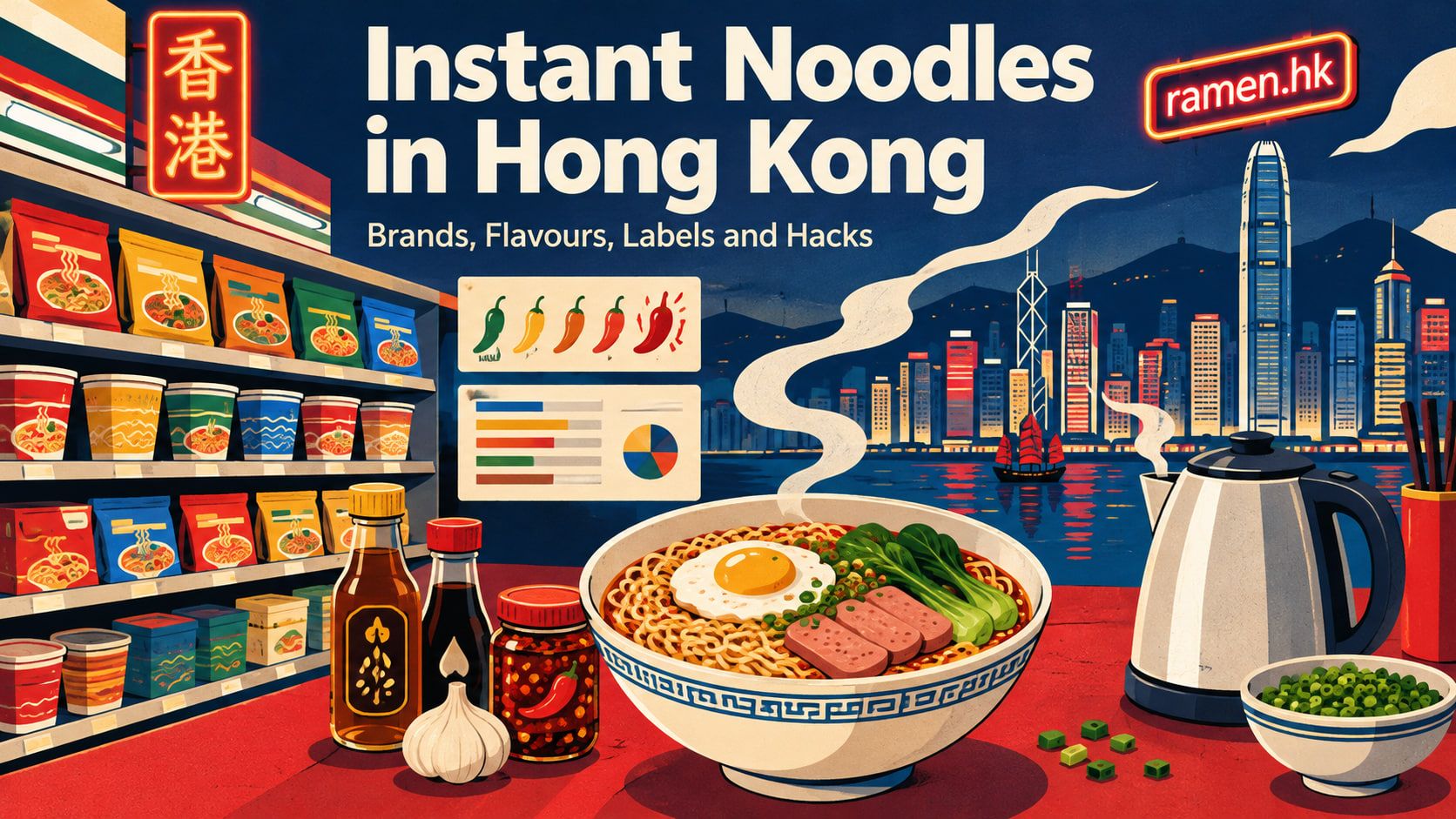
Go beyond packet rankings with Hong Kong brand history, heat levels, nutrition labels, better cooking and pantry upgrades.
Explore Nissin Demae Iccho through brand history, flavour choices, preparation and Hong Kong label information.
Understand cha chaan teng instant noodles through meal formats, toppings and the ordering questions Hong Kong diners ask.
Explore Doll noodles through Hong Kong brand context, product formats, cooking directions and label checks.
Explore Buldak Carbonara through its flavour format, cooking instructions and ingredient checks, without assuming creamy means mild.
Understand Shin Ramyun through its product family, preparation instructions and nutrition information on the pack.
Explore Samyang noodles beyond a single flavour by comparing formats, preparation methods and imported labels.
Compare Jin Ramen variants through exact product names, heat descriptions, cooking methods and labels.
Explore Cup Noodles through product history, flavour choices and the fill-line and preparation instructions on each cup.
Navigate Korean instant noodles through soup and sauced formats, flavour families and practical shopping checks.