
Cheese Ramen: What It Is and How to Cook It
Explore cheese ramen through preparation, ingredient choices and the allergens and nutrition questions additions introduce.
Cheese Ramen: What It Is and How to Cook It
Cheese ramen is the Korean practice of melting a slice of processed cheese, or a spoon of cheese powder, into a hot bowl of instant ramyeon, usually a spicy one. The fat and casein in cheese blunt capsaicin, so a single slice turns Shin Ramyun or Buldak into something a cautious Hong Kong eater can finish, while adding body to a thin broth. It is not a Japanese ramen style, although some Hong Kong ramen shops offer cheese as a topping.
This page is for home cooks who want a reliable method, shoppers deciding between cheese-flavoured packets and adding their own, and anyone wondering whether the combination works with Japanese bowls. It sits under the hub on instant noodles in Hong Kong, and the heat context is in our Korean instant noodle buying guide.
The off-heat rule. Add cheese after the pan leaves the hob. Processed slices melt in residual heat within a minute; boiling them makes the fat split and the broth greasy. Cheese powder goes in with the reserved water, not into boiling liquid.
🧀 1. Where cheese ramen comes from
Cheese ramyeon is a home and convenience-store habit in South Korea that spread through television and online eating videos, and Korean makers now sell cheese-flavoured packets and cups. The idea travelled to Hong Kong with the wider Korean noodle boom. For how ramyeon sits alongside Japanese ramen, read ramyeon versus ramen. Japanese shops in Hong Kong occasionally offer cheese on tantanmen or mazesoba, which share the rich, spicy profile that cheese suits.
🍜 2. Packet cheese versus your own slice
- Cheese-flavoured packets (Buldak Cheese, cheese cup lines from several Korean brands): a powder sachet with cheese flavour and salt; convenient, consistent, usually a tier above the plain version.
- A processed cheese slice added at home: cheaper per bowl, more actual dairy, and you control the quantity.
- Shredded mozzarella: stretches well in stir noodles but adds little flavour; combine with a processed slice.
- Cream cheese: works in Carbonara-style bowls; see our Buldak Carbonara page.
- Parmesan or strong cheddar: assertive and can clash with chilli; use sparingly.
A plain packet plus one processed slice gives you the same effect as most cheese-flavoured packets at a lower price tier, with one more thing to buy. Prices change frequently; check the shelf.
🍳 3. Method for soup ramyeon
- Cook a soup noodle such as Shin Ramyun or Jin Ramen as directed, using about 50 ml less water.
- Turn off the heat in the last thirty seconds and crack in an egg if you like.
- Lay one processed cheese slice on the noodles.
- Cover for one minute so it melts in the residual heat.
- Stir gently, add spring onion, and serve in a warmed bowl.
🔥 4. Method for stir noodles
- Cook Buldak or another stir noodle; drain, leaving eight to ten tablespoons of water.
- Add the liquid sauce and stir over low heat for thirty seconds.
- Remove from heat, add a cheese slice or a tablespoon of shredded mozzarella and the cheese powder if using.
- Toss until glossy; add a splash of hot water if it tightens.
- Serve immediately; cheese stir noodles set as they cool.
For other toppings that pair with dairy, see instant ramen hacks and our instant noodle recipes.
🧂 5. Choosing the base and keeping it balanced
- Mild bases (Jin Mild, Samyang Ramen): cheese makes them creamy and comforting but can taste flat; add kimchi or chilli flakes.
- Medium bases (Shin Original, Jin Spicy): the classic pairing; one slice is enough.
- Hot bases (Buldak Original, 2x): cheese softens but does not neutralise; expect a still-hot bowl.
- Japanese-style instant bowls (Demae Iccho tonkotsu, miso cups): cheese can work with miso and tonkotsu styles, less so with shoyu or shio.
❤️ 6. Nutrition and who should be careful
A processed cheese slice adds saturated fat and more sodium to a meal that is already high in both. The Hong Kong Consumer Council's February 2024 test found whole servings of all 19 instant noodles it examined exceeded the per-meal sodium guidance before any topping was added. If you are using cheese to make a bowl milder, use less of the powder or sauce at the same time so the total does not climb. See instant noodle calories and sodium and healthier instant noodle choices for practical steps.
Cheese adds sodium as well as comfort. Processed cheese is a salted product, so cheese ramen is saltier than the plain bowl. People with hypertension, heart or kidney disease, those managing weight or cholesterol on medical advice, pregnant readers and parents of young children should treat it as an occasional meal. Anyone with a milk allergy or lactose intolerance should avoid it. This is general information, not medical advice; a doctor or registered dietitian can advise on individual limits.
❓ 7. FAQ
Does cheese really reduce the spiciness? It reduces the perception of heat because fat and milk proteins bind and dilute capsaicin on the tongue; the chilli content itself is unchanged.
Which cheese works best? Processed slices melt most evenly and are what Korean convenience stores use. Mozzarella adds stretch; cream cheese adds richness.
Can I microwave cheese ramen? You can microwave a cooked bowl briefly to melt the slice, but check the container is microwave-safe and never microwave a cup with foil or a metal rim.
Is cheese ramen served in Hong Kong ramen shops? Some shops list cheese as a topping, usually on spicy or mazesoba-style bowls. Check the current menu; it is not standard.
Is cheese ramen suitable for children? The cheese softens the heat but adds sodium and fat. Occasional servings are a family decision; a doctor or dietitian can advise on salt intake for children.
instant noodles Hong Kong best instant noodles Hong Kong Nissin Demae Iccho Doll noodles Buldak ramen Shin Ramyun Samyang noodles Jin Ramen cup noodles instant noodles ranking instant noodles recipe instant noodle calories
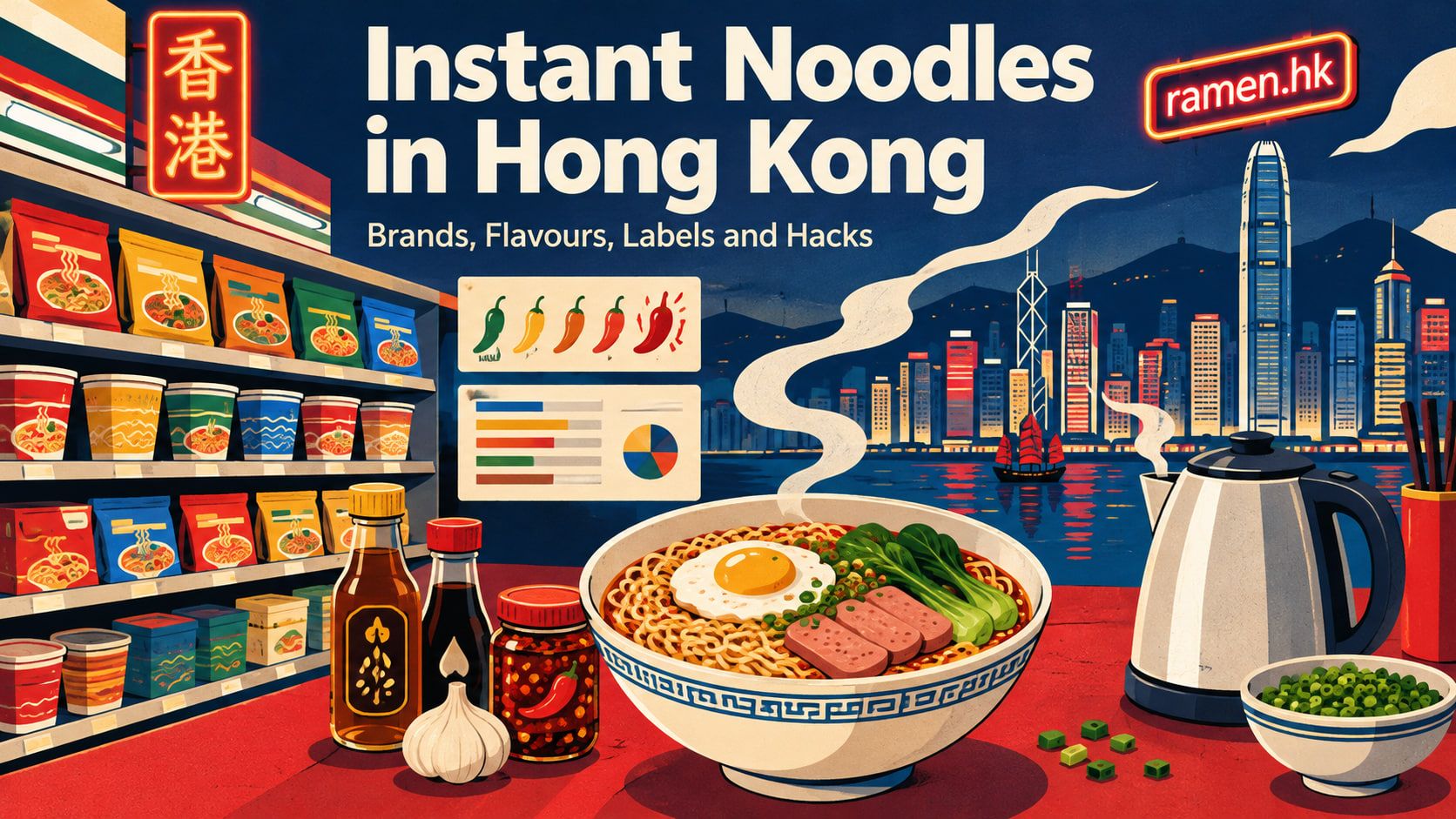
Go beyond packet rankings with Hong Kong brand history, heat levels, nutrition labels, better cooking and pantry upgrades.
Explore Nissin Demae Iccho through brand history, flavour choices, preparation and Hong Kong label information.
Understand cha chaan teng instant noodles through meal formats, toppings and the ordering questions Hong Kong diners ask.
Explore Doll noodles through Hong Kong brand context, product formats, cooking directions and label checks.
Understand Buldak noodles through exact flavours, sauced formats, heat descriptions and pack-specific preparation.
Explore Buldak Carbonara through its flavour format, cooking instructions and ingredient checks, without assuming creamy means mild.
Understand Shin Ramyun through its product family, preparation instructions and nutrition information on the pack.
Explore Samyang noodles beyond a single flavour by comparing formats, preparation methods and imported labels.
Compare Jin Ramen variants through exact product names, heat descriptions, cooking methods and labels.
Explore Cup Noodles through product history, flavour choices and the fill-line and preparation instructions on each cup.