Korean Ramyeon vs Japanese Ramen: What Is Different?
Compare ramyeon and ramen through product formats, cooking methods and what the names commonly describe.
Korean Ramyeon vs Japanese Ramen: What Is Different?
Korean ramyeon and Japanese ramen share a name and a noodle ancestry, but they are different daily foods: in Korea ramyeon usually means a quick instant packet, in Japan ramen usually means a composed restaurant bowl. This page explains trade-offs and characteristics; it is not a ranking.
Comparison hub: Ramen Comparisons. Style hub: Ramen Types and Regional Styles. Site hub: Ramen in Hong Kong: The Complete Local Guide.
The format rule. Ramyeon: dried or fried noodles, a seasoning sachet, four minutes, usually spicy, often eaten from the pot. Ramen: fresh noodles, stock plus tare, hours of preparation, mild unless you order tantanmen or a spicy variant.
🇰🇷 1. Korean ramyeon
Shin Ramyun, Buldak, Neoguri and Jin Ramen are instant products for home and convenience stores; see Korean instant noodles and Shin Ramyun.
🇯🇵 2. Japanese ramen
Restaurant ramen is assembled from noodles, broth, tare, oil and toppings, and regional styles change each part; see anatomy of a ramen bowl.
🔥 3. Heat and flavour
Ramyeon is chilli-forward by default; ramen is umami, salt, soy, miso or pork-forward with heat as a choice. Packets are compared in Buldak versus Shin Ramyun.
🧂 4. Nutrition
Both can be high in sodium: packets concentrate it in the sachet, restaurant ramen in tare and soup; see instant noodle calories and sodium.
These are usual meanings, not laws. Japan has instant ramen and Korea has restaurant noodle bowls; the comparison describes the default in each country.
🧭 What to read next
The short answer is in ramen versus ramyeon; the Hong Kong packet shelf is in instant noodles in Hong Kong.
ramen comparison Ichiran vs Ippudo ramen vs udon ramen vs pho ramen vs Lanzhou lamian ramen vs wonton noodles ramen vs ramyeon tonkotsu vs paitan instant vs fresh ramen
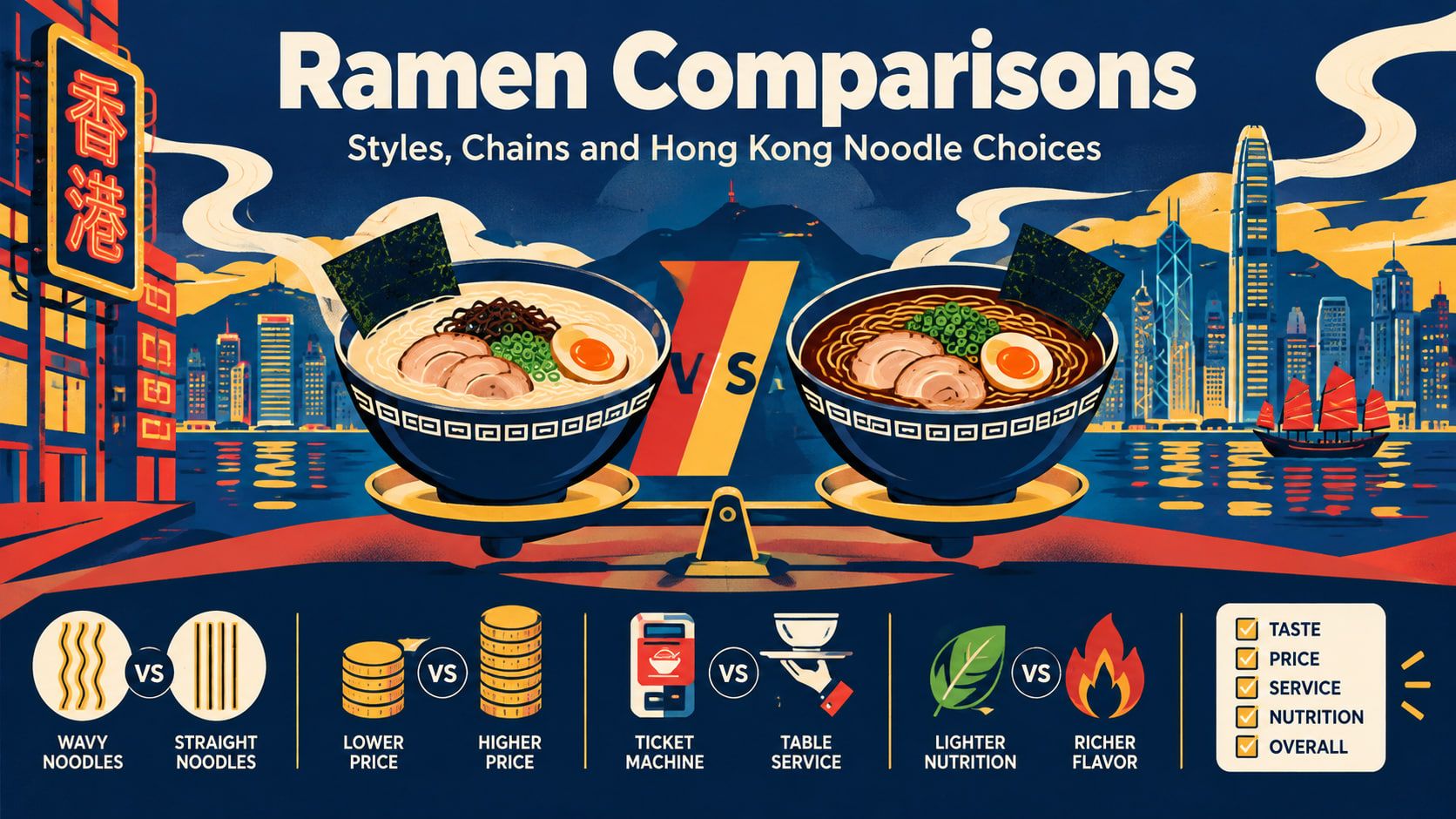
Choose with honest side-by-side trade-offs in broth, noodles, price tier, service format and nutrition—not a subjective winner.

Get the direct answer first, then follow links to the deeper guide on ingredients, culture, calories or cooking.
Compare Ichiran, Ippudo and Butao through published menus, customisation, seating and ordering logistics without a winner.
Compare ramen, udon and soba through noodle ingredients, serving formats and the dietary questions worth checking.
Compare ramen and pho through noodles, broth, toppings and eating format rather than declaring one superior.
Compare ramen and Lanzhou lamian through preparation, noodles, broth and the context behind their names.
Explore ramen and Hong Kong wonton noodles through their ingredients, serving styles and practical meal differences.
Compare tsukemen and ramen through dipping versus soup formats, noodle choices and the way each meal is eaten.
Compare mazesoba and ramen through sauce, soup, toppings and serving format without assuming soupless means lighter.
Compare tonkotsu and chicken paitan through broth ingredients, preparation and the dietary checks each requires.