

Ramen Questions Answered: Quick, Accurate Guides
Get the direct answer first, then follow links to the deeper guide on ingredients, culture, calories or cooking.
Ramen Questions: Direct Answers, Their Limits and the Right Deeper Guide
Get the direct answer first, then follow links to the deeper guide on ingredients, culture, calories or cooking.
Highlight key: figures and prices · direct answers · limits of the answer · times and temperatures · terms
Most ramen questions have a short answer, but each kind of question needs different evidence. A definition needs a reference source; a price needs a named bowl, branch and date; a nutrition figure needs a study or label; a food-safety step needs official guidance. None of them can be answered reliably from a menu name alone.
This sub-hub gives direct answers to common questions, states the limits of each answer and links to the guide that covers it fully. For the site-wide overview, return to Ramen in Hong Kong.
Match the question to the evidence:
“What is…?” → a reference guide.
“How much does… cost?” → the operator’s current menu for a named bowl and channel.
“How many calories or how much sodium…?” → a dated study or the product label.
“Is it safe to…?” → official food-safety guidance and the pack instructions.
“Is it right for me?” → a doctor or registered dietitian for medical diets.
🍜 1. Definitions and origins
What is ramen?
Ramen is a Japanese noodle dish of wheat noodles in a seasoned broth, usually finished with aroma oil and toppings. It is easiest to understand as five components: noodles, broth, tare (concentrated seasoning), aroma oil and toppings. Full guide: what is ramen? and the anatomy of a ramen bowl.
What does tonkotsu mean?
Tonkotsu describes a pork-bone broth, typically cooked to a cloudy, rich soup. As Serious Eats explains, it names a broth base, while shoyu, shio and miso name seasonings, so “tonkotsu shoyu” is not a contradiction. It is not a full ingredient statement. Full guide: what is tonkotsu ramen?
Is ramen Japanese or Chinese?
Both histories matter: ramen developed in Japan from Chinese-style wheat noodles and early Chinese cooks, then evolved into distinctly Japanese regional styles. Full guide: is ramen Japanese or Chinese?
🌶️ 2. Names, products and heat
Is ramyeon the same as ramen?
The words are related, but in everyday use ramyeon usually refers to Korean instant noodles, while ramen covers Japanese restaurant bowls as well as instant products. Similar words on imported packs do not guarantee the same cooking method. Full guide: ramen vs ramyeon.
How spicy is Buldak?
It depends on the exact flavour and version. A “creamy” or “carbonara” label does not mean chilli-free, and online heat figures often conflict. Prefer the manufacturer’s description for the matching product. Full guide: how spicy is Buldak? For trade-offs between dishes, see ramen comparisons.
💰 3. Prices and finding a bowl
How much does ramen cost in Hong Kong?
There is no single reliable citywide figure; check the named bowl at a named branch through a named channel. Add toppings, drinks, service charge and any time-based surcharge to compare the full bill. Full guide: ramen prices in Hong Kong.
Where can I find ramen near me?
Start from the district or MTR area you can reach, then confirm the branch’s address, entrance and current hours. A search result does not prove a branch is trading today. Full guides: ramen near me and restaurant and brand guides.
🧂 4. Nutrition, with scope
How much sodium is in a bowl of ramen?
In a CFS and Consumer Council study published in February 2018, the ten pork-bone-broth chashu ramen samples collected in 2017 averaged 2,600 mg sodium per whole portion with soup, ranging from 2,000 to 3,900 mg. These are historical sample results, not figures for any current menu. Drinking less soup reduces intake, but the noodles and toppings still contain sodium. Full guide: ramen sodium.
How many calories are in ramen? Is ramen healthy?
It depends on portion, broth, oil, toppings and how much soup you drink; use the product label or operator data for a specific figure. “Healthy” depends on the whole meal and the person. Full guides: ramen calories and is ramen healthy?
Does this ramen contain my allergen?
Ask the operator about every component, including noodles, stock, tare, oil and toppings, and about cross-contact. A bowl’s appearance cannot tell you its composition, especially for severe allergy or coeliac disease. Full guide: ramen allergens.
🧊 5. Cooking, storage and reheating
Can I keep leftover ramen, and for how long?
The Centre for Food Safety advises cooling leftovers promptly and refrigerating within 2 hours, and discarding refrigerated leftovers after 3 days. Food left at room temperature for more than 4 hours should be thrown away. Storing noodles and soup separately also protects texture.
How should I reheat ramen?
The CFS advises reheating leftovers thoroughly to a core temperature of at least 75°C and bringing soups to the boil. Leftovers should not be reheated more than once. Reheating cannot rescue food with an unknown time and temperature history. Full guides: reheating ramen and ramen food safety.
Why are my homemade noodles soggy?
Usually because the noodles sat in hot soup too long or were overcooked; prepare the soup and toppings first, cook the noodles last and serve immediately. Follow the pack’s cooking time for that specific noodle. Full guides: home ramen mistakes and making ramen at home.
🧭 6. Ask the question at the right level
| Type of question | Best source | What this hub can do |
|---|---|---|
| Definition or history | Reference sources with stated scope. | Give a short answer and link the full guide. |
| Specific restaurant fact | The operator’s current branch information. | Explain what to check and how. |
| Product instruction | The pack you are holding. | Explain how to read the label. |
| Food-safety rule | Official guidance, such as the CFS. | Summarise and link the source. |
| Personal health advice | A doctor or registered dietitian. | Provide general context only. |
If an exact detail is unavailable, a good answer says so rather than filling the gap with a plausible number or a familiar brand’s practice. Follow the deeper guide that matches the uncertainty, not just a related title.
🔎 Sources and limitations
The tonkotsu definition and the broth-versus-seasoning distinction follow Serious Eats’ Guide to Ramen Varieties. Sodium figures come from the CFS and Consumer Council study published in February 2018. Leftover and reheating guidance come from two Centre for Food Safety pages: Five Keys to Food Safety (handling leftovers) and the HACCP food-safety-at-home guidance.
Ramen.hk is an independent information resource. Answers here are general, not medical or dietary advice. Historical study figures are not current menu data. Check the exact product, branch and official guidance before acting.
"what is ramen what is tonkotsu ramen ramen vs ramyeon ramen Japanese or Chinese how spicy is Buldak ramen price Hong Kong ramen storage reheat ramen narutomaki kansui
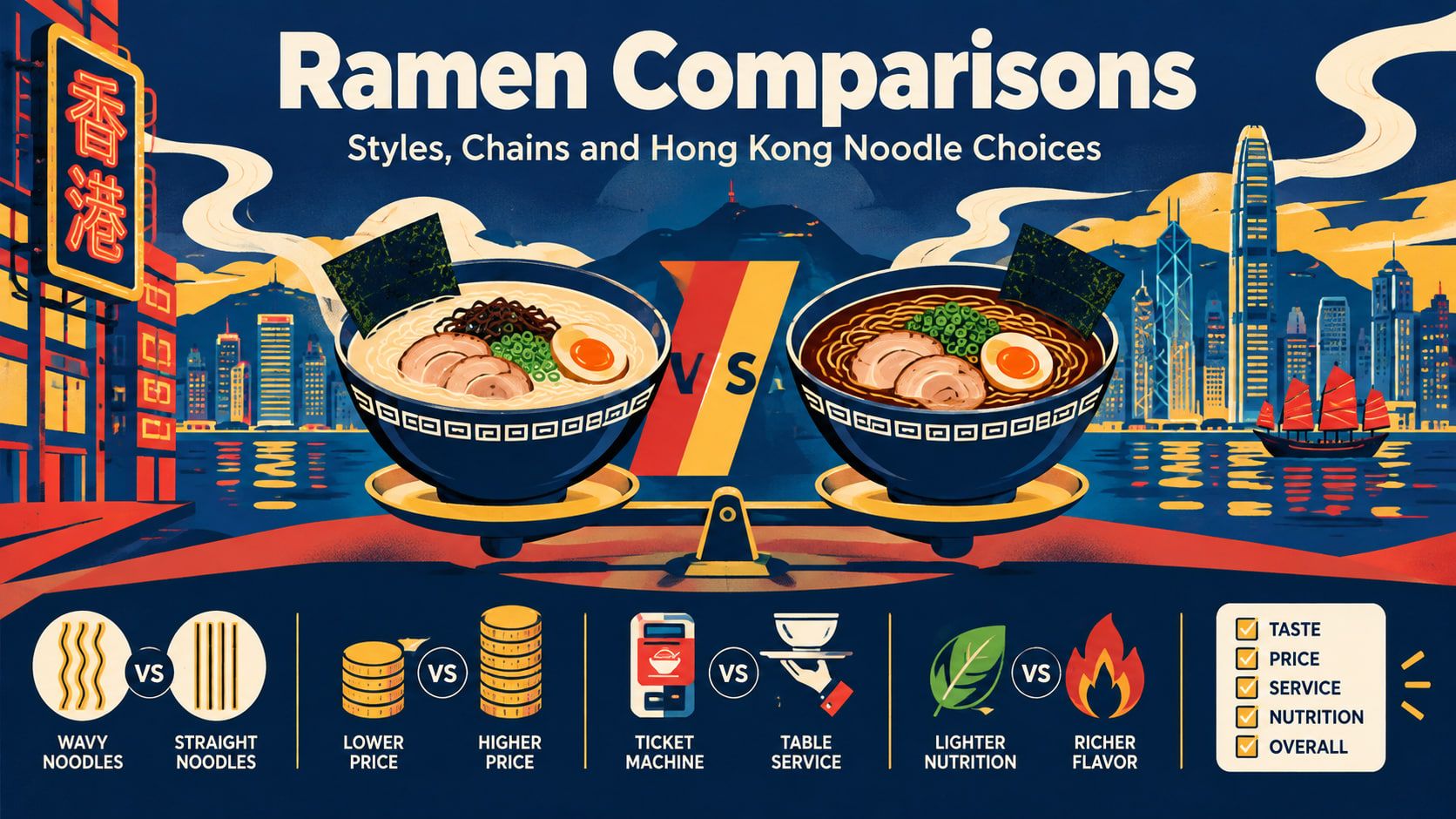
Choose with honest side-by-side trade-offs in broth, noodles, price tier, service format and nutrition—not a subjective winner.
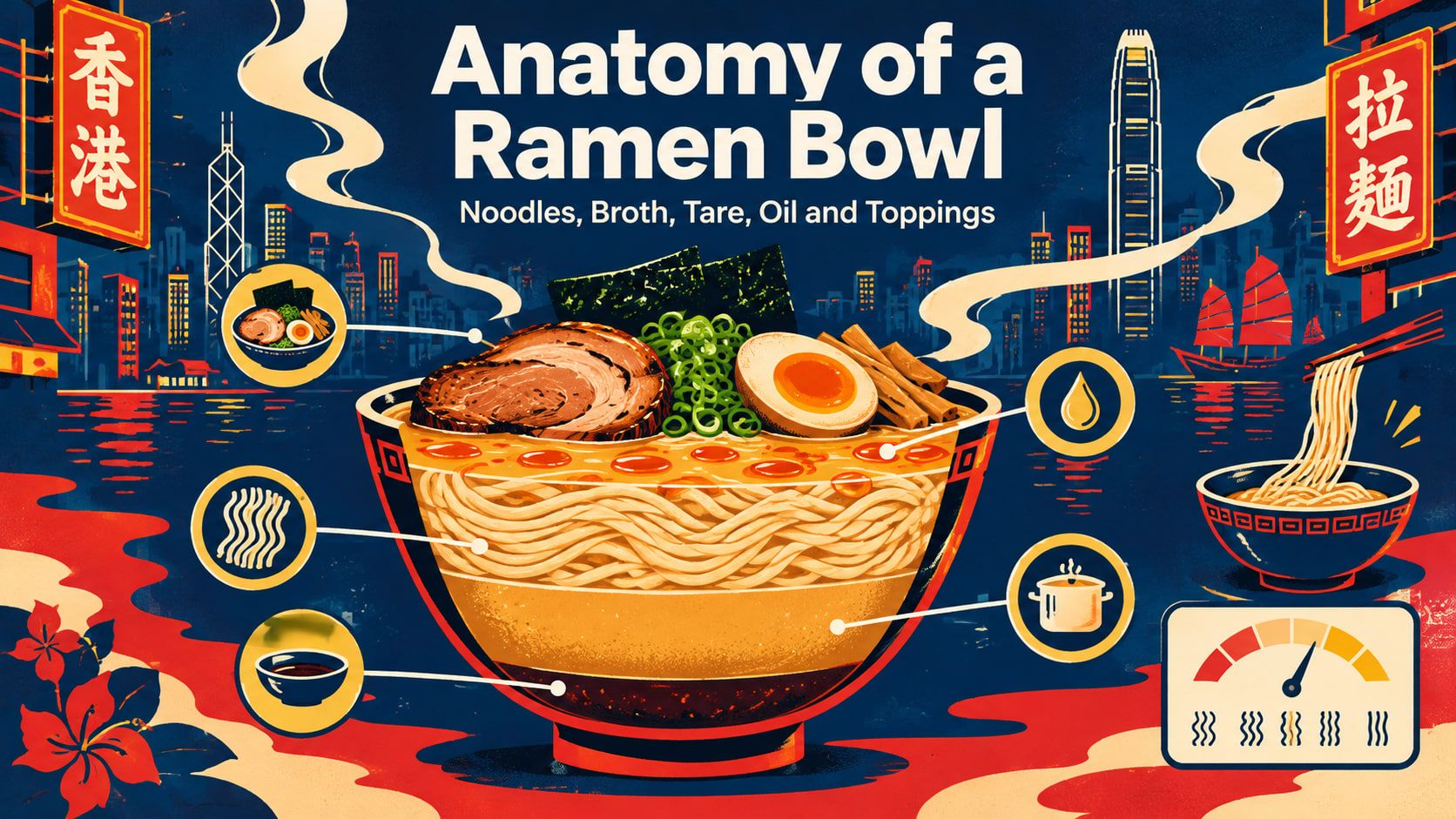
Understand the technical parts of a bowl so menu terms like chintan, paitan, kaedama and barikata become useful rather than confusing.

Follow new shops, closures, seasonal bowls and price changes through dated updates rather than stale evergreen claims.
Compare Ichiran, Ippudo and Butao through published menus, customisation, seating and ordering logistics without a winner.
Compare ramen, udon and soba through noodle ingredients, serving formats and the dietary questions worth checking.
Compare ramen and pho through noodles, broth, toppings and eating format rather than declaring one superior.
Compare ramen and Lanzhou lamian through preparation, noodles, broth and the context behind their names.
Explore ramen and Hong Kong wonton noodles through their ingredients, serving styles and practical meal differences.
Compare ramyeon and ramen through product formats, cooking methods and what the names commonly describe.
Compare tsukemen and ramen through dipping versus soup formats, noodle choices and the way each meal is eaten.