
Shio Ramen: Broth, Noodles, Toppings and Origin
Understand shio ramen through salt-based seasoning and broth choices without mistaking a clear appearance for low sodium.
Shio Ramen: Broth, Noodles, Toppings and Origin
Shio ramen is seasoned with a salt-based tare, the most transparent style in the family: because nothing masks the stock, the quality of the broth is fully exposed. This page explains trade-offs and characteristics; it is not a ranking.
Style hub: Ramen Types and Regional Styles. Component detail: Anatomy of a Ramen Bowl. Site hub: Ramen in Hong Kong: The Complete Local Guide.
What to expect. A pale, clear soup; delicate chicken, pork or seafood notes; thin to medium noodles; restrained toppings such as menma, nori, spring onion and sometimes yuzu peel or a pickled plum.
🧂 1. Tare
Salt dissolved with kombu, dried scallop or fish and sometimes chicken fat; subtle but still salty. See ramen tare and shio tare at home.
🍜 2. Broth and noodles
Usually chintan; Santouka pairs shio with a white tonkotsu for an Asahikawa hybrid. Noodles are thin to medium. See ramen broth and Santouka Hong Kong.
📍 3. Origin and Hong Kong
Hakodate is the classic shio city; Tokyo modernised it. In Hong Kong, Afuri’s yuzu-shio is the best-known example. See yuzu shio ramen and Afuri Hong Kong.
📊 4. Nutrition
Generally the lowest-fat mainstream style, but sodium is comparable to shoyu; see ramen calories by style and ramen sodium.
Shio is unforgiving. A weak stock has nowhere to hide, so shop quality varies more than in tonkotsu; try the shop’s shio only where it is the house speciality.
🧭 What to read next
Compare with shoyu versus shio; see the regional map in ramen types.
ramen types tonkotsu ramen shoyu ramen shio ramen miso ramen tsukemen mazesoba abura soba tantanmen chicken paitan shrimp ramen iekei ramen Hakata ramen Sapporo ramen
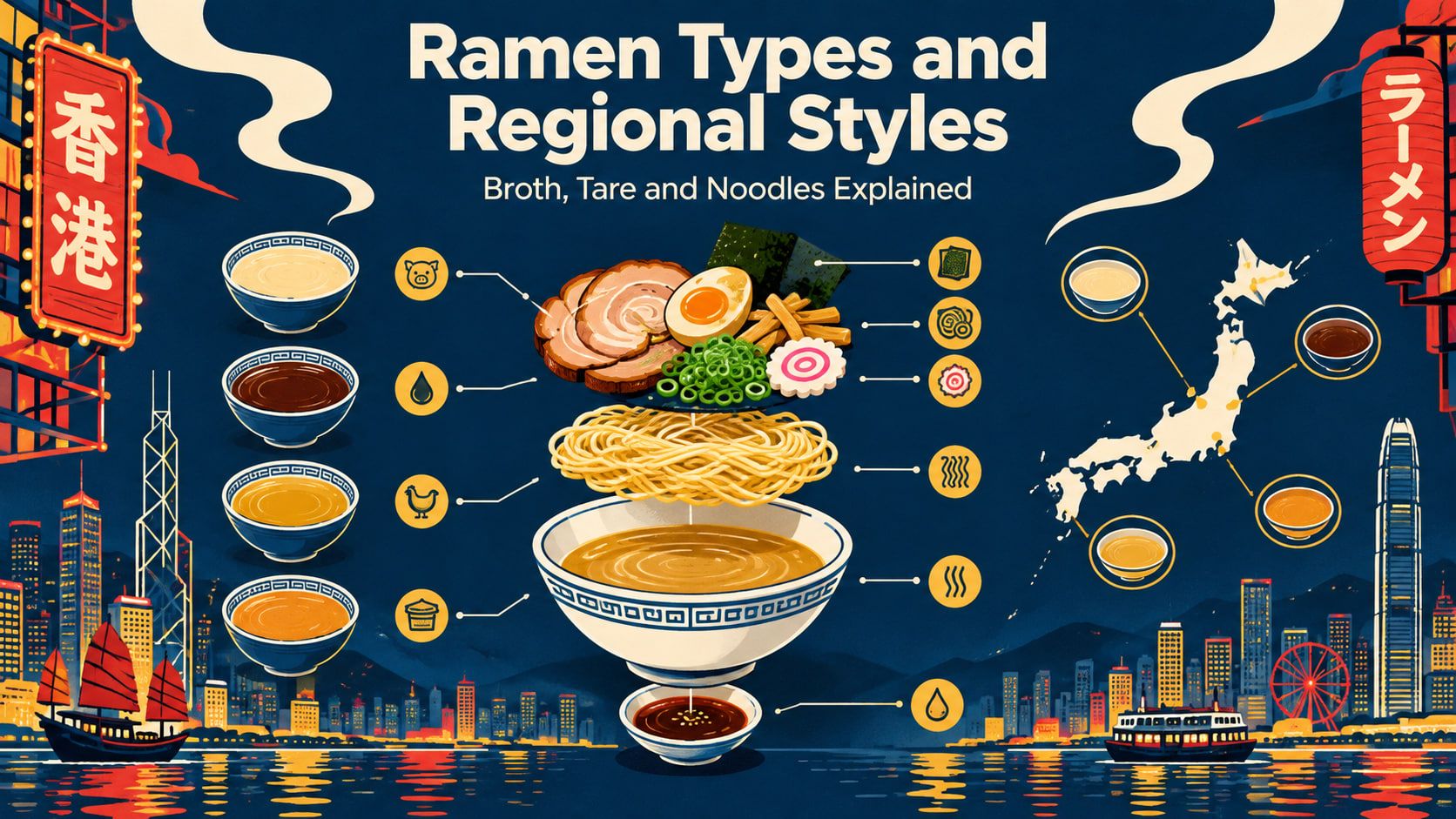
Learn to read any ramen menu confidently by understanding broth, tare, noodle texture, toppings and regional Japanese origins.

Plan a Japan ramen trip with city-specific styles, queues, museums and practical travel details.
Understand tonkotsu ramen through pork-bone broth, noodle options and the recipe details to ask about.
Explore shoyu ramen through soy-based seasoning, broth variations and the menu terms that help you choose.
Explore miso ramen through seasoning, noodle pairings and regional context before ordering or cooking it.
Understand tsukemen through its separate noodles and dipping broth, serving options and eating sequence.
Explore mazesoba through sauce, noodles and toppings, with practical guidance on mixing and ordering.
Understand abura soba through its soupless format, seasoning and the distinctions to check against mazesoba.
Explore tantanmen through sesame, chilli, recipe variations and the ingredient questions to ask before ordering.
Understand chicken paitan through broth preparation and the checks needed before assuming a bowl is pork-free.