
Ramen Tare: Shoyu, Shio and Miso Seasoning Explained
Understand ramen tare as a seasoning component and learn what its menu names tell you—and what they do not.
Ramen Tare: Shoyu, Shio and Miso Seasoning Explained
Tare is the concentrated seasoning ladled into the empty bowl before the broth — soy sauce, salt or miso blended with mirin, sake, kombu, dried fish and sometimes meat reductions. It is roughly a tenth of the liquid and most of the salt, which is why asking for less tare is the real low-sodium request.
Component hub: Anatomy of a Ramen Bowl. Styles: Ramen Types and Regional Styles. Site hub: Ramen in Hong Kong: The Complete Local Guide.
Three families, one job. Shoyu-dare: soy sauce base, brown, savoury-sweet. Shio-dare: salt dissolved with kombu, scallop or chicken fat, pale. Miso-dare: miso paste with garlic, ginger and sesame, opaque. The same broth with a different tare is a different ramen.
🫙 1. Shoyu-dare
Soy sauce (often a blend of dark, light and tamari) simmered with mirin, sake, kombu and katsuobushi, sometimes with chicken or pork drippings; Toyama’s black shoyu is the darkest expression. See shoyu ramen.
🧂 2. Shio-dare
Sea salt dissolved in a kombu-and-dried-seafood infusion, often with a little white soy for depth; it exposes the stock, so it is used where the broth is the star. See shio ramen and yuzu shio ramen.
🥣 3. Miso-dare
Blended miso (red, white, barley) worked with lard or oil, garlic, ginger, sesame and sometimes chilli; in Sapporo it is fried in the wok before the broth goes in. See miso ramen and spicy miso ramen.
🏠 4. Making and using tare at home
Tare keeps for weeks refrigerated and is the single biggest upgrade to a home bowl: about 30 ml per 300 ml of broth is the usual starting ratio. Recipes are in shoyu tare and shio tare for home ramen; the order of assembly (tare, oil, broth, noodles, toppings) is in anatomy of a ramen bowl.
Tare is where allergens and alcohol hide. Fish (katsuobushi), shellfish (dried scallop), wheat (soy sauce), soy and alcohol (mirin, sake) are common; see ramen allergens and halal-friendly ramen.
❓ FAQ
Can I ask for less tare? Yes; “usukuchi” or “aji usume” is understood at Japanese-run shops.
Is shio tare lower in sodium than shoyu? Not reliably; both are salt-driven. See shoyu versus shio.
Does tare contain MSG? Some do; many rely on kombu and dried fish for glutamate. See MSG and umami in ramen.
ramen noodles ramen broth ramen tare ramen toppings chashu ajitama menma nori ramen oil ramen glossary kansui kaedama ramen ticket machine
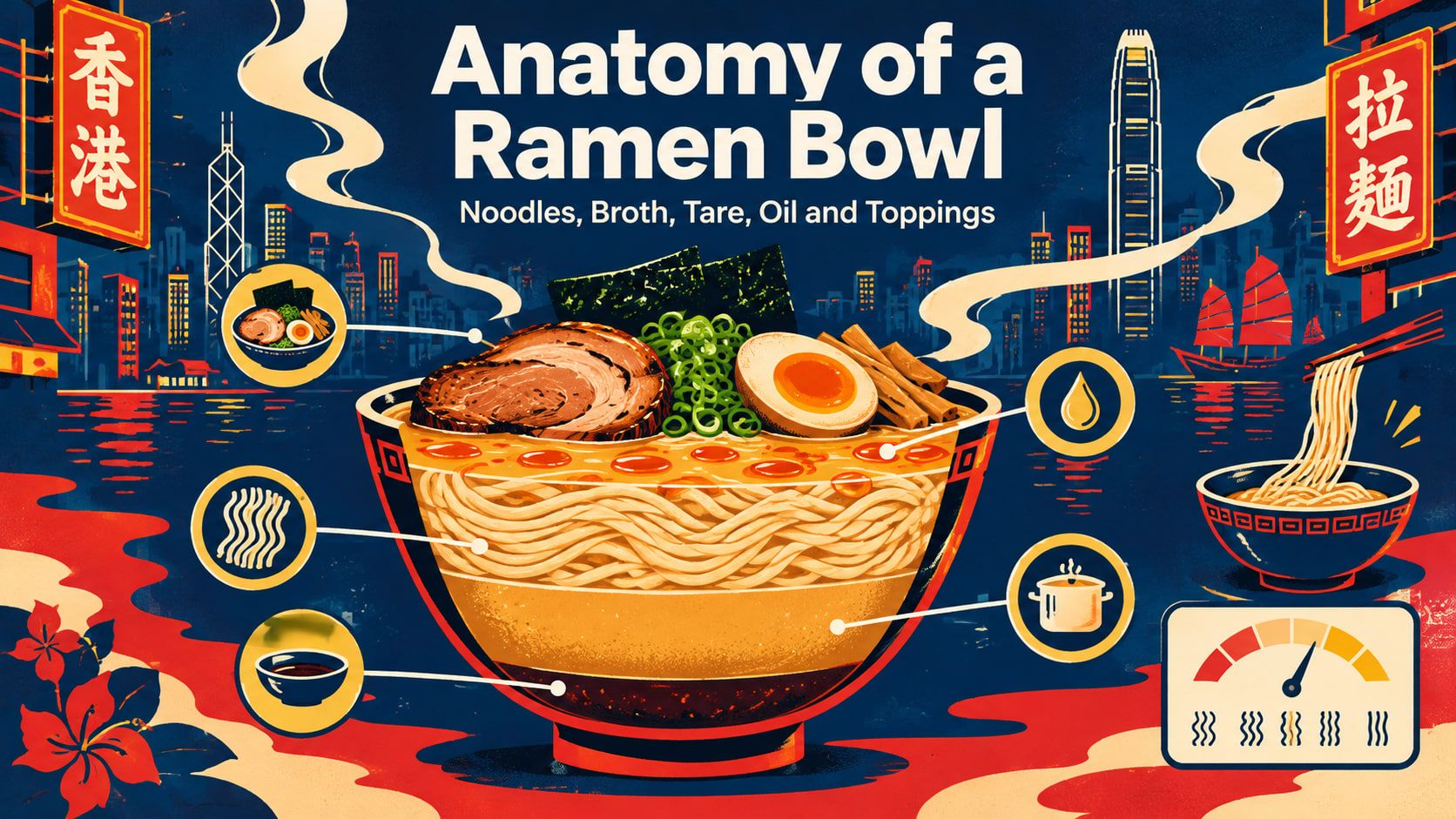
Understand the technical parts of a bowl so menu terms like chintan, paitan, kaedama and barikata become useful rather than confusing.

Get the direct answer first, then follow links to the deeper guide on ingredients, culture, calories or cooking.
Understand ramen noodles through ingredients, hydration, thickness and texture before buying or ordering.
Explore ramen broth through ingredients, clear and cloudy styles and the preparation choices behind the bowl.
Explore ramen aroma oil through its ingredients and role in the bowl, with questions for cooking and dietary checks.
Understand ramen chashu through cuts, preparation and portion choices before ordering or making it.
Explore ajitama ramen eggs through preparation, texture and the menu details that determine whether they are included.
Decode ramen toppings through their names, ingredients and role in the bowl before choosing extras.
Understand MSG in ramen through ingredient context and food-safety evidence rather than myths or blanket reassurance.
Decode ramen menu language with a plain-English glossary of broth, seasoning, noodles, toppings and refills.