
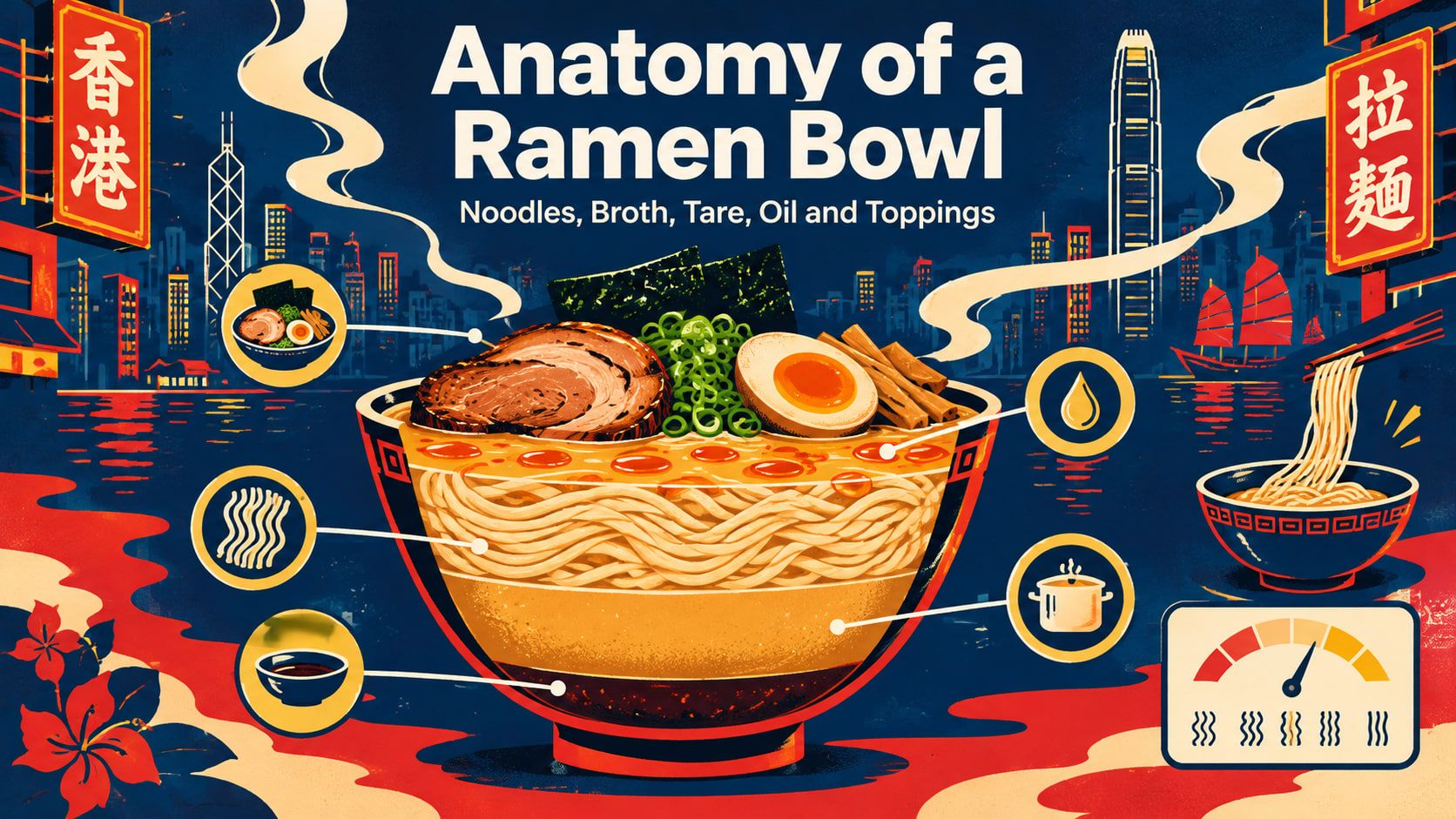
Anatomy of a Ramen Bowl: Noodles, Broth, Tare, Oil and Toppings
Understand the technical parts of a bowl so menu terms like chintan, paitan, kaedama and barikata become useful rather than confusing.
Ramen Bowl Anatomy: Noodles, Broth, Tare, Aroma Oil and Toppings
Understand what changes the flavour of a bowl—and what terms such as chintan, paitan, kaedama and barikata actually help you choose.
A useful way to understand soup ramen is to separate noodles, broth, tare, aroma oil and toppings. Two bowls can share a name while differing in every other component. “Shoyu ramen”, for example, names a seasoning direction, not a complete recipe.
This hub explains those parts, introduces useful technical terms and links to component guides. It is different from the ramen styles hub: styles organise categories, while anatomy explains what goes into the bowl.
Choose a component:
Texture or firmness → noodles.
Clear versus opaque soup → broth.
Salt, soy sauce or miso flavour → tare.
Garlic, chilli or finishing-fat aroma → aroma oil.
Meat, egg, bamboo shoots or seaweed → toppings.
Another portion of noodles → kaedama, where the shop offers it.
🥣 1. Five components, different jobs
| Component | Main role | Detailed guide |
|---|---|---|
| Noodles | Bite, elasticity and how soup or sauce is carried. | Ramen noodles |
| Broth | The stock base and much of the soup’s body. | Ramen broth |
| Tare | Concentrated seasoning and the main salt-led flavour direction. | Ramen tare |
| Aroma oil | Finishing aroma, flavour and a sense of fat or richness. | Aroma oil |
| Toppings | Additional flavours, textures and ingredients. | Ramen toppings |
The boundaries are useful for learning, not a mandatory kitchen workflow. A shop may combine seasoning with stock in advance, and a retail soup pack may already include oil and tare.
📖 2. Technical terms made useful
- Chintan: clear broth. It describes appearance and preparation style, not an absence of meat or fat.
- Paitan: opaque, often creamy-looking broth. It can be made with chicken as well as pork and does not necessarily contain dairy.
- Kansui: alkaline ingredients used in ramen noodles to contribute characteristic texture.
- Kaedama: an additional portion of noodles for the soup remaining in your bowl, not a second complete ramen.
- Barikata: an extra-firm noodle request, particularly associated with thin-noodle ordering. Available firmness options and labels vary by shop.
These terms are not universal cooking times, ingredient guarantees or quality grades. Ask what a restaurant actually offers rather than assuming every menu uses the same scale. Continue with the ramen glossary and Japanese ordering vocabulary.
🍜 3. Noodles: thickness, firmness and kaedama are separate choices
Ramen noodles commonly combine wheat flour, water, salt and alkaline ingredients. Thickness, shape and elasticity affect the eating experience, while cooking changes firmness. Thin noodles are not automatically firmer than thick noodles, and extra-firm is not inherently more authentic or better.
As noodles sit in hot soup they continue to change texture. Ichiran’s official system guide explains kaedama as a way to enjoy another portion without leaving all the noodles in the broth from the start, and asks diners to retain at least half the soup for a refill.
Before ordering a refill, ask whether it is available, what it costs and how to request it. One operator’s system is not a rule for every restaurant. Explore noodle characteristics and Hakata ramen traditions.
🧂 4. Broth, tare and aroma oil: do not treat them as one ingredient
Broth establishes the stock direction; tare establishes much of the seasoning; aroma oil adds a finishing layer. Chicken broth with soy-sauce tare and garlic oil can taste very different from the same stock with salt-led tare and another fat.
Aroma oil does not mean sesame oil specifically. It can refer to different seasoned oils or animal fats. Likewise, asking for less oil is not the same as asking for less salt.
Read broth, tare and aroma oil separately before trying to diagnose why a bowl seems rich, salty or strongly aromatic.
🥚 5. Toppings: flavour, texture and what the basic bowl includes
Chashu brings meat, fat and seasoning; ajitama adds a seasoned egg; other toppings include bamboo shoots, wood-ear mushrooms, spring onions and seaweed.
A standard bowl, special bowl and promotional photograph may show different quantities. Ask what is included before adding extras. Egg seasoning and yolk doneness are also different characteristics; the name alone does not promise one precise texture.
📝 6. Read the menu component by component
Ask: “What stock, tare and finishing oil does this bowl use? What noodles and toppings are included? Are firmness choices or noodle refills available? Can any component be adjusted, and what costs extra?”
Removing pork slices does not remove pork from the broth, and omitting an egg topping does not establish that the noodles or sauces are egg-free. For allergies or other restrictions, check every component and preparation arrangements. See ramen allergens.
❓ 7. FAQ and sources
Is broth the same as tare?
No. Broth is the stock base; tare is concentrated seasoning. They may be prepared separately or combined before serving.
Does barikata mean extra noodles?
No. Barikata concerns firmness. Kaedama concerns an additional noodle portion.
Do I need to make all five components myself?
No. Purchased noodles and prepared soup can be a practical starting point. Check which components the product already includes.
The component framework draws on Serious Eats’ Guide to Ramen Varieties; kaedama procedures are illustrated with Ichiran’s published system. Terminology and shop procedures vary. This page is an explanatory guide, not a universal recipe, ingredient declaration or first-hand tasting report.
Next: Ramen styles · Home cooking · Ramen in Hong Kong
"ramen noodles ramen broth ramen tare ramen toppings chashu ajitama menma nori ramen oil ramen glossary kansui kaedama ramen ticket machine

Get the direct answer first, then follow links to the deeper guide on ingredients, culture, calories or cooking.
Understand ramen noodles through ingredients, hydration, thickness and texture before buying or ordering.
Explore ramen broth through ingredients, clear and cloudy styles and the preparation choices behind the bowl.
Understand ramen tare as a seasoning component and learn what its menu names tell you—and what they do not.
Explore ramen aroma oil through its ingredients and role in the bowl, with questions for cooking and dietary checks.
Understand ramen chashu through cuts, preparation and portion choices before ordering or making it.
Explore ajitama ramen eggs through preparation, texture and the menu details that determine whether they are included.
Decode ramen toppings through their names, ingredients and role in the bowl before choosing extras.
Understand MSG in ramen through ingredient context and food-safety evidence rather than myths or blanket reassurance.
Decode ramen menu language with a plain-English glossary of broth, seasoning, noodles, toppings and refills.