

Ramen Delivery in Hong Kong: Which Bowls Travel Well
Compare ramen delivery through menu charges, delivery arrangements, packaging and instructions for the arriving meal.
Ramen Delivery in Hong Kong: Which Bowls Travel Well
Ramen delivery can be excellent or ruined before the bag reaches the lift. Thick noodles, separate broth and brothless bowls travel; thin Hakata noodles in hot soup do not. This guide uses published operator information and current listings, not rankings or anonymous “best” claims.
For district context see Ramen Near Me in Hong Kong; for the broader brand map see Hong Kong Ramen Restaurants and Chains; for the site hub see Ramen in Hong Kong: The Complete Local Guide.
The 15-minute rule. Keep the route short, choose noodles-separated packaging if offered, and reheat the broth to a boil. Tonkotsu survives best, mazesoba and tsukemen better still, while thin straight noodles lose their bite fastest.
🛵 1. Choose the right style
Mazesoba is the safest delivery bowl because it has no broth; tsukemen is next because noodles and dip are separate; creamy tonkotsu is more forgiving than clear shoyu. The formats are explained in mazesoba, tsukemen and tonkotsu ramen.
📦 2. Order packaging, not only flavour
Choose a shop that sends broth and noodles separately. Open the bag immediately, move noodles out of hot liquid and reheat broth first. Shop kits, rather than ready bowls, often deliver better results; see frozen and chilled ramen kits.
♨️ 3. Reheat correctly
Bring broth to a rolling boil in a pan, refresh cold noodles briefly in boiling water and add toppings last. The full method is in how to reheat ramen.
Do not hold delivered ramen at room temperature. Eat promptly; warm broth, soft egg and pork are food-safety risks as well as texture problems.
🧭 What to read next
For late orders see late-night ramen; for home alternatives see how to make ramen at home and instant noodles in Hong Kong.
Hong Kong ramen ramen near me ramen by district Causeway Bay ramen Central ramen Wan Chai ramen Tsim Sha Tsui ramen Mong Kok ramen Tsuen Wan ramen late-night ramen cheap ramen ramen delivery solo ramen Michelin ramen
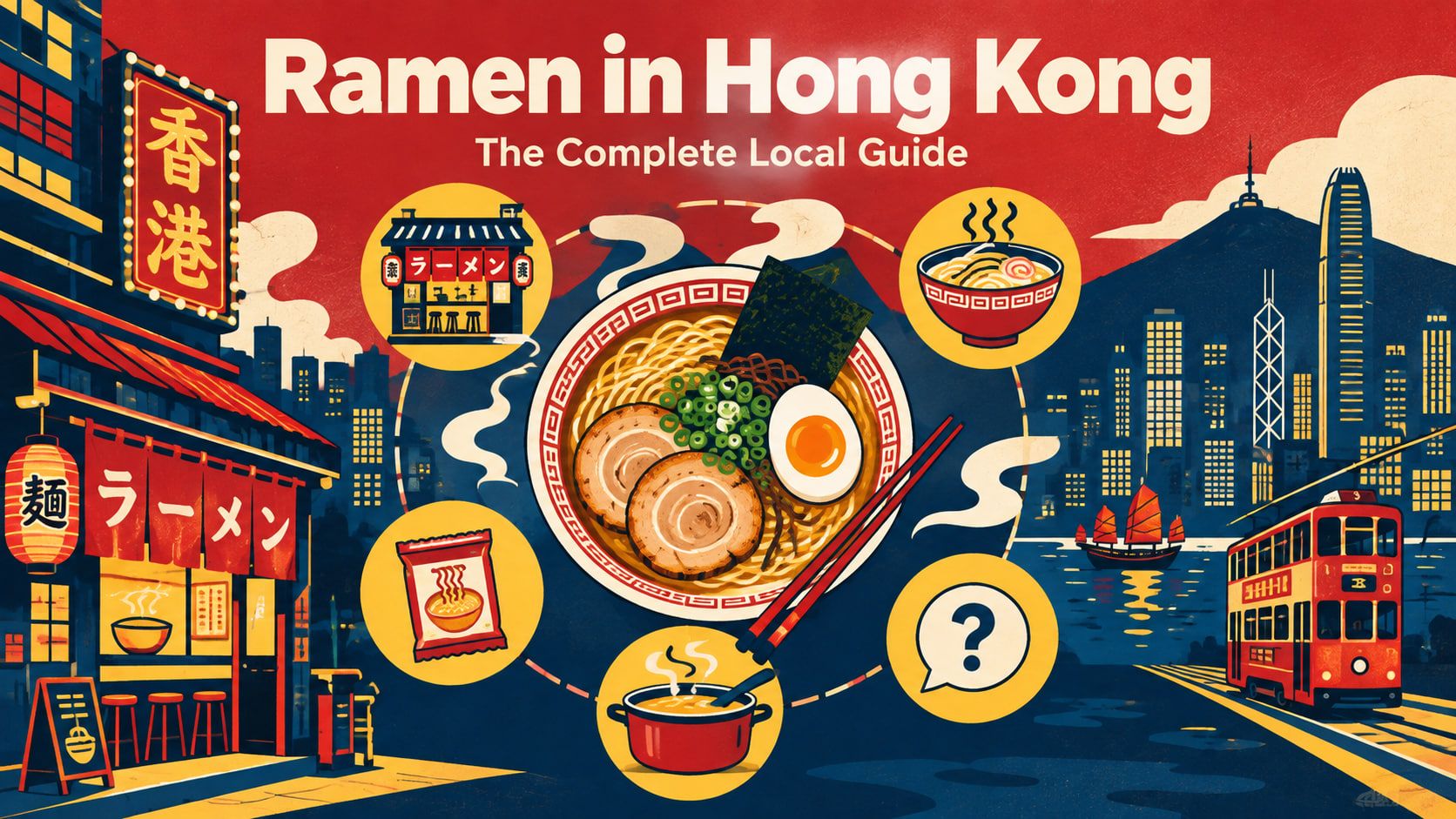
A Hong Kong-first ramen guide connecting local restaurants, Japanese styles, instant noodles, home cooking and the practical questions people ask before choosing a bowl.
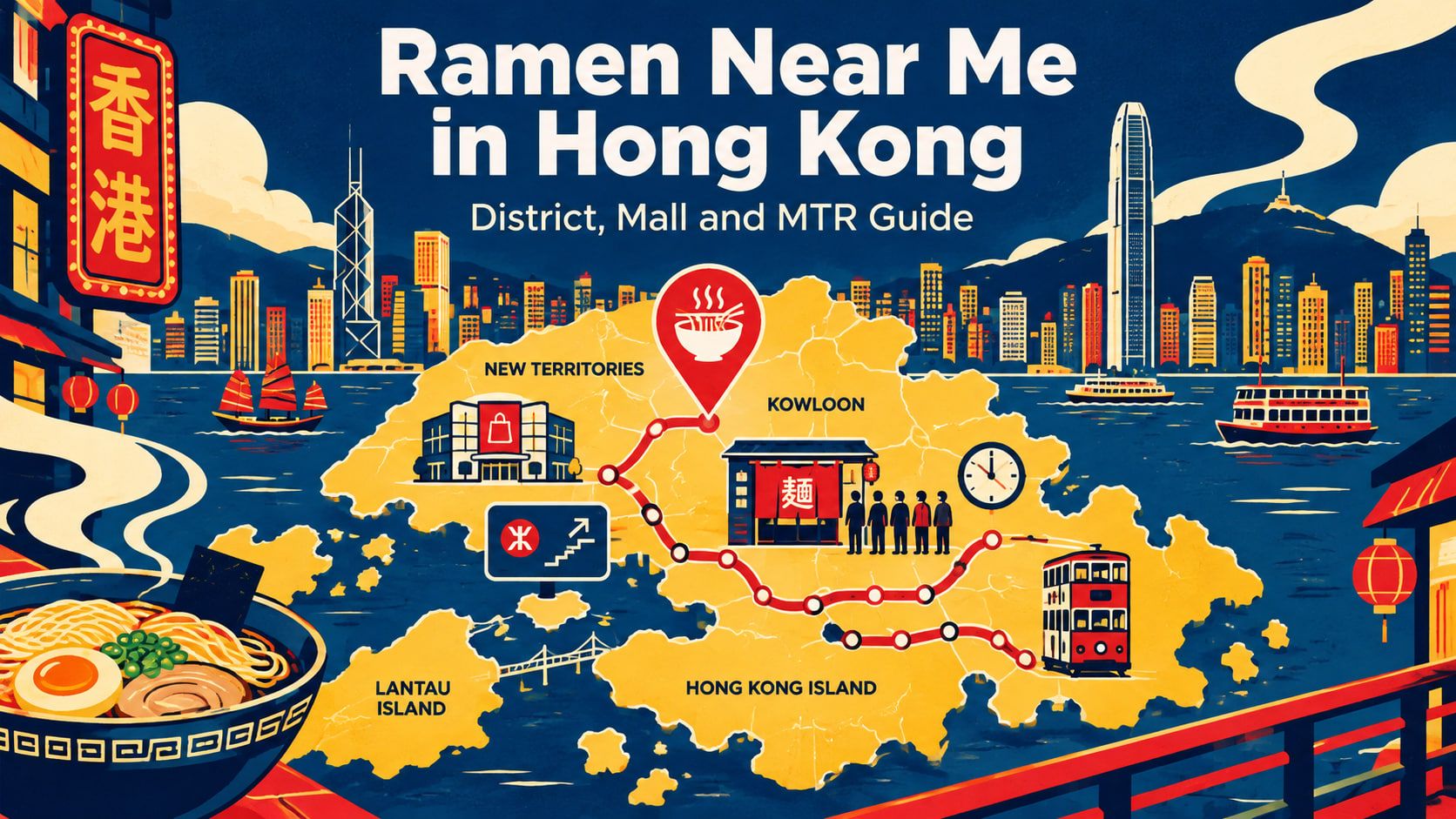
Use this location-first guide to choose an area, plan around an MTR exit and avoid arriving at a closed or over-queued ramen shop.

Choose ramen according to the moment: late shift, tight budget, solo lunch, family outing or rainy-night delivery.

Understand why ramen is eaten fast, slurped loudly, ordered by ticket and discussed with Japanese vocabulary.
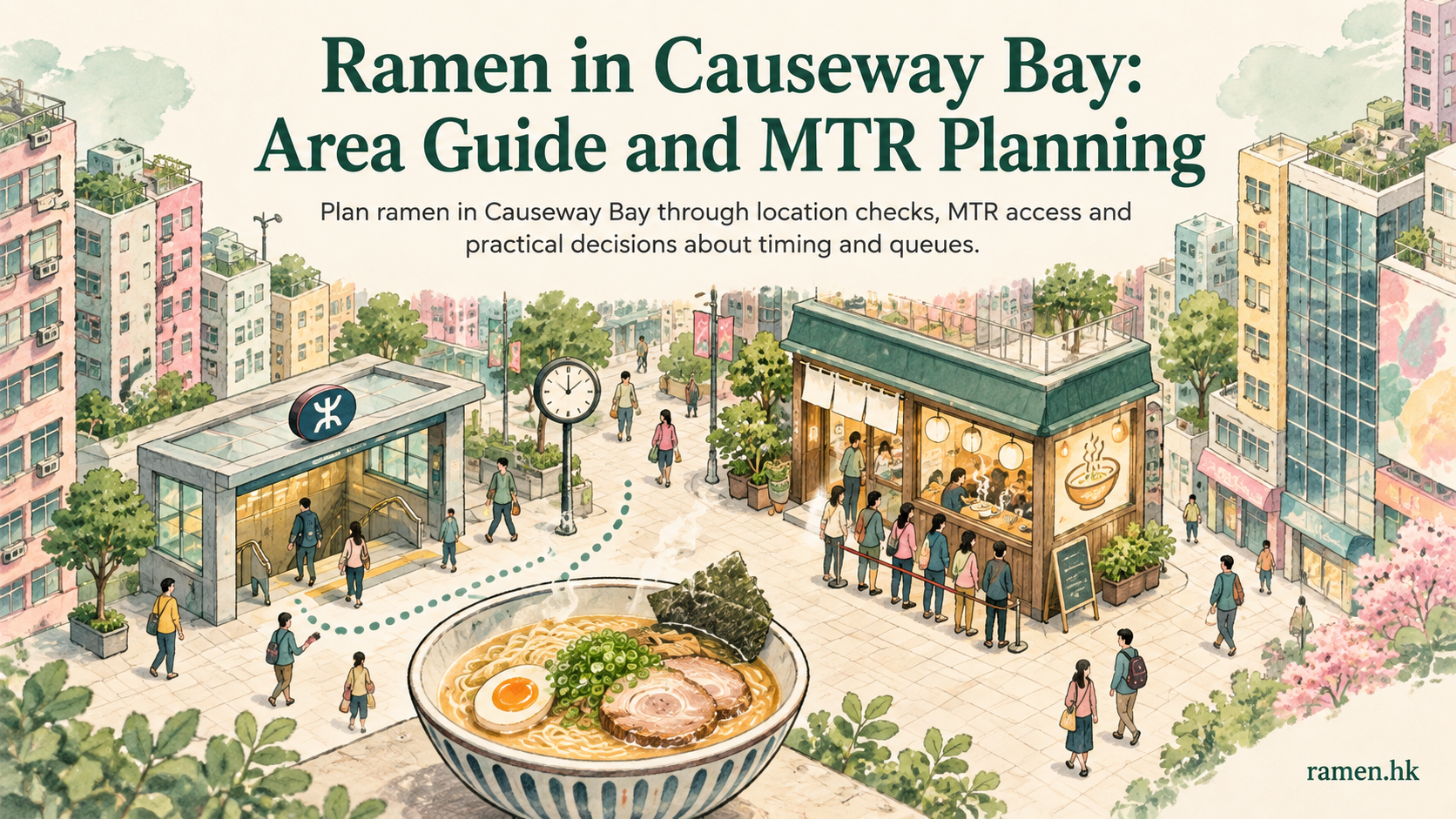
Plan ramen in Causeway Bay through location checks, MTR access and practical decisions about timing and queues.
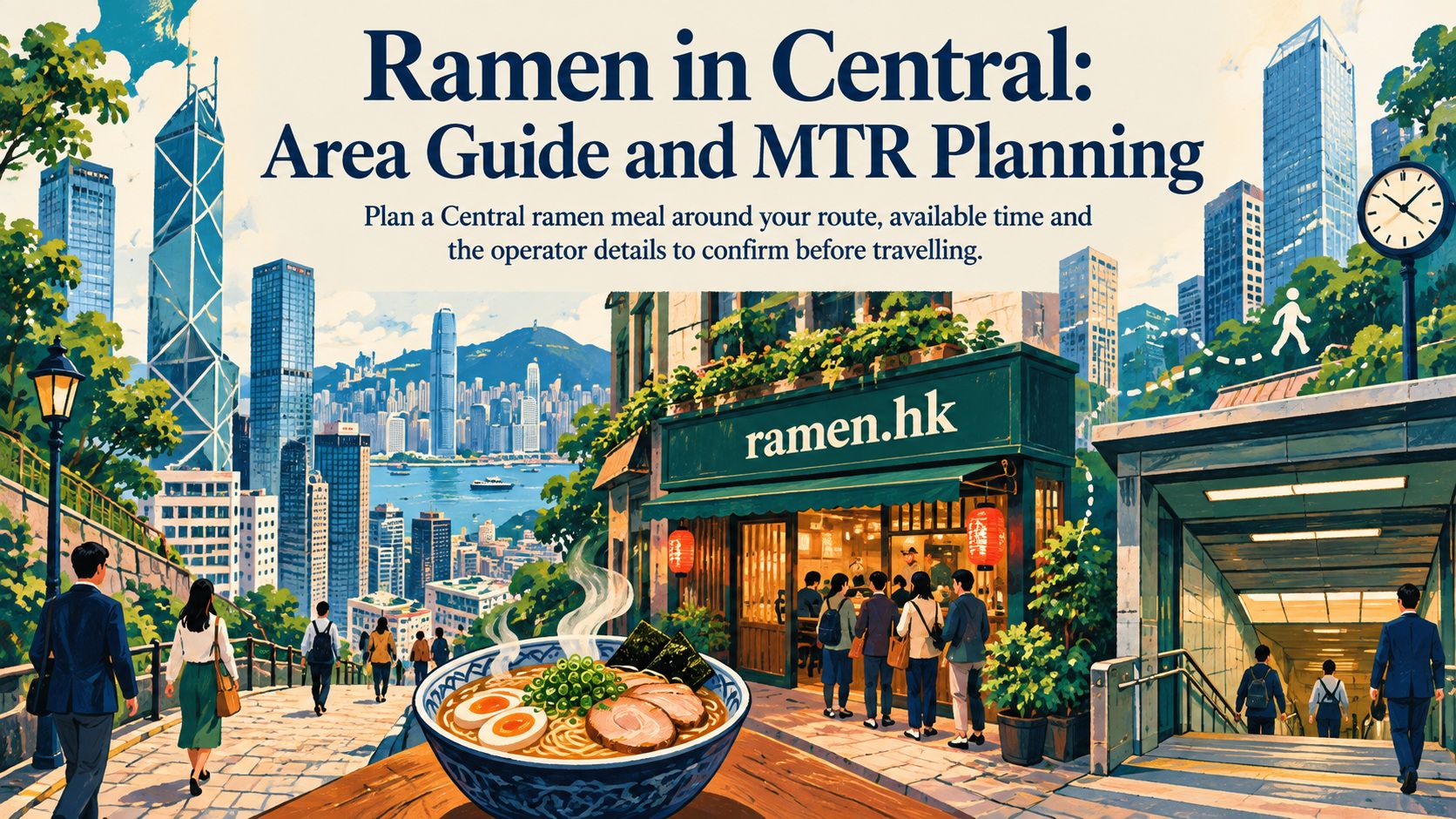
Plan a Central ramen meal around your route, available time and the operator details to confirm before travelling.
Explore ramen in Wan Chai with area planning, MTR access and checks on menus, hours and queues.
Plan ramen in Tsim Sha Tsui through station access, branch verification and a workable fallback for your visit.
Explore Mong Kok ramen with attention to the actual address, building access, opening arrangements and waiting time.
Plan a Sheung Wan ramen visit by checking the location, menu and service window before walking over.