Sapporo Miso Ramen: Broth, Noodles, Toppings and Origin
Explore Sapporo miso ramen through its preparation, noodles and toppings without assuming every shop follows one recipe.
Sapporo Miso Ramen: Broth, Noodles, Toppings and Origin
Sapporo miso ramen is the original miso bowl: wok-fried vegetables and pork deglazed with pork stock, miso tare, thick curly noodles, and often a lard cap, butter and corn. It is the regional style with the cleanest documented origin in Japan, and the model for every miso ramen Hong Kong serves.
Style hub: Ramen Types and Regional Styles. Components: Anatomy of a Ramen Bowl. Site hub: Ramen in Hong Kong: The Complete Local Guide.
What to expect. A hot, opaque, tan soup with a shimmering fat layer; bean sprouts, cabbage, onion and minced pork fried in the wok first; thick yellow curly noodles; optional butter and sweetcorn; ginger grated on top at many shops.
🍲 1. Broth and tare
The Sapporo method fries garlic, ginger, pork and vegetables in lard, adds miso tare, then pours in pork stock and brings it to a boil in the wok; the lard seals heat for the winter walk home. Detail in miso ramen and aroma oil.
🍜 2. Noodles and toppings
Thick, curly, egg-rich noodles developed by Sapporo noodle makers for this soup; toppings are vegetables, pork, corn, butter, menma and spring onion. See ramen noodles.
📜 3. Origin
Created at Aji no Sanpei in Sapporo by Morito Omiya in the mid-1950s (sources range from 1954 to 1961), taken national by the 1972 Winter Olympics and by instant packets; Sumire added the lard-cap style in 1964. Visiting detail is in Sapporo ramen.
🇭🇰 4. In Hong Kong and at home
Hong Kong’s chains carry miso bowls, and Ramen Iroha lists a Sapporo miso ramen; see Ramen Iroha. The cold-weather logic also makes it the city’s winter order; see ramen trends and seasons.
The lard cap hides the temperature. The soup under the fat layer is near boiling; let it stand before drinking.
❓ 5. FAQ
Is Sapporo miso the same as all miso ramen? It is the original; other regions and shops have lighter or spicier versions.
Why is it so hot? The wok method and lard layer are designed for a Hokkaido winter.
Is butter traditional? Common since the 1960s tourist boom, but optional.
ramen types tonkotsu ramen shoyu ramen shio ramen miso ramen tsukemen mazesoba abura soba tantanmen chicken paitan shrimp ramen iekei ramen Hakata ramen Sapporo ramen
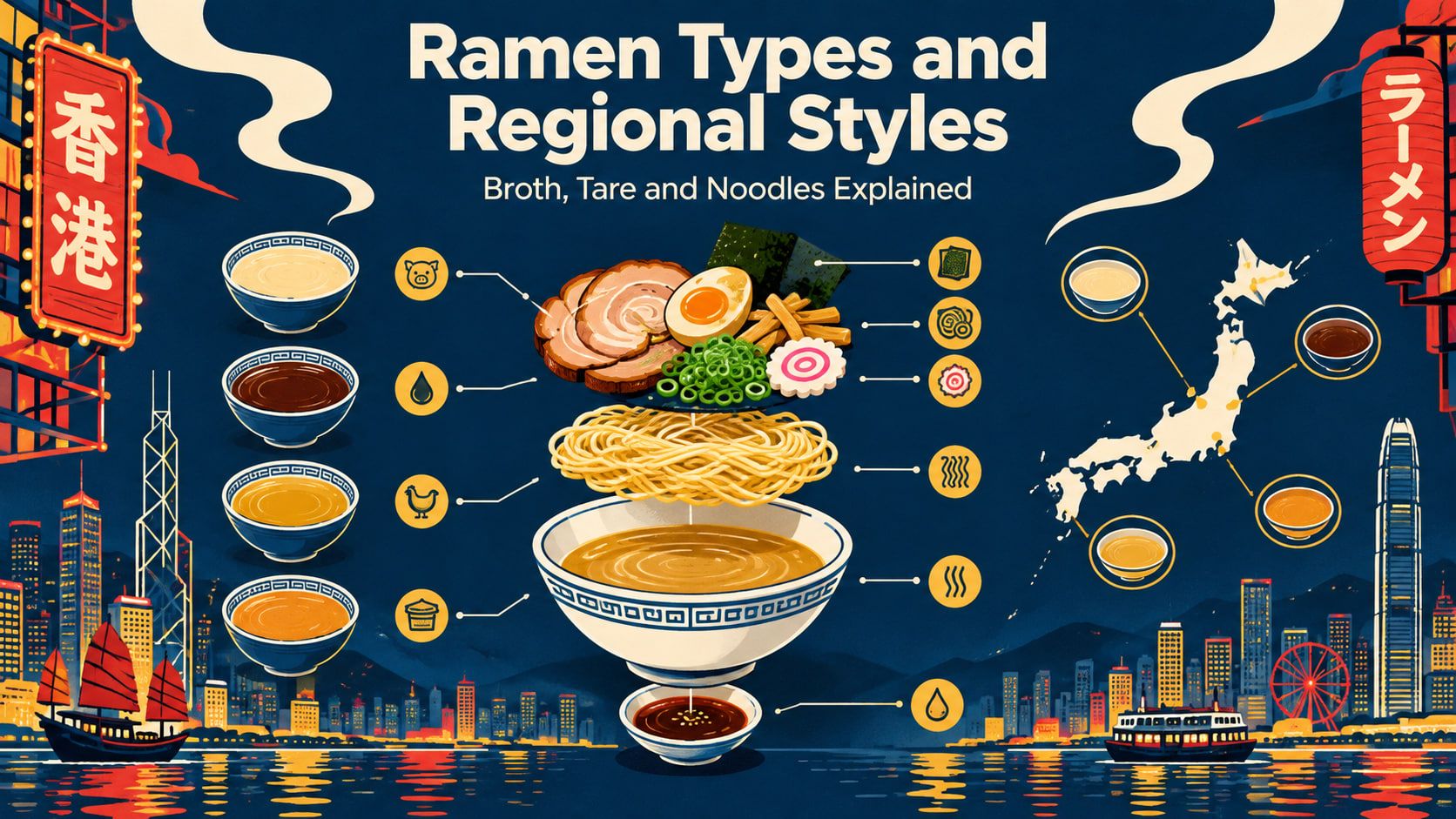
Learn to read any ramen menu confidently by understanding broth, tare, noodle texture, toppings and regional Japanese origins.

Plan a Japan ramen trip with city-specific styles, queues, museums and practical travel details.
Understand tonkotsu ramen through pork-bone broth, noodle options and the recipe details to ask about.
Explore shoyu ramen through soy-based seasoning, broth variations and the menu terms that help you choose.
Understand shio ramen through salt-based seasoning and broth choices without mistaking a clear appearance for low sodium.
Explore miso ramen through seasoning, noodle pairings and regional context before ordering or cooking it.
Understand tsukemen through its separate noodles and dipping broth, serving options and eating sequence.
Explore mazesoba through sauce, noodles and toppings, with practical guidance on mixing and ordering.
Understand abura soba through its soupless format, seasoning and the distinctions to check against mazesoba.
Explore tantanmen through sesame, chilli, recipe variations and the ingredient questions to ask before ordering.