Ramen Noodles: Kansui, Thickness, Firmness and Kaedama
Understand ramen noodles through ingredients, hydration, thickness and texture before buying or ordering.
Ramen Noodles: Kansui, Thickness, Firmness and Kaedama
Ramen noodles are wheat noodles made with kansui, an alkaline solution of sodium and potassium carbonate, which is what separates them from udon, pasta and Hong Kong egg noodles. Kansui is the reason the noodles are yellow, springy and faintly “eggy” even when there is no egg in the dough.
Component hub: Anatomy of a Ramen Bowl. Styles: Ramen Types and Regional Styles. Site hub: Ramen in Hong Kong: The Complete Local Guide.
The four things to know. Kansui sets the texture. Hydration (30–40% water) and thickness decide the bite. Firmness is yours to order — barikata, kata, futsu, yawa. Kaedama is a noodle-only refill at Hakata-style shops.
🧪 1. What kansui does
Food-science studies show that alkaline salts raise the dough’s pH, tighten the gluten network and turn the flour’s natural flavonoids yellow; cooked alkaline noodles are measurably harder, chewier and less sticky than plain wheat noodles. Potassium carbonate tends to firm and colour the noodle; sodium carbonate makes it softer and chewier, and makers blend the two. The baking-soda trick for spaghetti works because heating sodium bicarbonate converts it to sodium carbonate; see baking-soda ramen noodles.
📏 2. Thickness and hydration
Thin, low-hydration straight noodles (Hakata) cook in under a minute and soften fast; medium wavy noodles (Tokyo shoyu) hold clear soup; thick, high-hydration curly noodles (Sapporo miso) and the thickest tsukemen noodles stand up to heavy soup or a dip. Styles are mapped in ramen types.
🎫 3. Firmness and kaedama
At Hakata shops you choose barikata (very firm), kata (firm), futsu (standard) or yawa (soft); firmer is safer if you eat slowly. Kaedama is a second portion of noodles added to leftover broth, usually for a small charge; ask before the soup goes cold. The ordering words are in the ramen glossary and the sheet in how to use a ramen order sheet.
🛒 4. Buying and making in Hong Kong
Fresh ramen noodles are sold at Japanese supermarkets, Don Don Donki and some wet-market stalls; see where to buy ramen noodles in Hong Kong. Making them needs kansui powder or baked baking soda and ideally a pasta roller: homemade ramen noodles.
Gluten is the point. Ramen noodles are wheat and cannot be made gluten-free without becoming a different noodle; see gluten-free ramen in Hong Kong.
❓ FAQ
Do ramen noodles contain egg? Usually not; the yellow comes from kansui. Some fresh brands add egg, so check.
Why do the noodles go soft so fast? Thin alkaline noodles keep absorbing hot soup; eat promptly or order firmer.
What is the difference from Hong Kong egg noodles? Both are alkaline, but egg noodles are thinner, drier and egg-based, made for a snap rather than chew. See ramen versus wonton noodles.
ramen noodles ramen broth ramen tare ramen toppings chashu ajitama menma nori ramen oil ramen glossary kansui kaedama ramen ticket machine
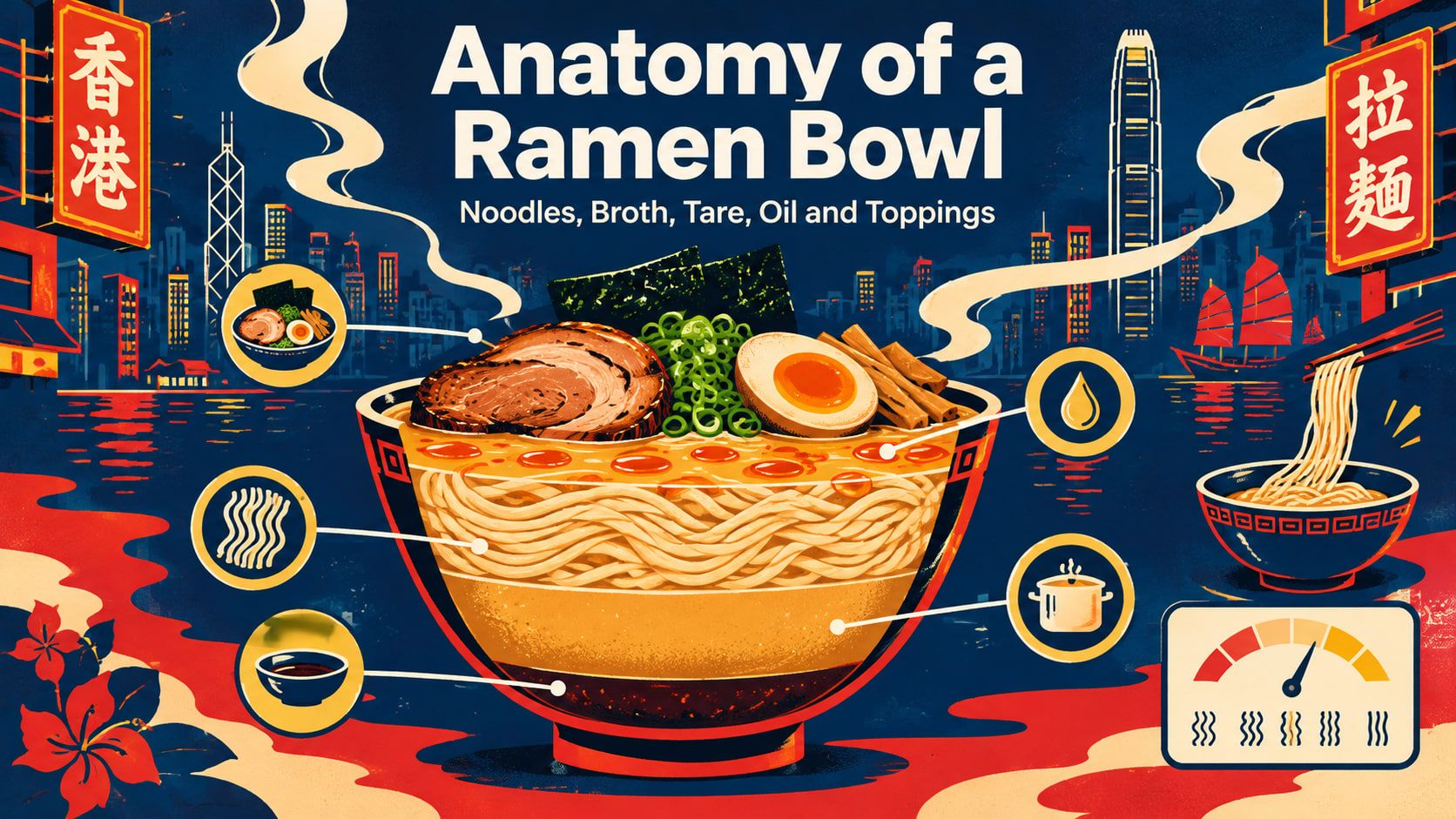
Understand the technical parts of a bowl so menu terms like chintan, paitan, kaedama and barikata become useful rather than confusing.

Get the direct answer first, then follow links to the deeper guide on ingredients, culture, calories or cooking.
Explore ramen broth through ingredients, clear and cloudy styles and the preparation choices behind the bowl.
Understand ramen tare as a seasoning component and learn what its menu names tell you—and what they do not.
Explore ramen aroma oil through its ingredients and role in the bowl, with questions for cooking and dietary checks.
Understand ramen chashu through cuts, preparation and portion choices before ordering or making it.
Explore ajitama ramen eggs through preparation, texture and the menu details that determine whether they are included.
Decode ramen toppings through their names, ingredients and role in the bowl before choosing extras.
Understand MSG in ramen through ingredient context and food-safety evidence rather than myths or blanket reassurance.
Decode ramen menu language with a plain-English glossary of broth, seasoning, noodles, toppings and refills.