
Sapporo Ramen: Miso, Butter Corn and Ramen Alley
Explore Sapporo ramen through regional context, access, weather considerations and individual shop-hour checks.
Sapporo Ramen: Miso, Ramen Yokocho and Winter Planning
Sapporo is the city most closely tied to miso ramen, and for Hong Kong visitors heading to Hokkaido for snow, seafood or a summer escape, it is the easiest place in Japan to compare the style at its source. The practical difference from a Hong Kong miso bowl is the method: Sapporo shops typically stir-fry vegetables and pork in a wok before adding the miso soup, which is why the bowl arrives hotter and oilier than most imports, and why a thin layer of fat keeps the soup warm in sub-zero weather. Thick, wavy, yellow noodles complete the style.
This page is for Hong Kong travellers planning a Sapporo stop who want to know where the ramen is clustered, how the famous alley works, and what to verify before queueing in the cold. It sits under ramen travel in Japan and the style is explained in depth on Sapporo miso ramen. It is a planning guide, not a ranking.
The winter rule. In Sapporo the queue is often outdoors in snow, so timing matters more than in Tokyo or Osaka: arrive before the lunch surge, wear proper footwear for icy pavements, and treat a small indoor waiting area as a reason to choose one shop over another.
🍜 1. What makes Sapporo miso ramen distinct
Visit Hokkaido's official feature on Sapporo ramen credits the shop Aji no Sanpei with originating the style, describing vegetables stir-fried in a Chinese-style pot before hot miso soup is poured over. The noodle side of the story belongs to local manufacturer Nishiyama Seimen, whose company history describes developing the wavy, chewy, egg-enriched Sapporo noodle and supplying Aji no Sanpei's founder. Butter and sweetcorn are optional toppings, not defaults, and many shops serve shoyu and shio alongside miso. The general category is covered on miso ramen and the noodle differences on ramen noodles.
Spicy miso variants are common and tend to be hotter than Hong Kong versions; see spicy miso ramen before ordering the top heat level.
📍 2. Where the ramen is concentrated
- Susukino, the entertainment district, holds Ganso Sapporo Ramen Yokocho, a narrow alley of small counters. Both the Sapporo tourism board and Visit Hokkaido list its opening hours as varying by shop, so there is no single alley timetable.
- The Odori and Sapporo Station area has ramen inside department stores and station buildings, which is useful in heavy snow. Visit Hokkaido's feature places Aji no Sanpei on the fourth floor of a stationery store about two minutes from Odori Station; a 2026 third-party listing adds that it is cash only, takes no reservations and closes on Mondays, which should be verified on the day.
- Shin-Chitose Airport has a ramen court for arrivals and departures; useful as a fallback if the city schedule slips.
- Ramen Yokocho counters are tiny, often under ten seats, so groups wait longer than pairs.
🎟️ 3. Ordering, payment and language
Ticket machines are common in station and department-store shops; smaller alley counters may take orders at the counter and be cash only. Carry yen. The steps for machines are on how to use a ramen ticket machine and the key words, including the miso, shoyu and shio distinctions, are on Japanese ramen vocabulary. Counter manners are on ramen etiquette.
⏰ 4. Timing and seasonal pressure
Sapporo's visitor numbers surge during the Snow Festival in February and again in summer, and Ramen Yokocho is a standard stop for tour groups, so lunch and early-dinner queues there can be long. Shops in office areas follow a weekday lunch surge from about 12:00. Winter closing times can be earlier than listed, and heavy snow occasionally disrupts both transport and openings. Check each shop's own page or social account on the day rather than relying on an alley-level listing.
🥣 5. Dietary and sodium notes
Sapporo miso soup is typically pork-based even when the headline flavour is miso, and the wok step usually uses lard. Those avoiding pork should ask directly. Egg noodles are the norm, which matters for egg allergy. Use ramen allergens for the questions. Miso bowls tend to be among the saltier ramen styles because miso itself is salted; the general evidence and the leave-the-soup approach are on ramen sodium.
🧳 6. Hokkaido souvenirs and Hong Kong connections
Boxed Sapporo ramen with dried noodles and miso paste is widely sold at Sapporo Station and the airport and is straightforward to carry. Kits with chilled chashu or other meat products fall under Hong Kong's Imported Game, Meat, Poultry and Eggs Regulations and the Centre for Food Safety's health-certificate requirement, which has no personal-use exemption. Read ramen souvenirs from Japan first. If you want to compare before or after the trip, the Hokkaido-origin chain Santouka has a Hong Kong presence covered on Hokkaido Ramen Santouka Hong Kong, and a multi-city plan is on ramen tours in Japan.
Alley hours are not shop hours. Official tourism listings for Ganso Sapporo Ramen Yokocho state that opening hours vary by shop, and third-party sites that publish a single alley timetable are not authoritative. Check the individual shop, expect earlier last orders in winter, and have an indoor fallback near Sapporo Station in case of heavy snow.
❓ 7. FAQ
Is Sapporo the birthplace of miso ramen? Visit Hokkaido credits Aji no Sanpei in Sapporo with originating the style. Treat it as the widely accepted account rather than a settled historical fact.
What are the hours for Ramen Yokocho? Official listings say hours vary by shop. There is no single alley timetable; check the shop you want.
Is Sapporo miso ramen pork-free? Usually not. The soup base and wok step typically involve pork and lard. Ask each shop directly.
Do I need cash? Small alley counters may be cash only. Larger station and department-store shops are more likely to accept cards or IC payment.
Can I bring Sapporo ramen kits to Hong Kong? Dried noodles with miso paste are generally fine. Kits containing meat or egg products are regulated by the Centre for Food Safety; check the current rules before buying.
best ramen Tokyo best ramen Osaka Fukuoka ramen Sapporo ramen Tokyo Ramen Street Ichiran Tokyo ramen tour Japan Cup Noodles Museum Yokohama Ramen Museum ramen souvenirs Japan
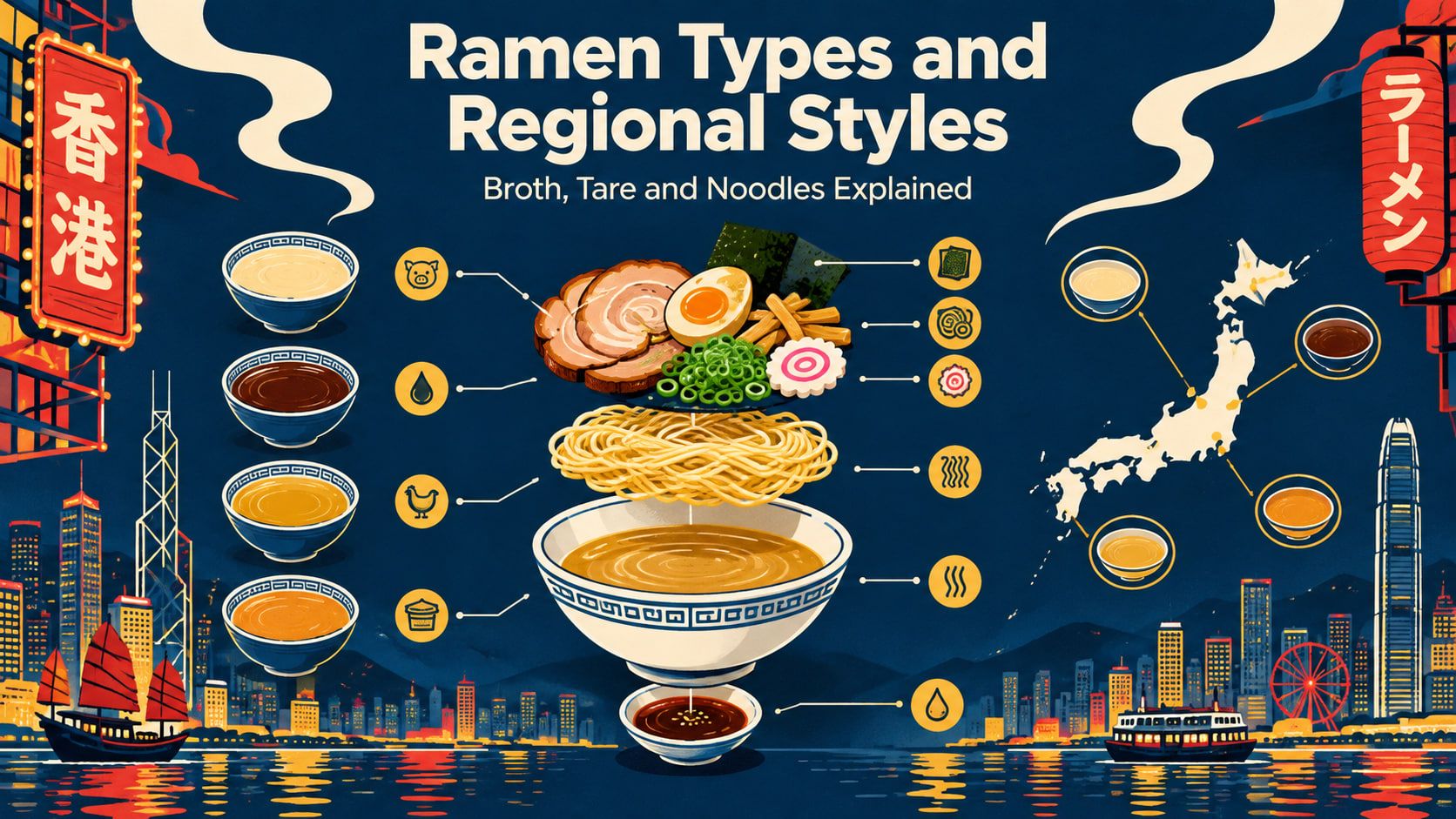
Learn to read any ramen menu confidently by understanding broth, tare, noodle texture, toppings and regional Japanese origins.

Plan a Japan ramen trip with city-specific styles, queues, museums and practical travel details.
Understand tonkotsu ramen through pork-bone broth, noodle options and the recipe details to ask about.
Explore shoyu ramen through soy-based seasoning, broth variations and the menu terms that help you choose.
Understand shio ramen through salt-based seasoning and broth choices without mistaking a clear appearance for low sodium.
Explore miso ramen through seasoning, noodle pairings and regional context before ordering or cooking it.
Understand tsukemen through its separate noodles and dipping broth, serving options and eating sequence.
Explore mazesoba through sauce, noodles and toppings, with practical guidance on mixing and ordering.
Understand abura soba through its soupless format, seasoning and the distinctions to check against mazesoba.
Explore tantanmen through sesame, chilli, recipe variations and the ingredient questions to ask before ordering.