
Tantanmen: Broth, Noodles, Toppings and Origin
Explore tantanmen through sesame, chilli, recipe variations and the ingredient questions to ask before ordering.
Tantanmen: Broth, Noodles, Toppings and Origin
Tantanmen is Japan’s version of Sichuan dan dan noodles: a sesame-and-chilli soup with spiced minced pork and greens. It is the spicy ramen most Hong Kong menus actually carry, and the Japanese bowl is milder and creamier than its Sichuan parent.
Style hub: Ramen Types and Regional Styles. Components: Anatomy of a Ramen Bowl. Site hub: Ramen in Hong Kong: The Complete Local Guide.
What to expect. A nutty, orange-red soup built on sesame paste and chilli oil; minced pork fried with fermented bean paste; pak choi or spinach; thin to medium noodles; optional Sichuan pepper numbness at specialist shops.
🍲 1. Broth and tare
The soup blends a chicken or pork stock with sesame paste, soy, chilli oil and sometimes soy milk, so it is both creamy and hot; the tare is sesame-forward rather than salt-forward. Compare with other creamy bowls in tonkotsu versus chicken paitan and read ramen broth.
🍜 2. Noodles and toppings
Thin to medium noodles that carry a thick soup; toppings are spiced mince, greens, spring onion, sometimes a soft egg or crushed peanuts. See ramen toppings.
📜 3. Origin
The soup version was popularised in Tokyo in the 1950s by Sichuan-born chef Chen Kenmin, who adapted the dry Chengdu dan dan noodles into a soup for Japanese tastes; the soupless “shiru-nashi” tantanmen is closer to the original.
🇭🇰 4. In Hong Kong and at home
Hong Kong diners should check the heat level: many shops offer numbered spice levels. Tantanmen is sesame-heavy, so see ramen allergens if sesame is an issue. The home version is tantanmen at home.
Sesame is a major allergen. Tantanmen cannot be made sesame-free; anyone with a sesame allergy should choose another style.
❓ 5. FAQ
Is tantanmen Chinese or Japanese? Chinese in origin, Japanese in the soup form most Hong Kong shops serve.
How spicy is it? Usually mild to medium by default; ask for the shop’s scale.
Is there a vegetarian version? Some shops use soy mince and vegetable stock; ask about the stock.
ramen types tonkotsu ramen shoyu ramen shio ramen miso ramen tsukemen mazesoba abura soba tantanmen chicken paitan shrimp ramen iekei ramen Hakata ramen Sapporo ramen
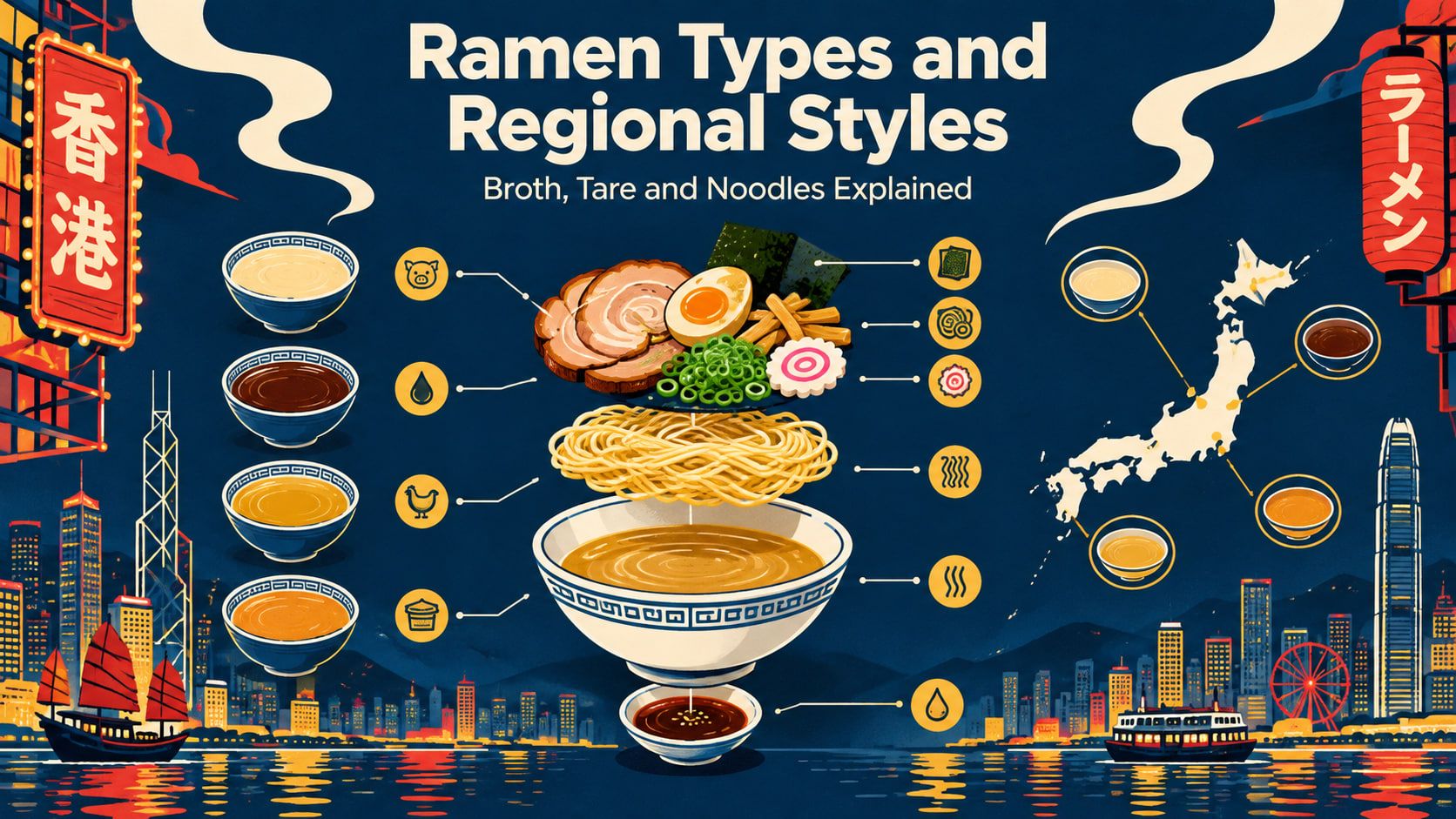
Learn to read any ramen menu confidently by understanding broth, tare, noodle texture, toppings and regional Japanese origins.

Plan a Japan ramen trip with city-specific styles, queues, museums and practical travel details.
Understand tonkotsu ramen through pork-bone broth, noodle options and the recipe details to ask about.
Explore shoyu ramen through soy-based seasoning, broth variations and the menu terms that help you choose.
Understand shio ramen through salt-based seasoning and broth choices without mistaking a clear appearance for low sodium.
Explore miso ramen through seasoning, noodle pairings and regional context before ordering or cooking it.
Understand tsukemen through its separate noodles and dipping broth, serving options and eating sequence.
Explore mazesoba through sauce, noodles and toppings, with practical guidance on mixing and ordering.
Understand abura soba through its soupless format, seasoning and the distinctions to check against mazesoba.
Understand chicken paitan through broth preparation and the checks needed before assuming a bowl is pork-free.