
Iekei Ramen: Broth, Noodles, Toppings and Origin
Understand iekei ramen through regional context, broth, noodles and the customisation a particular operator offers.
Iekei Ramen: Broth, Noodles, Toppings and Origin
Iekei (“house-style”) is Yokohama’s hybrid: a tonkotsu-shoyu broth topped with chicken oil, thick straight noodles, spinach, three sheets of nori and a slab of chashu. It was a Google Trends breakout query in Hong Kong this year, which is why it has a page before it has a local specialist.
Style hub: Ramen Types and Regional Styles. Components: Anatomy of a Ramen Bowl. Site hub: Ramen in Hong Kong: The Complete Local Guide.
What to expect. A brown, glossy pork-and-soy soup with a chicken-fat layer; thick, short, straight noodles; spinach, nori and chashu; a counter card that lets you set noodle firmness, oil and tare strength; rice on the side is customary.
🍲 1. Broth and tare
Pork-bone stock seasoned with a strong shoyu tare and finished with chiyu (chicken fat); the customisation of “katame, koime, oome” (firm, strong, extra oil) is part of the style. Compare with shoyu ramen and tonkotsu ramen.
🍜 2. Noodles and toppings
Thick, straight, medium-short noodles that stand up to the heavy soup; the nori is meant to be dipped in soup and wrapped around rice. See ramen noodles.
📜 3. Origin
Iekei began with Yoshimuraya, founded in Yokohama in 1974; apprentices opened shops with names ending in “-ya”, which gave the style its name. It is now a national genre centred on Tokyo and Yokohama.
🇭🇰 4. In Hong Kong and at home
Hong Kong has no dedicated iekei specialist confirmed on an operator page at the time of writing, so the style is best tried in Japan — see ramen in Tokyo and ramen in Japan. Watch new ramen openings for arrivals.
Do not trust a Hong Kong shop list for iekei yet. Several online lists label ordinary tonkotsu-shoyu bowls “iekei”; the style has specific noodles, toppings and ordering conventions.
❓ 5. FAQ
Why is it called house-style? From the “-ya” (house) suffix of the shops descended from Yoshimuraya.
Is it very heavy? Rich, but customisable; order light oil and standard tare the first time.
What is the rice for? Dipping the nori in soup and wrapping rice is the classic way to finish.
ramen types tonkotsu ramen shoyu ramen shio ramen miso ramen tsukemen mazesoba abura soba tantanmen chicken paitan shrimp ramen iekei ramen Hakata ramen Sapporo ramen
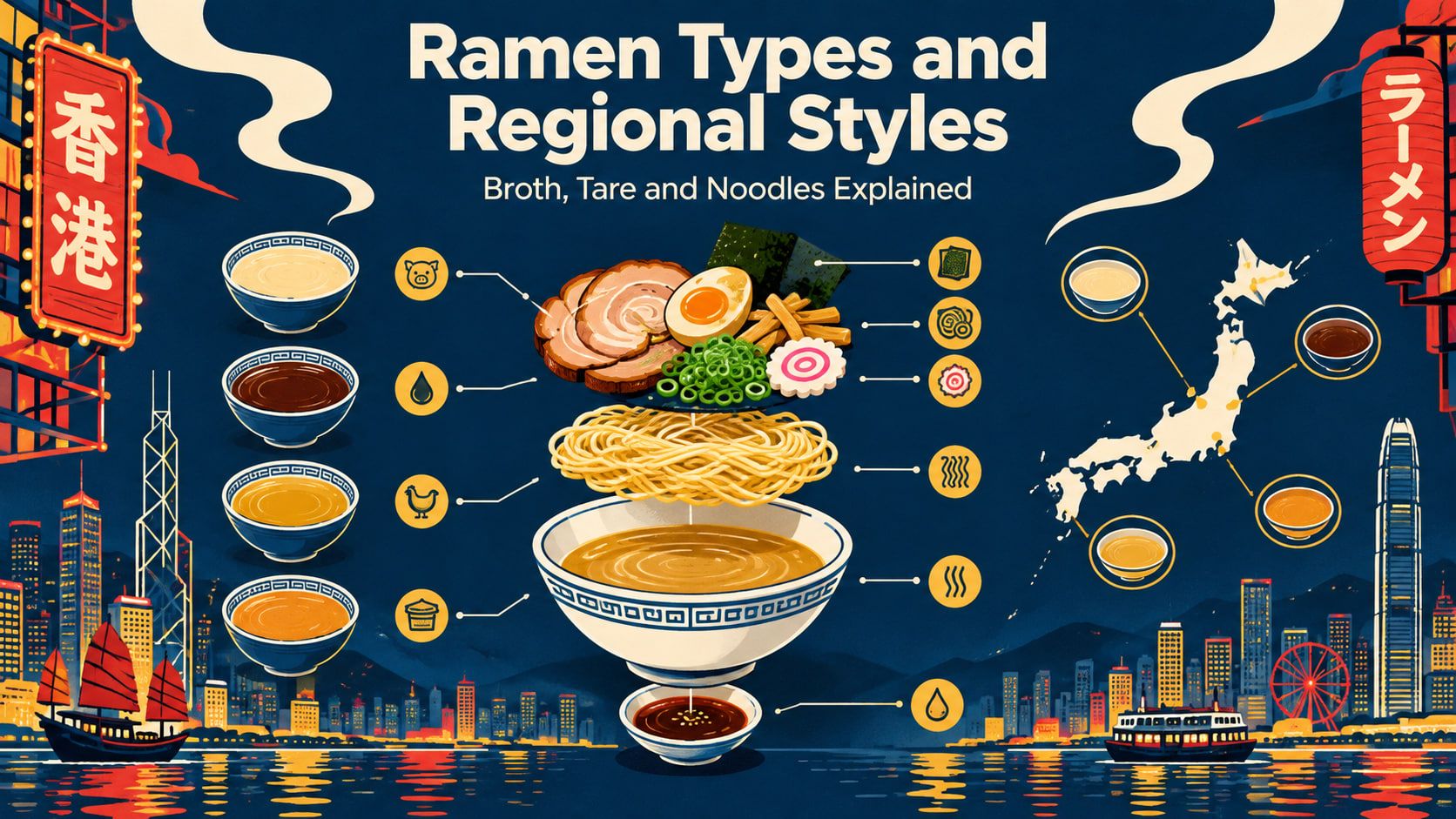
Learn to read any ramen menu confidently by understanding broth, tare, noodle texture, toppings and regional Japanese origins.

Plan a Japan ramen trip with city-specific styles, queues, museums and practical travel details.
Understand tonkotsu ramen through pork-bone broth, noodle options and the recipe details to ask about.
Explore shoyu ramen through soy-based seasoning, broth variations and the menu terms that help you choose.
Understand shio ramen through salt-based seasoning and broth choices without mistaking a clear appearance for low sodium.
Explore miso ramen through seasoning, noodle pairings and regional context before ordering or cooking it.
Understand tsukemen through its separate noodles and dipping broth, serving options and eating sequence.
Explore mazesoba through sauce, noodles and toppings, with practical guidance on mixing and ordering.
Understand abura soba through its soupless format, seasoning and the distinctions to check against mazesoba.
Explore tantanmen through sesame, chilli, recipe variations and the ingredient questions to ask before ordering.