
Tonkotsu Ramen: Broth, Noodles, Toppings and Origin
Understand tonkotsu ramen through pork-bone broth, noodle options and the recipe details to ask about.
Tonkotsu Ramen: Broth, Noodles, Toppings and Origin
Tonkotsu is pork-bone broth boiled hard until collagen and fat emulsify into an opaque, creamy soup. It is a broth, not a flavour, which is why tonkotsu-shoyu and tonkotsu-shio both exist. This page explains trade-offs and characteristics; it is not a ranking.
Style hub: Ramen Types and Regional Styles. Component detail: Anatomy of a Ramen Bowl. Site hub: Ramen in Hong Kong: The Complete Local Guide.
What to expect. Opaque white or beige soup, thin straight noodles, chashu, wood-ear mushroom, spring onion and often pickled ginger; kaedama noodle refills at Hakata-style shops. It is the richest mainstream style and the most common in Hong Kong.
🍲 1. Broth
Trotters, neck and back bones at a rolling boil for many hours; fat is emulsified, not skimmed. Compare the clear alternative in ramen broth.
🍜 2. Noodles and tare
Thin, low-hydration noodles ordered by firmness (barikata to yawa); tare is usually shio or shoyu beneath the pork. See ramen noodles and ramen tare.
📍 3. Origin and Hong Kong
Fukuoka’s Hakata and Kurume districts are the home; Hong Kong’s Ichiran, Butao and Ippudo made it the local default. See Hakata ramen, Fukuoka and Hakata and Ichiran versus Ippudo versus Butao.
📊 4. Nutrition and cooking at home
Highest in fat and calories among common styles; see tonkotsu ramen calories. A pressure cooker gets you close at home: pressure-cooker tonkotsu broth.
Not all white broth is pork. Chicken paitan looks similar; if pork matters for dietary or religious reasons, ask. See tonkotsu versus chicken paitan.
🧭 What to read next
The quick answer is what is tonkotsu ramen?; the Kumamoto variant is Kumamoto ramen and mayu.
ramen types tonkotsu ramen shoyu ramen shio ramen miso ramen tsukemen mazesoba abura soba tantanmen chicken paitan shrimp ramen iekei ramen Hakata ramen Sapporo ramen
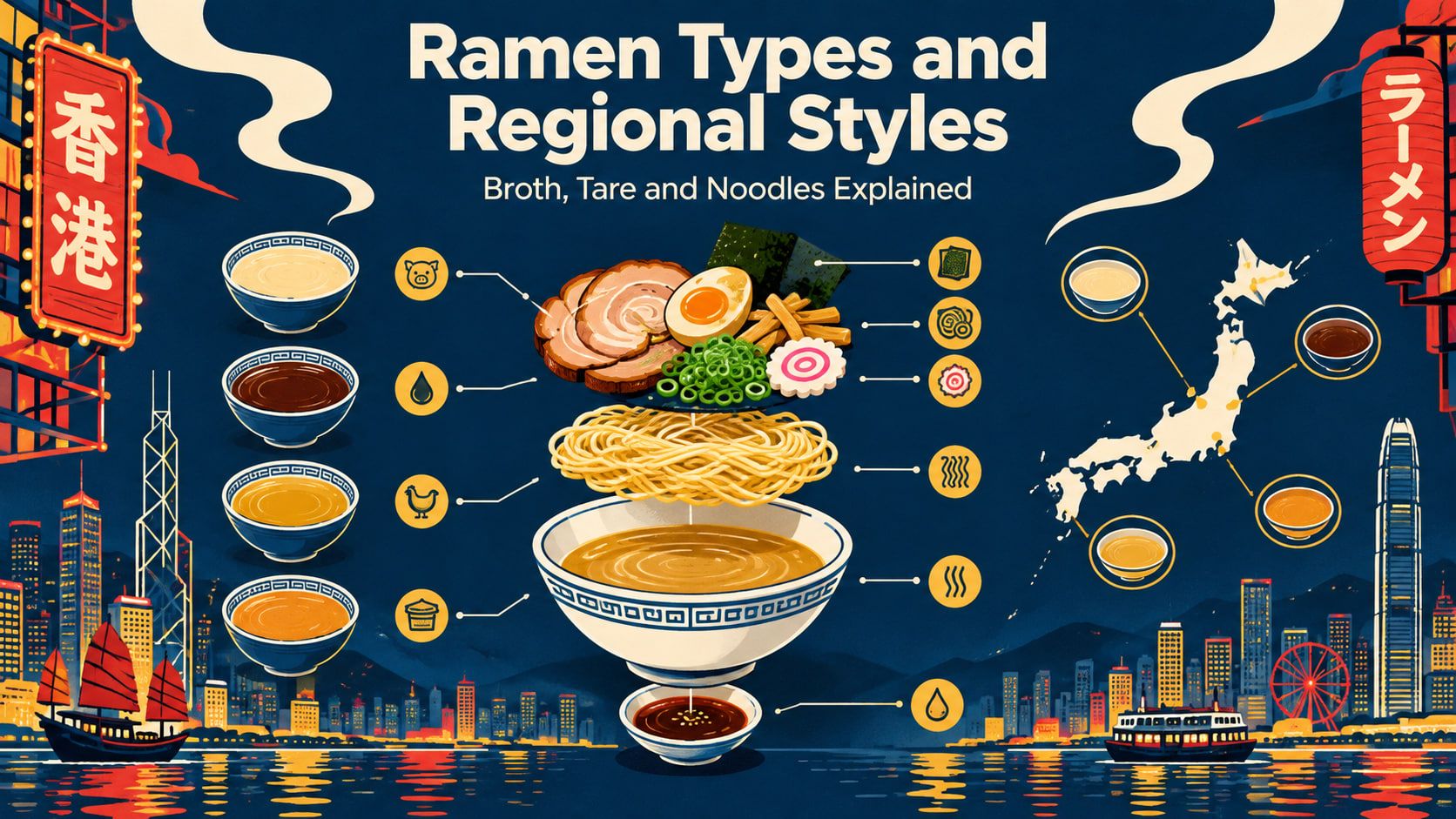
Learn to read any ramen menu confidently by understanding broth, tare, noodle texture, toppings and regional Japanese origins.

Plan a Japan ramen trip with city-specific styles, queues, museums and practical travel details.
Explore shoyu ramen through soy-based seasoning, broth variations and the menu terms that help you choose.
Understand shio ramen through salt-based seasoning and broth choices without mistaking a clear appearance for low sodium.
Explore miso ramen through seasoning, noodle pairings and regional context before ordering or cooking it.
Understand tsukemen through its separate noodles and dipping broth, serving options and eating sequence.
Explore mazesoba through sauce, noodles and toppings, with practical guidance on mixing and ordering.
Understand abura soba through its soupless format, seasoning and the distinctions to check against mazesoba.
Explore tantanmen through sesame, chilli, recipe variations and the ingredient questions to ask before ordering.
Understand chicken paitan through broth preparation and the checks needed before assuming a bowl is pork-free.