
Ramen in Tokyo: Districts, Styles and Planning
Plan Tokyo ramen visits through district guides, service formats and checks on access, hours and queues.
Ramen in Tokyo: Districts, Styles and Planning
Tokyo is not one ramen destination but a network of neighbourhoods, each with different access, hours, queues and style traditions. For a Hong Kong visitor, the best plan is one ramen stop near where you already are: Tokyo Station for transit convenience, Shinjuku for late-day options, Ikebukuro for dense city energy, Asakusa for sightseeing and old-Tokyo context, or Yokohama for the ramen museums. Chasing a single viral bowl across town can consume half a travel day.
This page is for first-time and repeat Tokyo visitors who want a usable ramen plan, not a ranking. It sits under ramen travel in Japan and links to Tokyo Ramen Street for the simplest station stop. Restaurant details need same-day verification.
The one-district rule. Pair ramen with the district you already plan to visit. Check official hours, last order, reservation or ticket rules that morning, and eat outside the 12:00–13:30 and 18:00–20:30 peaks when possible.
🚉 1. Tokyo Station and Yaesu
Tokyo Station is the most practical arrival or departure bowl because it connects JR lines, Shinkansen, Narita Express and buses. Tokyo Ramen Street is in First Avenue Tokyo Station on the Yaesu side, with several specialist shops under one roof. It is a useful fallback when a train schedule matters, but it can be busy around lunch, dinner and weekend travel. The dedicated planning page is Tokyo Ramen Street: what to know.
🌃 2. Shinjuku, Shibuya and west-central Tokyo
Shinjuku is useful for a ramen dinner after shopping, nightlife or a Shinjuku Gyoen visit, but the station is vast, so allow time for exits and underground passages. Shibuya works similarly for shopping and evening plans. Both districts have broad supply, but a broad supply is not a reason to assume a particular famous shop is open or walk-in; check the operator. The Michelin Guide's current Tokyo ramen page lists RAMEN MATSUI near Shinjuku Gyoen as one example that requires reservations, showing why a blanket walk-in assumption fails.
🏙️ 3. Ikebukuro and north-west Tokyo
Ikebukuro is a major rail terminal with department stores, anime shopping, hotels and a busy evening crowd. Michelin's current Tokyo page highlights Japanese Ramen Gokan in Higashi-Ikebukuro and notes the area’s multiple line connections. It is a useful district for ramen if you are already there for Sunshine City or anime retail, not a reason to detour from the other side of the city without a reservation.
🏮 4. Asakusa and east Tokyo
Asakusa combines Senso-ji, craft streets and old-town sightseeing, making a ramen lunch a natural stop even though soba is more strongly associated with the district. Asakusa Station serves the Ginza Line, Toei Asakusa Line and Tobu Skytree Line. Tokyo's official tourism guide suggests a route from Tokyo Station via Kanda and the Ginza Line of about 20 minutes; routes, fares and service patterns change, so use the current transit app.
🍜 5. Style-first planning
- Tonkotsu: look for Hakata-style shops, often offering thin noodles and kaedama; see Hakata ramen.
- Shoyu and shio: Tokyo's clear-broth tradition, often chicken, pork or fish based; see shoyu ramen and shio ramen.
- Tsukemen: thicker noodles and separate dip; popular in station and office districts; see tsukemen.
- Miso: more associated with Sapporo but widely available; see Sapporo miso ramen.
- Niboshi: dried-fish-driven broth, common in specialist shops; see niboshi ramen.
🎟️ 6. Planning logistics
- Check the official operator page for hours, last order, holiday closures, cash or card and reservation rules.
- If there is a ticket machine, carry yen and know the key words; see the ticket machine guide.
- Arrive outside conventional meal peaks if flexibility matters.
- Do not base the day on a single shop: save a nearby backup with a different format.
- Tell staff about allergies before buying a non-refundable ticket where possible.
- Do not assume meat, egg or chilled ramen kits can be brought home to Hong Kong; check current Customs and CFS rules.
❤️ 7. Health and diet planning
Tokyo ramen has the same sodium issue as Hong Kong ramen; our sodium guide explains why leaving soup matters. Gluten-free and vegan supply exists but is patchy and requires a component-by-component check; use the gluten-free ramen checklist and the vegan ramen checklist as questions to ask, not as Tokyo shop lists.
Tokyo is large; plan for travel, not just the bowl. A restaurant described as 'Tokyo' may be 45 minutes or more away once station walking and transfers are included. Published hours, queues and booking systems change; never rely on an old guide or social post. Check the operator and transit route on the day, especially during public holidays or severe weather.
❓ 8. FAQ
Which Tokyo district is best for ramen? The most useful one is the district you already plan to visit. Tokyo Station is best for transit; Shinjuku and Ikebukuro for broad city supply; Asakusa for sightseeing.
Do I need reservations for Tokyo ramen? Many shops are walk-in, but some require reservations or timed tickets. Check the official operator page for each shop.
What time should I eat to avoid queues? Outside lunch and dinner peaks is usually easier, but no time guarantees no wait. Early afternoon can work for some shops.
Can I use credit cards? Some shops take cards or IC payment; many ticket machines still favour cash. Check in advance and carry some yen.
Can I bring ramen kits back to Hong Kong? Rules for meat, egg and chilled foods can change. Check current Hong Kong Customs and CFS requirements before buying.
best ramen Tokyo best ramen Osaka Fukuoka ramen Sapporo ramen Tokyo Ramen Street Ichiran Tokyo ramen tour Japan Cup Noodles Museum Yokohama Ramen Museum ramen souvenirs Japan
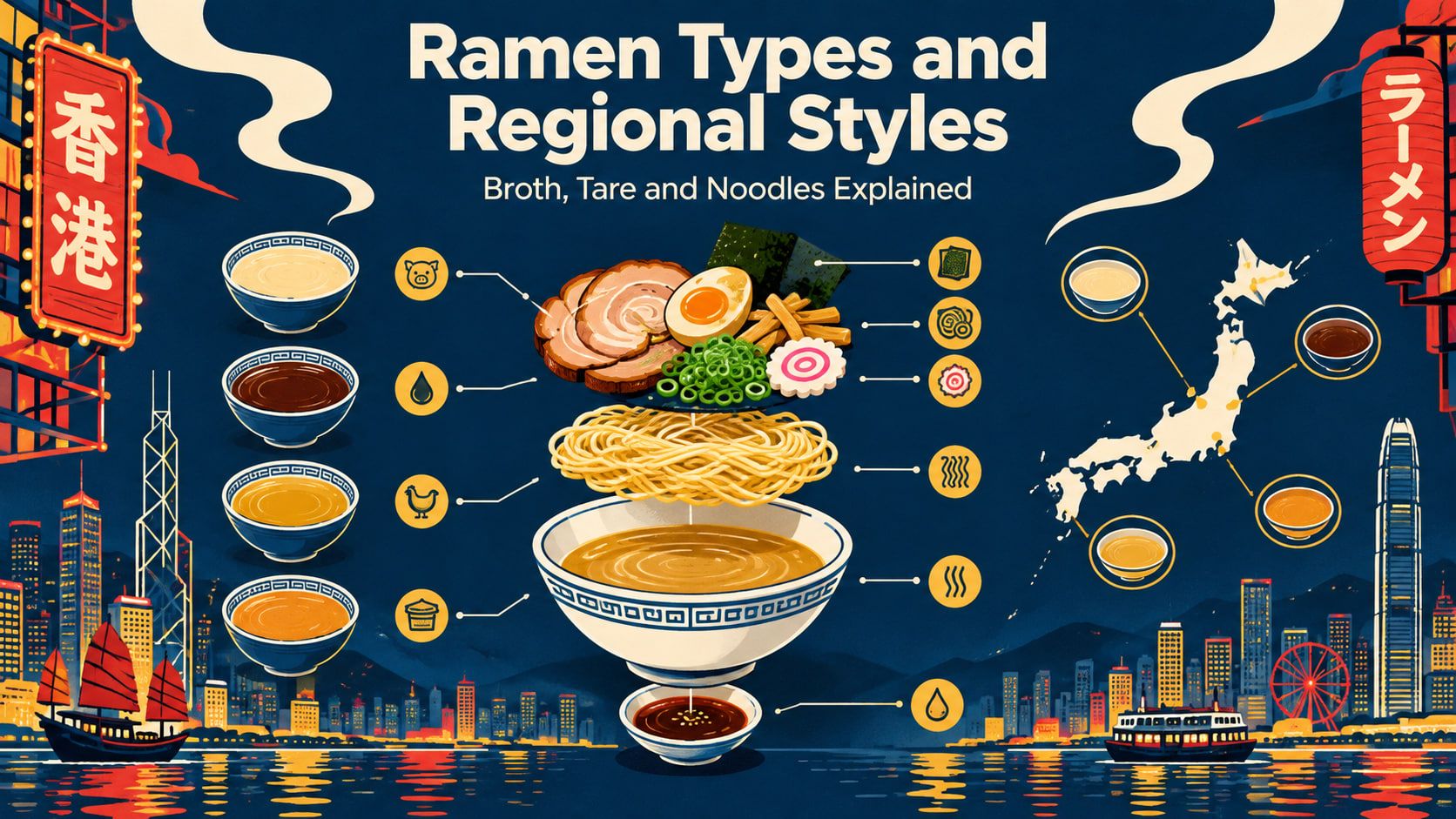
Learn to read any ramen menu confidently by understanding broth, tare, noodle texture, toppings and regional Japanese origins.

Plan a Japan ramen trip with city-specific styles, queues, museums and practical travel details.
Understand tonkotsu ramen through pork-bone broth, noodle options and the recipe details to ask about.
Explore shoyu ramen through soy-based seasoning, broth variations and the menu terms that help you choose.
Understand shio ramen through salt-based seasoning and broth choices without mistaking a clear appearance for low sodium.
Explore miso ramen through seasoning, noodle pairings and regional context before ordering or cooking it.
Understand tsukemen through its separate noodles and dipping broth, serving options and eating sequence.
Explore mazesoba through sauce, noodles and toppings, with practical guidance on mixing and ordering.
Understand abura soba through its soupless format, seasoning and the distinctions to check against mazesoba.
Explore tantanmen through sesame, chilli, recipe variations and the ingredient questions to ask before ordering.