
Kumamoto Ramen and Black Garlic Mayu: Broth, Noodles, Toppings and Origin
Understand Kumamoto ramen and black garlic mayu through regional context, broth and aroma-oil choices.
Kumamoto Ramen and Black Garlic Mayu: Broth, Noodles, Toppings and Origin
Kumamoto ramen is a Kyushu tonkotsu with two signatures: a milder, often chicken-blended pork broth, and mayu — garlic fried in oil until black and pressed into a dark, nutty slick. It is the regional style behind Ajisen, which makes it the first ramen many Hong Kong people ever ate.
Style hub: Ramen Types and Regional Styles. Components: Anatomy of a Ramen Bowl. Site hub: Ramen in Hong Kong: The Complete Local Guide.
What to expect. A beige, medium-rich soup with a black mayu swirl on top; medium-thick straight noodles (thicker than Hakata); chashu, wood-ear mushroom, cabbage, spring onion and often a soft egg; fried garlic chips at some shops.
🍲 1. Broth and tare
Pork bones often blended with chicken for a gentler base than Hakata; the mayu was introduced in the 1950s to mask the pork smell locals disliked. Compare with Hakata ramen and read aroma oil and mayu.
🍜 2. Noodles and toppings
Medium-thick, straight noodles with more chew than Hakata; kaedama is less common. Toppings include cabbage and fried garlic as well as chashu and kikurage. See ramen noodles.
📜 3. Origin
Tonkotsu travelled from Kurume via Tamana to Kumamoto City in the early 1950s; shops such as Komurasaki are credited with adding mayu in the late 1950s. Ajisen, founded in Kumamoto in 1968, built its brand on the mayu bowl.
🇭🇰 4. In Hong Kong and at home
Ajisen has served the Kumamoto style across Hong Kong since 1996 by its own account; see Ajisen Ramen Hong Kong. For the broader pork-bone family see tonkotsu ramen.
Mayu is bitter by design. It should taste roasted, not burnt; a harsh, acrid oil means it was overcooked. Stir it in gradually.
❓ 5. FAQ
Is Kumamoto ramen milder than Hakata? Usually, because of the chicken blend and thicker noodles.
What is mayu made of? Garlic cooked in oil (often lard or sesame) until black, then blended.
Is Ajisen typical Kumamoto ramen? It is the mass-market export version of the style.
ramen types tonkotsu ramen shoyu ramen shio ramen miso ramen tsukemen mazesoba abura soba tantanmen chicken paitan shrimp ramen iekei ramen Hakata ramen Sapporo ramen
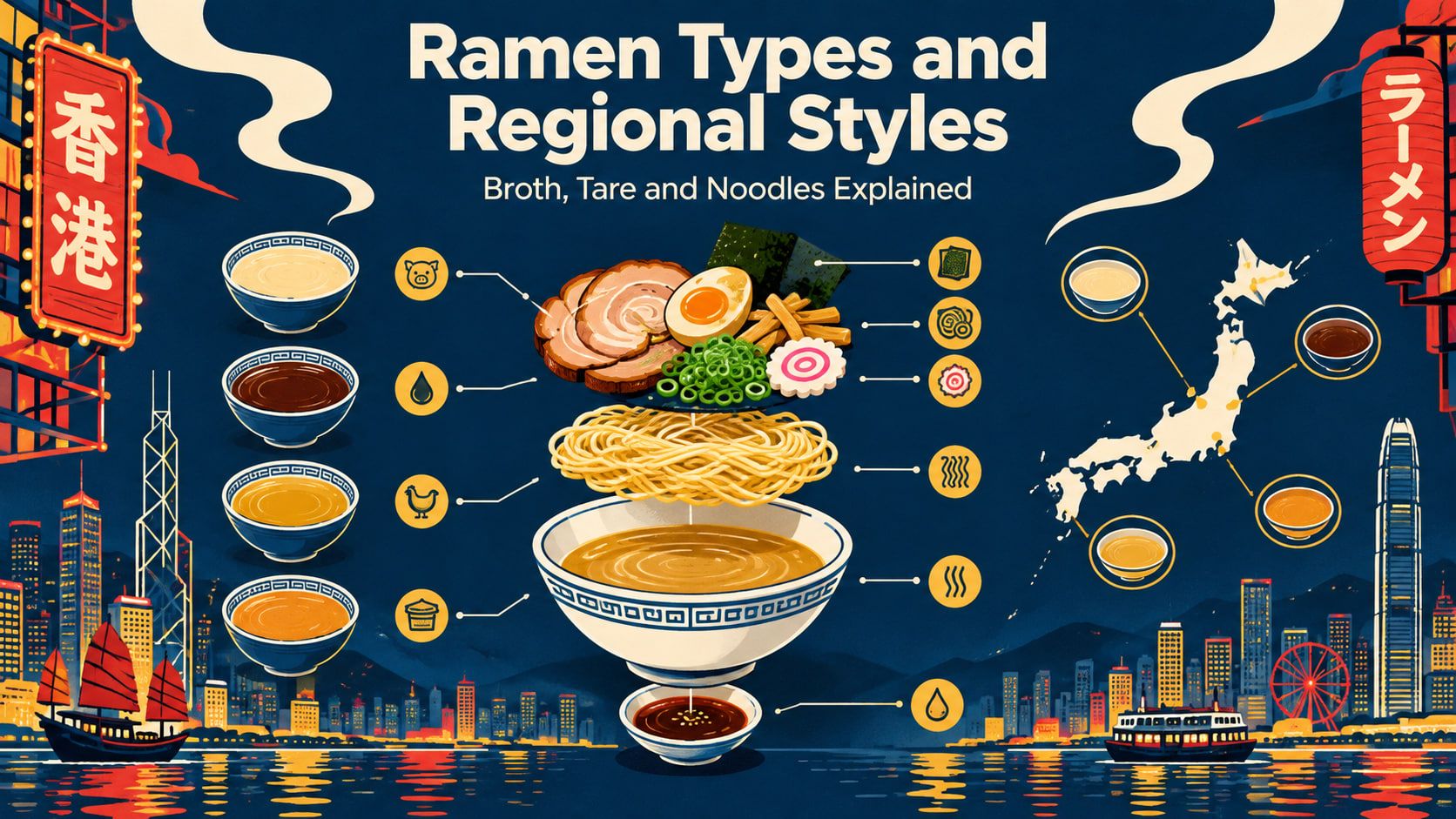
Learn to read any ramen menu confidently by understanding broth, tare, noodle texture, toppings and regional Japanese origins.

Plan a Japan ramen trip with city-specific styles, queues, museums and practical travel details.
Understand tonkotsu ramen through pork-bone broth, noodle options and the recipe details to ask about.
Explore shoyu ramen through soy-based seasoning, broth variations and the menu terms that help you choose.
Understand shio ramen through salt-based seasoning and broth choices without mistaking a clear appearance for low sodium.
Explore miso ramen through seasoning, noodle pairings and regional context before ordering or cooking it.
Understand tsukemen through its separate noodles and dipping broth, serving options and eating sequence.
Explore mazesoba through sauce, noodles and toppings, with practical guidance on mixing and ordering.
Understand abura soba through its soupless format, seasoning and the distinctions to check against mazesoba.
Explore tantanmen through sesame, chilli, recipe variations and the ingredient questions to ask before ordering.