
Hakata Ramen: Broth, Noodles, Toppings and Origin
Understand Hakata ramen through regional context, noodle firmness and refill vocabulary before ordering.
Hakata Ramen: Broth, Noodles, Toppings and Origin
Hakata ramen is the Fukuoka tonkotsu tradition: a white pork-bone soup, very thin straight noodles, and the kaedama system of ordering a noodle refill for the broth you have left. It is the style behind Ichiran, Ippudo and Butao, which makes it the ramen most Hong Kong people have actually eaten.
Style hub: Ramen Types and Regional Styles. Components: Anatomy of a Ramen Bowl. Site hub: Ramen in Hong Kong: The Complete Local Guide.
What to expect. Creamy white tonkotsu; thin, low-hydration noodles ordered by firmness (barikata, kata, futsu, yawa); sliced chashu, wood-ear mushroom, spring onion; counter condiments of pickled ginger, sesame, garlic and spicy takana greens; kaedama for a small extra charge.
🍲 1. Broth and tare
Pork bones boiled hard for many hours; the tare is usually a light shio or shoyu so the pork leads. The technique is explained in tonkotsu ramen and ramen broth.
🍜 2. Noodles and toppings
Thin, straight, firm noodles that soften quickly — the reason portions are small and kaedama exists. Toppings are simple; the counter condiments are where you customise. See ramen noodles.
📜 3. Origin
Emulsified tonkotsu is generally traced to Kurume in the 1930s–40s and to Fukuoka’s yatai stalls after the war; Hakata’s thin noodles and kaedama grew out of the need to serve fish-market workers fast. Travel detail is in Fukuoka and Hakata ramen.
🇭🇰 4. In Hong Kong and at home
Ichiran, Ippudo and Butao are the Hong Kong references; compare them in Ichiran versus Ippudo versus Butao and read Ichiran Hong Kong and Butao Ramen.
Eat fast. Thin Hakata noodles overcook in the bowl within minutes; order barikata or kata if you talk while you eat.
❓ 5. FAQ
What is kaedama? A refill of noodles only, ordered when soup remains.
Is Hakata the same as tonkotsu? Hakata is one tonkotsu tradition; Kurume, Kumamoto and Kagoshima are others.
Why pickled ginger? It cuts the richness; add it halfway through.
ramen types tonkotsu ramen shoyu ramen shio ramen miso ramen tsukemen mazesoba abura soba tantanmen chicken paitan shrimp ramen iekei ramen Hakata ramen Sapporo ramen
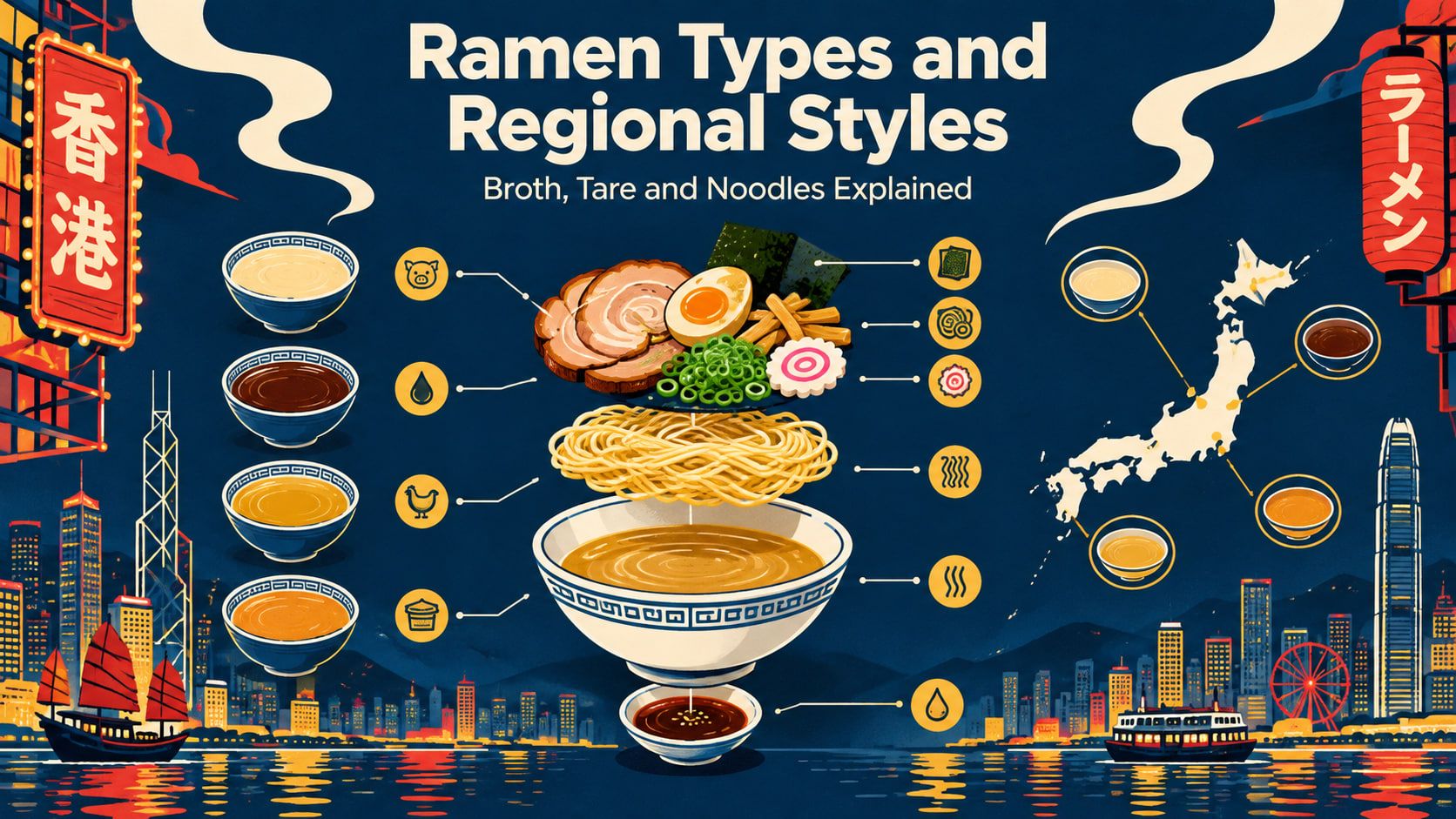
Learn to read any ramen menu confidently by understanding broth, tare, noodle texture, toppings and regional Japanese origins.

Plan a Japan ramen trip with city-specific styles, queues, museums and practical travel details.
Understand tonkotsu ramen through pork-bone broth, noodle options and the recipe details to ask about.
Explore shoyu ramen through soy-based seasoning, broth variations and the menu terms that help you choose.
Understand shio ramen through salt-based seasoning and broth choices without mistaking a clear appearance for low sodium.
Explore miso ramen through seasoning, noodle pairings and regional context before ordering or cooking it.
Understand tsukemen through its separate noodles and dipping broth, serving options and eating sequence.
Explore mazesoba through sauce, noodles and toppings, with practical guidance on mixing and ordering.
Understand abura soba through its soupless format, seasoning and the distinctions to check against mazesoba.
Explore tantanmen through sesame, chilli, recipe variations and the ingredient questions to ask before ordering.