
MSG and Umami in Ramen: Evidence and Myths
Understand MSG in ramen through ingredient context and food-safety evidence rather than myths or blanket reassurance.
MSG and Umami in Ramen: Evidence and Myths
Monosodium glutamate is the sodium salt of glutamic acid, the amino acid behind umami; ramen is full of glutamate whether or not a shop adds the white powder, because kombu, dried fish, soy sauce and long-cooked pork are all rich in it. The major food-safety agencies classify MSG as safe at normal intakes, and controlled studies have not reliably reproduced “MSG symptoms” in people who report them.
Component hub: Anatomy of a Ramen Bowl. Styles: Ramen Types and Regional Styles. Site hub: Ramen in Hong Kong: The Complete Local Guide.
What the evidence says. The US FDA lists MSG as generally recognised as safe; JECFA (FAO/WHO) and EFSA agree. Double-blind studies giving MSG or placebo to self-described sensitive people have not consistently triggered reactions. The 1995 FASEB review found only mild, transient symptoms in some people taking 3 g or more without food — a typical serving of MSG-seasoned food contains under 0.5 g.
🧪 1. Where glutamate comes from in a bowl
Kombu dashi, katsuobushi, niboshi, soy sauce, miso, aged pork stock and tomatoes all deliver free glutamate; a “no MSG” sign therefore does not mean a low-glutamate soup. Component detail is in ramen tare and ramen broth.
📚 2. The “Chinese restaurant syndrome” story
The term comes from a 1968 letter to a medical journal; later reporting has questioned the letter’s authorship, and decades of controlled trials have not confirmed a reproducible syndrome. A 2019 review in a peer-reviewed journal concluded that reports of MSG hypersensitivity had little supporting evidence, while noting some researchers still question very high long-term intakes.
🧂 3. The real issue: sodium
MSG contains roughly a third of the sodium of table salt by weight, and some kitchens use it to reduce salt. The thirst and heaviness people feel after ramen are better explained by total sodium — the soup, the tare, the toppings — than by the additive. See ramen sodium.
🧭 4. What to do if you react
If you consistently feel unwell after very savoury soups, the practical steps are smaller portions, leaving the soup and choosing lighter styles; if symptoms are significant, see a doctor rather than self-diagnosing. Style choices are in ramen types and is ramen healthy?.
This is general information, not medical advice. People with severe or unstable asthma were flagged in the FASEB review as a possible sensitive subgroup when MSG is taken without food; anyone with a diagnosed condition should follow their clinician’s guidance.
❓ FAQ
Is MSG banned anywhere? No major food-safety authority bans it; some jurisdictions require labelling.
Does Ichiran or Butao use MSG? Operators decide and disclose themselves; Ramen.hk does not test kitchens. Ask the shop.
Is natural glutamate different from added MSG? Chemically the glutamate is the same; the body does not distinguish the source.
ramen noodles ramen broth ramen tare ramen toppings chashu ajitama menma nori ramen oil ramen glossary kansui kaedama ramen ticket machine
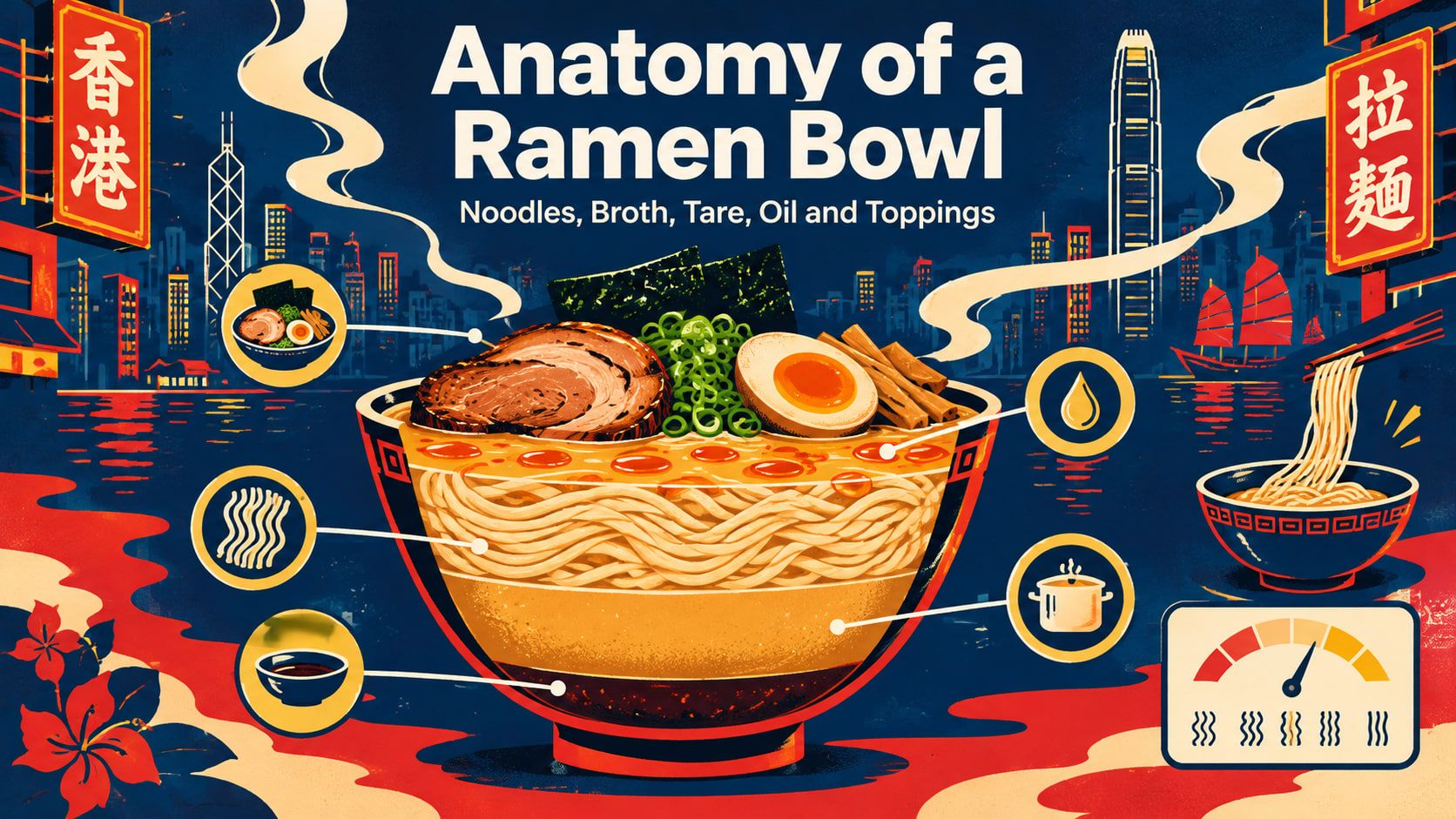
Understand the technical parts of a bowl so menu terms like chintan, paitan, kaedama and barikata become useful rather than confusing.

Get the direct answer first, then follow links to the deeper guide on ingredients, culture, calories or cooking.
Understand ramen noodles through ingredients, hydration, thickness and texture before buying or ordering.
Explore ramen broth through ingredients, clear and cloudy styles and the preparation choices behind the bowl.
Understand ramen tare as a seasoning component and learn what its menu names tell you—and what they do not.
Explore ramen aroma oil through its ingredients and role in the bowl, with questions for cooking and dietary checks.
Understand ramen chashu through cuts, preparation and portion choices before ordering or making it.
Explore ajitama ramen eggs through preparation, texture and the menu details that determine whether they are included.
Decode ramen toppings through their names, ingredients and role in the bowl before choosing extras.
Decode ramen menu language with a plain-English glossary of broth, seasoning, noodles, toppings and refills.