
Ramen Broth: Chintan vs Paitan and How Stock Is Built
Explore ramen broth through ingredients, clear and cloudy styles and the preparation choices behind the bowl.
Ramen Broth: Chintan vs Paitan and How Stock Is Built
Ramen broth is either chintan — clear, simmered gently — or paitan — white, boiled hard until fat and collagen emulsify. Everything else is a question of which bones, fish and vegetables go in and for how long. The broth gives body and aroma; the salt comes mostly from the tare added separately.
Component hub: Anatomy of a Ramen Bowl. Styles: Ramen Types and Regional Styles. Site hub: Ramen in Hong Kong: The Complete Local Guide.
The two families. Chintan: chicken, pork or fish simmered below a boil for a clear stock (most shoyu and shio). Paitan: pork (tonkotsu) or chicken (tori paitan) at a rolling boil for hours until opaque. A double soup blends an animal stock with a fish-and-kombu dashi.
🍲 1. Chintan: clear stock
Bones are blanched, then simmered with aromatics at a bare tremble so fat stays separate and the liquid stays clear; dashi elements (kombu, katsuobushi, niboshi) are steeped at the end. It is the base for shoyu and shio bowls.
🥛 2. Paitan: emulsified stock
A hard boil breaks fat into droplets and dissolves collagen into gelatin, which together turn the liquid white and give the mouth-coating richness of tonkotsu and chicken paitan. Pork needs many hours; chicken emulsifies faster.
🐟 3. Dashi and double soups
Many modern shops finish an animal stock with a fish dashi for depth without extra fat; niboshi-forward broths push that to an extreme. See niboshi ramen and the dip used in tsukemen.
🏠 4. Home versions
A pressure cooker shortens both families: chicken paitan in 90 minutes and pressure-cooker tonkotsu; the plant-based route is kombu-shiitake broth. Storage is in freezing ramen broth.
Broth is a food-safety risk when it cools slowly. Cool large pots fast (ice bath or shallow containers) and refrigerate within two hours; reheat to a full boil. See ramen food safety.
❓ FAQ
Is clear broth lower in calories? Usually lower in fat; sodium depends on the tare. See ramen calories.
Why is tonkotsu white? Hard boiling emulsifies fat and gelatin into the liquid.
What is a “W soup”? A double soup blending animal stock and fish dashi.
ramen noodles ramen broth ramen tare ramen toppings chashu ajitama menma nori ramen oil ramen glossary kansui kaedama ramen ticket machine
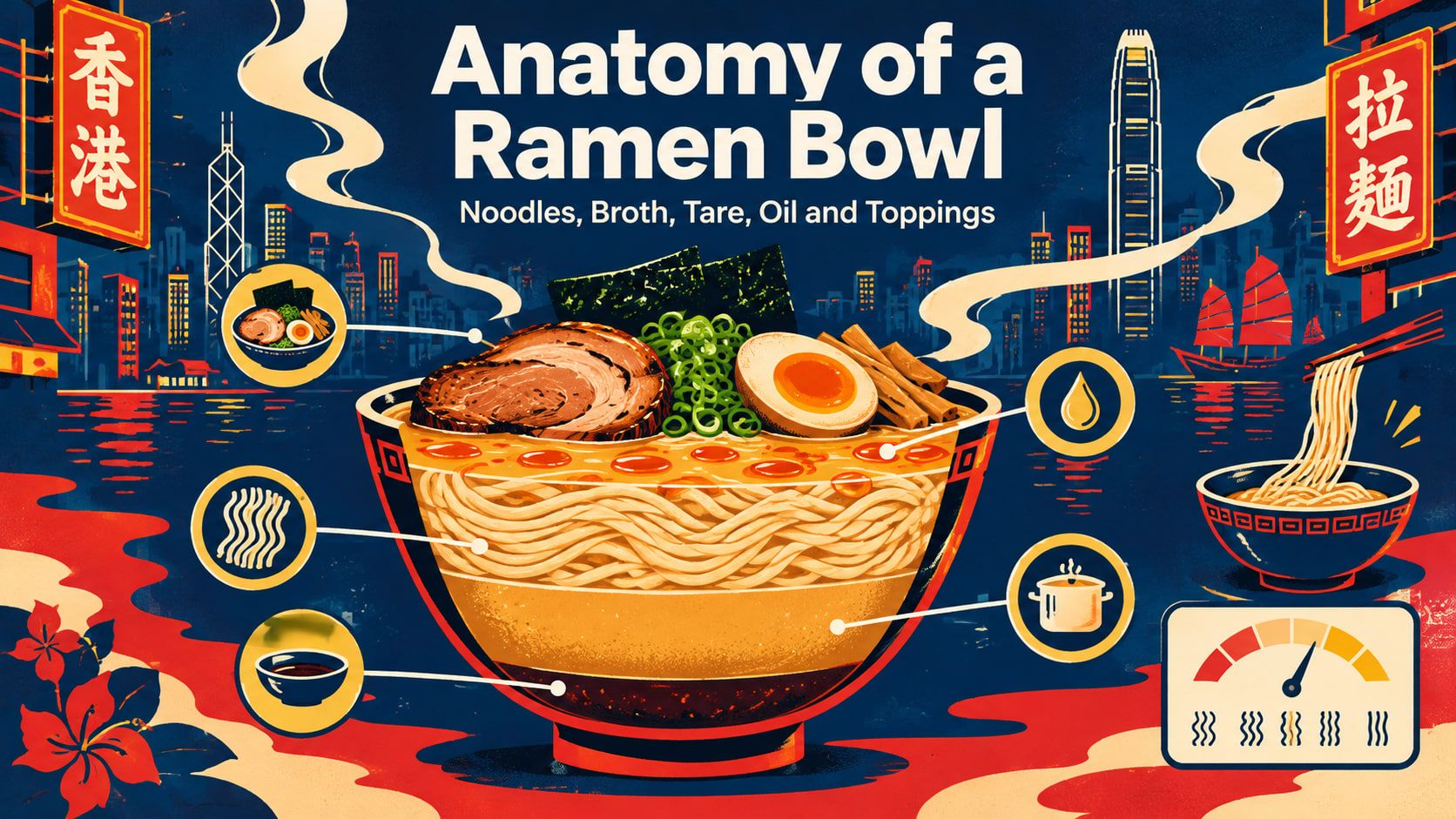
Understand the technical parts of a bowl so menu terms like chintan, paitan, kaedama and barikata become useful rather than confusing.

Get the direct answer first, then follow links to the deeper guide on ingredients, culture, calories or cooking.
Understand ramen noodles through ingredients, hydration, thickness and texture before buying or ordering.
Understand ramen tare as a seasoning component and learn what its menu names tell you—and what they do not.
Explore ramen aroma oil through its ingredients and role in the bowl, with questions for cooking and dietary checks.
Understand ramen chashu through cuts, preparation and portion choices before ordering or making it.
Explore ajitama ramen eggs through preparation, texture and the menu details that determine whether they are included.
Decode ramen toppings through their names, ingredients and role in the bowl before choosing extras.
Understand MSG in ramen through ingredient context and food-safety evidence rather than myths or blanket reassurance.
Decode ramen menu language with a plain-English glossary of broth, seasoning, noodles, toppings and refills.