
Ramen Terms in Cantonese
Use Cantonese ramen phrases for ingredients, preferences, toppings and practical conversations with Hong Kong staff.
Ramen Terms in Cantonese
Hong Kong ramen is ordered in a city where Cantonese, Japanese and English overlap, so a menu can say 拉麵 beside tonkotsu, 公仔麵 beside Demae Iccho and 叉燒 beside chashu. The practical distinction is that 拉麵 means ramen, 公仔麵 usually means instant noodles, 湯麵 means noodle soup and 撈麵 means dry mixed noodles; knowing those four terms prevents most ordering mistakes. This guide uses everyday Hong Kong Cantonese rather than textbook Japanese.
It is for visitors and local diners decoding menus, and for readers who want to understand how Hong Kong has adapted Japanese noodle vocabulary. It sits under ramen culture and history and pairs with Japanese ramen vocabulary.
The format rule. Ask first whether it is 湯麵 (soup noodles) or 撈麵 (dry mixed noodles), then ask which broth and topping. A familiar Japanese name does not guarantee a familiar format.
🍜 1. The core words
- 拉麵 (laam6 min6): ramen; the usual written term on a Japanese restaurant menu.
- 湯麵 (tong1 min6): noodle soup.
- 撈麵 (lou1 min6): noodles tossed or mixed without a soup; useful for mazesoba and dry instant noodles.
- 公仔麵 (gung1 zai2 min6): Doll noodles by brand origin, but commonly any instant noodle.
- 即食麵 (zik6 sik6 min6): instant noodles, the more generic written term.
- 出前一丁 (ceot1 cin4 jat1 ding1): Demae Iccho, a brand named directly in cha chaan teng orders.
The brand and breakfast history behind 公仔麵 and Demae Iccho is on the Doll noodles page and the cha chaan teng instant noodle page.
🥣 2. Broth and style terms
- 豚骨拉麵 (tyun4 gwat1 laam6 min6): tonkotsu ramen, pork-bone broth.
- 醬油拉麵 (zoeng3 jau4 laam6 min6): shoyu ramen, soy sauce seasoning.
- 鹽味拉麵 (jim4 mei6 laam6 min6): shio ramen, salt seasoning.
- 味噌拉麵 (mei6 zung1 laam6 min6): miso ramen.
- 沾麵 (zim1 min6): tsukemen, noodles dipped into separate concentrated soup.
- 拌麵 (bun6 min6): mixed noodles; a broad term that can include mazesoba.
- 擔擔麵 (daam3 daam3 min6): tantanmen, sesame and chilli noodle soup.
The Japanese style guide is our ramen styles hub; the Cantonese terms describe what diners will often see printed locally rather than strict culinary categories.
🥩 3. Toppings and additions
- 叉燒 (caa1 siu1): roast pork. In Japanese ramen it often translates chashu, but Hong Kong char siu and Japanese chashu are prepared differently.
- 溏心蛋 (tong4 sam1 daan2): soft-centred egg, close to ajitama.
- 溏心蛋要熟啲 (tong4 sam1 daan2 jiu3 suk6 di1): ask for the egg more cooked, though availability varies.
- 加麵 (gaa1 min6): extra noodles; equivalent in function to kaedama.
- 少油 (siu2 jau4): less oil.
- 少鹽 (siu2 jim4): less salt; an understandable request, not a promise that the bowl is low-sodium.
- 走蔥 (zau2 cung1): no spring onion.
- 辣 (laat6): spicy.
🗣️ 4. Useful requests
- 唔該,少鹽。 (m4 goi1, siu2 jim4.) Please, less salt.
- 唔該,少油。 (m4 goi1, siu2 jau4.) Please, less oil.
- 唔該,唔要蔥。 (m4 goi1, m4 jiu3 cung1.) Please, no spring onion.
- 有冇素食湯底? (jau5 mou5 sou3 sik6 tong1 dai2?) Do you have a vegetarian broth?
- 我對花生/芝麻/蝦敏感。 (ngo5 deoi3 faa1 sang1 / zi1 maa4 / haa1 man5 gam2.) I am allergic to peanuts / sesame / shrimp.
- 可唔可以分開上湯? (ho2 m4 ho2 ji5 fan1 hoi1 soeng5 tong1?) Can the soup be served separately?
For allergies, a spoken request is only the start: ask about broth, tare, oil and toppings, using our ramen allergen guide as your checklist.
🧂 5. When Cantonese terms mislead
叉燒 does not necessarily mean Hong Kong barbecue pork; it may be Japanese braised pork. 清湯 (clear soup) does not mean low sodium. 素食 (vegetarian) may still include egg or dairy, and sometimes fish dashi unless the operator defines it carefully. 公仔麵 on a menu may be a generic noodle, not the Doll brand. Ask if the distinction matters.
🇭🇰 6. Why the vocabulary matters
The mixed language captures Hong Kong ramen's history: Japanese bowl forms, Cantonese restaurant conventions and packet-noodle culture. It also makes menus flexible but occasionally ambiguous. If you are ordering in a busy shop, naming the format, broth and topping in sequence is clearer than asking for 'ramen' alone. For general counter practice, see ramen etiquette.
A translation is not an ingredient guarantee. Words such as 素食, 清湯 and 少鹽 are useful requests, not certifications. People with coeliac disease, a severe food allergy, pregnancy-related food-safety concerns or medically restricted sodium intake should ask the operator for ingredients and avoid the bowl when the answer is vague. This is general information, not medical advice.
❓ 7. FAQ
What is 公仔麵? Originally Doll brand instant noodles; in everyday Cantonese it often means any instant noodle.
What is the Cantonese for ramen? 拉麵, pronounced laam6 min6.
What is the difference between 湯麵 and 撈麵? 湯麵 is served in soup; 撈麵 is drained and mixed with sauce or seasoning.
Does 少鹽 guarantee low sodium? No. It asks for less salt, but broth and tare may still be high in sodium. Leaving soup is more reliable.
How do I ask for no egg? Say 唔要蛋 (m4 jiu3 daan2), please no egg, and ask whether egg is in the noodles or sauce if allergy is the reason.
history of ramen ramen history Hong Kong ramen etiquette why slurp ramen ramen in anime ramen Japanese vocabulary ramen Cantonese terms ramen museum Michelin ramen
A Hong Kong-first ramen guide connecting local restaurants, Japanese styles, instant noodles, home cooking and the practical questions people ask before choosing a bowl.
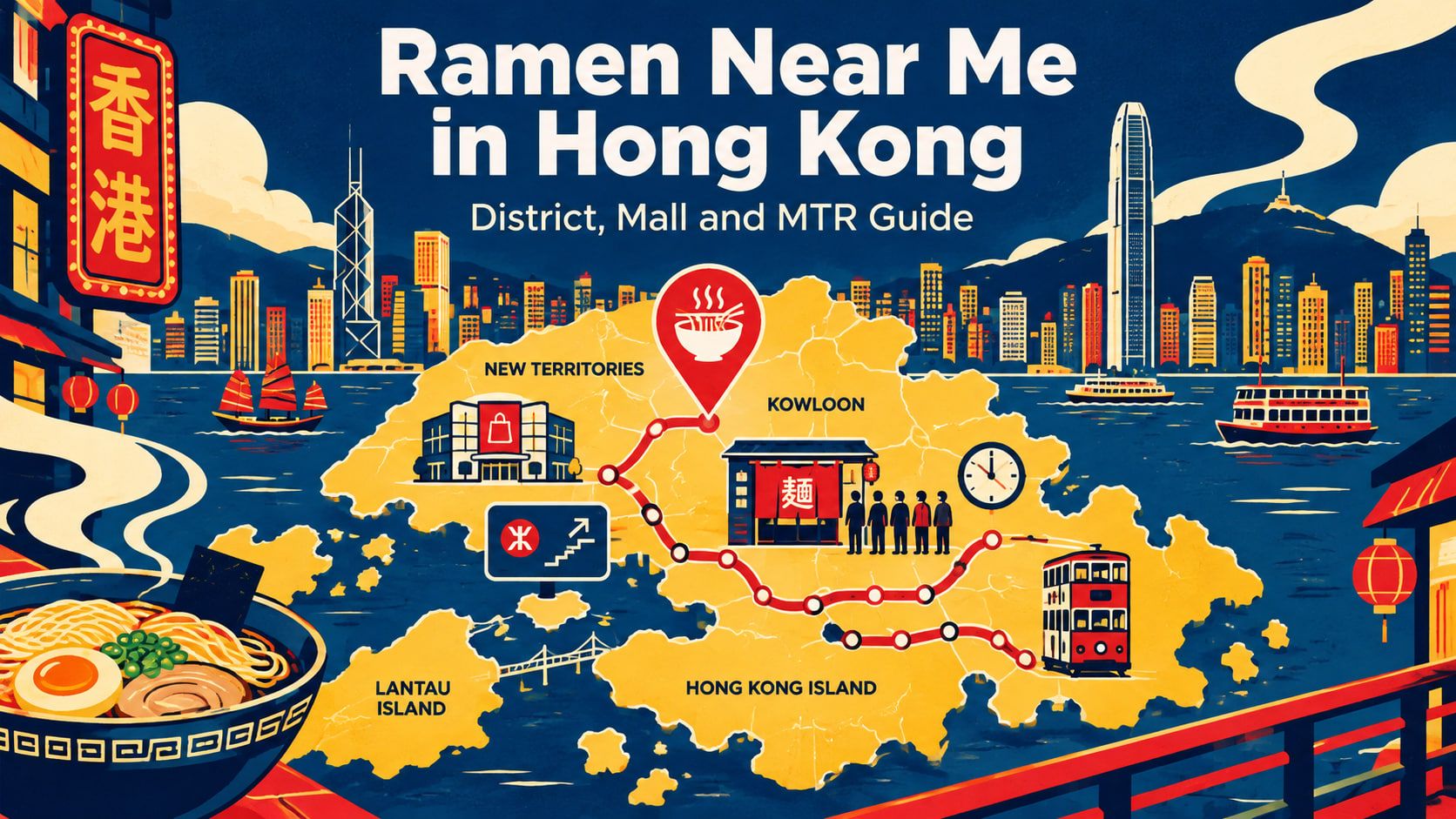
Use this location-first guide to choose an area, plan around an MTR exit and avoid arriving at a closed or over-queued ramen shop.

Choose ramen according to the moment: late shift, tight budget, solo lunch, family outing or rainy-night delivery.

Understand why ramen is eaten fast, slurped loudly, ordered by ticket and discussed with Japanese vocabulary.
Plan ramen in Causeway Bay through location checks, MTR access and practical decisions about timing and queues.
Plan a Central ramen meal around your route, available time and the operator details to confirm before travelling.
Explore ramen in Wan Chai with area planning, MTR access and checks on menus, hours and queues.
Plan ramen in Tsim Sha Tsui through station access, branch verification and a workable fallback for your visit.
Explore Mong Kok ramen with attention to the actual address, building access, opening arrangements and waiting time.
Plan a Sheung Wan ramen visit by checking the location, menu and service window before walking over.