Japanese Ramen Vocabulary for Hong Kong Diners
Learn Japanese ramen vocabulary that helps with noodles, firmness, toppings and refills at the counter.
Japanese Ramen Vocabulary for Hong Kong Diners
You do not need Japanese to order ramen in Japan, but ten or fifteen words make a ticket machine, a counter question and a menu much easier. The most useful distinction is not the name of the broth but the choice words: futsu for normal, kata for firm noodles, usu for light seasoning, abura for oil and kaedama for an extra noodle serving. A screenshot of this page can save a lot of pointing at a machine.
This page is for Hong Kong travellers heading to Japan and local diners who want to read a Japanese menu more confidently. It sits under ramen travel in Japan and works alongside the ramen ticket machine guide. Cantonese terms used at Hong Kong shops are on ramen terms in Cantonese.
The three-order rule. Learn the bowl name, the noodle firmness and the extra noodle word. You can order most ramen with: tonkotsu ramen, kata-men, kaedama; meaning pork-bone ramen, firm noodles, extra noodles.
🍜 1. Bowl and broth words
- Ramen (ラーメン): the bowl itself.
- Shoyu (醤油): soy sauce seasoning, usually clear brown broth.
- Shio (塩): salt seasoning, usually clear and pale; not automatically low sodium.
- Miso (味噌): fermented soybean paste seasoning.
- Tonkotsu (豚骨): pork bone broth, typically creamy and opaque.
- Tori paitan (鶏白湯): emulsified chicken broth.
- Tantanmen (担々麺): Japanese-style sesame and chilli noodle soup.
- Tsukemen (つけ麺): dipping noodles, served separately from concentrated broth.
- Mazesoba (まぜそば): brothless mixed noodles.
The styles are explained in more depth on the ramen styles hub, including the difference between shoyu ramen and shio ramen.
🗣️ 2. Ordering and customising
- Futsu (普通): normal or standard.
- Kata-men / kata (硬麺 / 硬): firm noodles.
- Barikata (バリカタ): very firm, common at Hakata-style shops.
- Yawamen / yawa (柔麺 / 柔): soft noodles.
- Koime (濃いめ): stronger seasoning.
- Usume (薄め): lighter seasoning.
- Abura oome (油多め): extra oil.
- Abura sukuname (油少なめ): less oil.
- Negi nuki (ネギ抜き): no spring onion.
- Men oosugi / omori (大盛り): large noodle portion.
Not every shop offers every change. At a ticket machine, choose the basic bowl, then state your preference when staff ask. At a counter that does not invite customisation, ordering the printed bowl is more polite than inventing a request.
➕ 3. Extras and toppings
- Kaedama (替え玉): an extra serving of noodles, especially with Hakata tonkotsu.
- Chashu (チャーシュー): braised pork slices.
- Ajitama / aji-tama (味玉): seasoned soft egg.
- Menma (メンマ): fermented bamboo shoots.
- Nori (海苔): dried seaweed.
- Kikurage (きくらげ): wood-ear mushroom.
- Moyashi (もやし): bean sprouts.
- Mayu (マー油): black garlic oil.
Ask about allergens before choosing extras: egg, soya, sesame, fish and shellfish are common. Our ramen allergen guide explains the components.
🎟️ 4. Ticket-machine words
- Shokken (食券): meal ticket.
- Urikire (売り切れ): sold out.
- Genkin (現金): cash.
- Kono shokken o watashite kudasai: please hand over this ticket; a phrase staff may use.
- Omatase shimashita: sorry to have kept you waiting.
- Okaikei: the bill, though most ticket shops are paid already.
Machine layouts vary, but colour-coded buttons and photos often help. The practical sequence is on how to use a ramen ticket machine and counter behaviour on ramen etiquette.
🙏 5. Useful courtesy phrases
- Onegaishimasu (お願いします): please.
- Arigato gozaimasu (ありがとうございます): thank you.
- Sumimasen (すみません): excuse me / sorry.
- Eigo no menu wa arimasu ka? (英語のメニューはありますか): do you have an English menu?
- Kore wa nan desu ka? (これは何ですか): what is this?
- Alerugii ga arimasu (アレルギーがあります): I have an allergy. Follow with the ingredient if you can.
⚠️ 6. Words that matter for health
Yasai (野菜) means vegetables; karame (辛め) means spicier; usume means lighter seasoning, a useful request for sodium but not a guarantee; and tamago (卵) means egg. Pregnant diners should ask for a fully cooked egg or omit ajitama, as described on ramen during pregnancy. Anyone with an allergy should not rely on a phrasebook alone: ask staff, show a written allergy card and avoid the bowl if the answer is unclear.
Translation does not replace an allergen check. A word such as shio or yasai does not mean allergen-free, low-sodium or vegetarian. Tare and aroma oil may contain wheat, soya, fish, sesame or animal ingredients. Ask about each component and avoid guessing if a severe allergy is involved.
❓ 7. FAQ
What does kaedama mean? An extra serving of noodles added after you finish the first; it is common at Hakata tonkotsu shops.
What is kata-men? Firm noodles. It is usually a texture preference, not uncooked noodles.
Does shio mean healthy? No. Shio means salt. It may be pale but can be as high in sodium as shoyu.
What does urikire mean? Sold out. Popular items may sell out before closing, so do not assume a posted hour guarantees the full menu.
Can I use English at a ramen shop? Often yes, especially in Tokyo tourist areas, and machines may have English. A few Japanese words and a translation app help in smaller shops.
history of ramen ramen history Hong Kong ramen etiquette why slurp ramen ramen in anime ramen Japanese vocabulary ramen Cantonese terms ramen museum Michelin ramen
A Hong Kong-first ramen guide connecting local restaurants, Japanese styles, instant noodles, home cooking and the practical questions people ask before choosing a bowl.
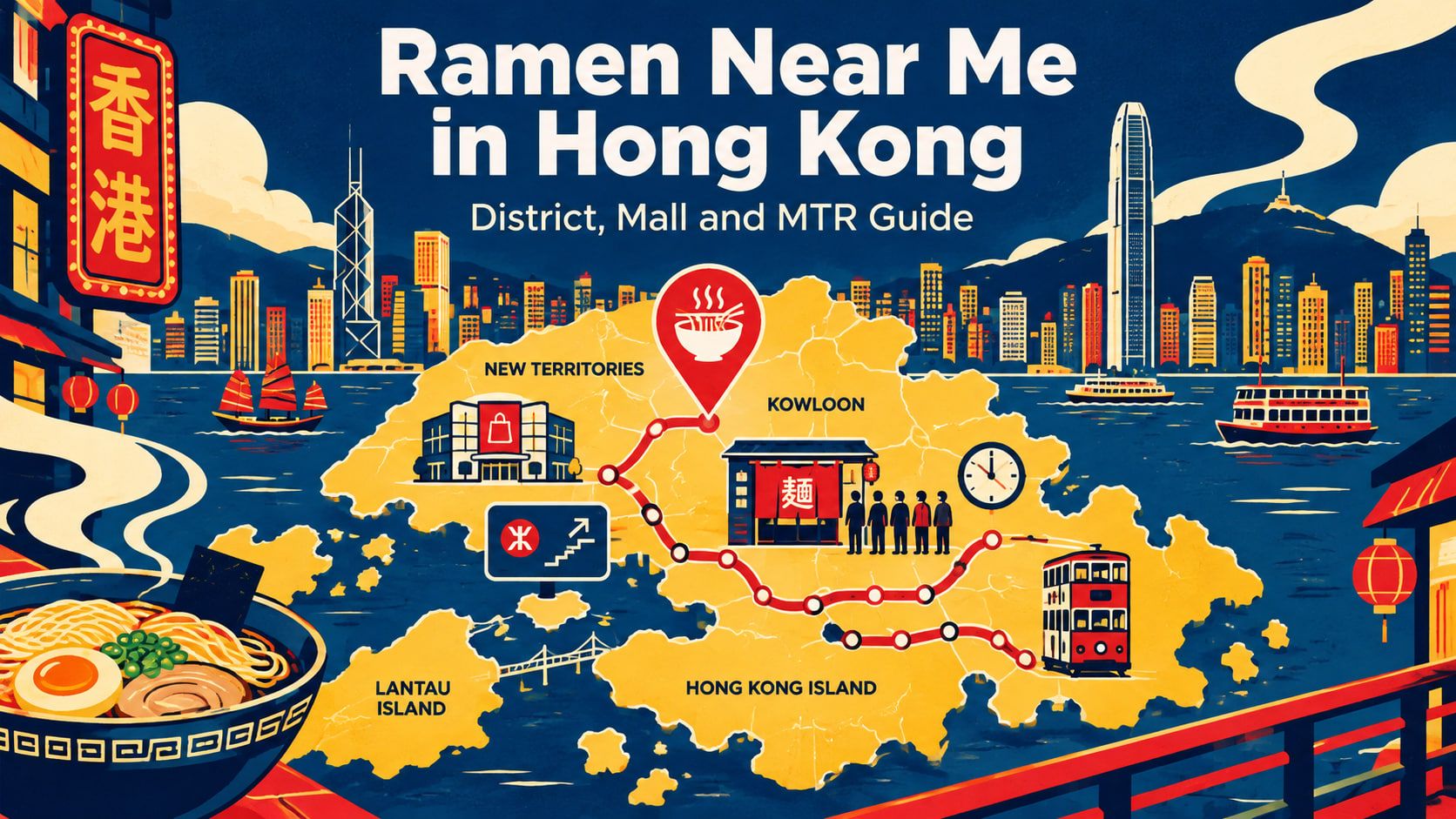
Use this location-first guide to choose an area, plan around an MTR exit and avoid arriving at a closed or over-queued ramen shop.

Choose ramen according to the moment: late shift, tight budget, solo lunch, family outing or rainy-night delivery.

Understand why ramen is eaten fast, slurped loudly, ordered by ticket and discussed with Japanese vocabulary.
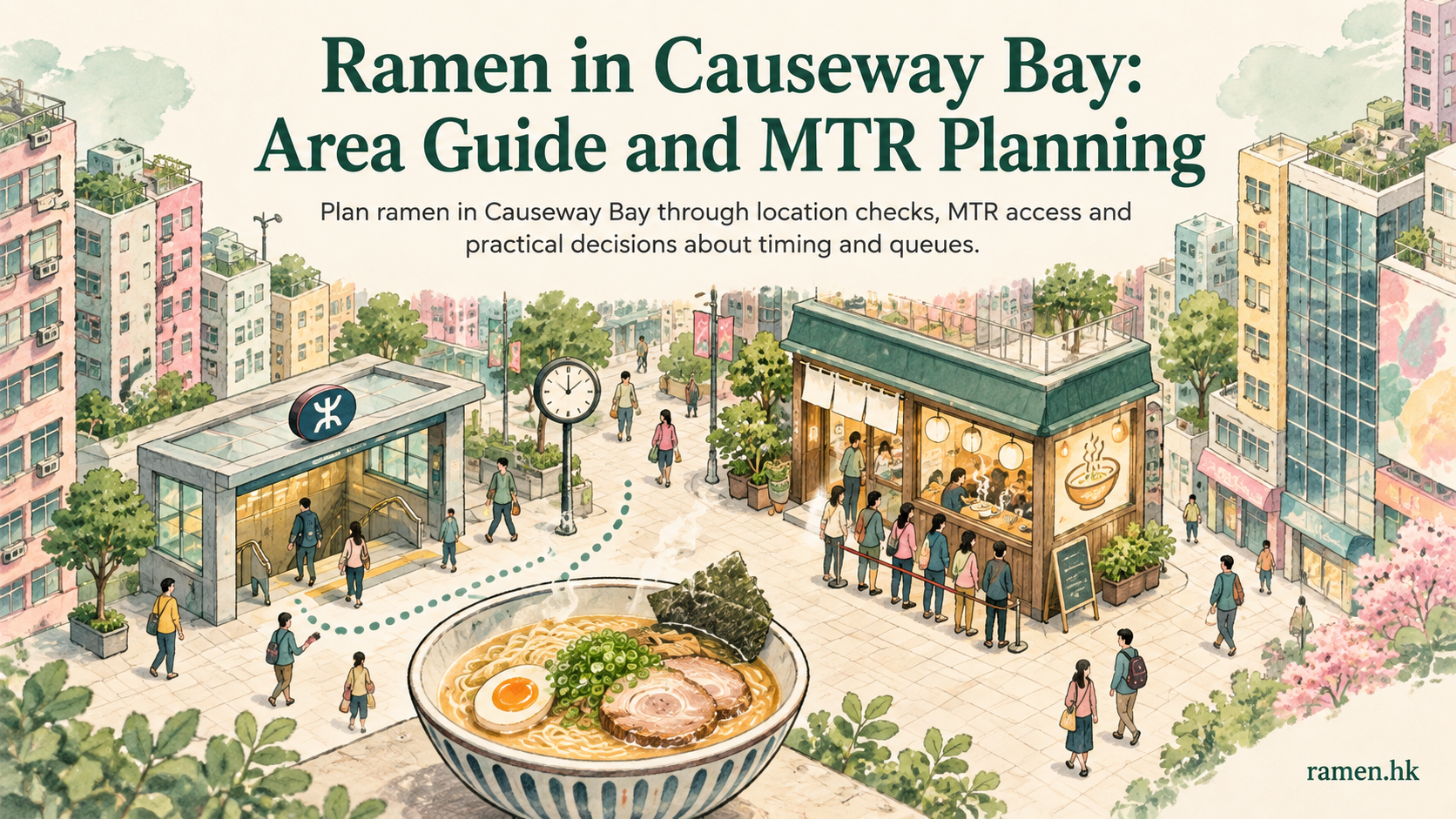
Plan ramen in Causeway Bay through location checks, MTR access and practical decisions about timing and queues.
Plan a Central ramen meal around your route, available time and the operator details to confirm before travelling.
Explore ramen in Wan Chai with area planning, MTR access and checks on menus, hours and queues.
Plan ramen in Tsim Sha Tsui through station access, branch verification and a workable fallback for your visit.
Explore Mong Kok ramen with attention to the actual address, building access, opening arrangements and waiting time.
Plan a Sheung Wan ramen visit by checking the location, menu and service window before walking over.