

Ramen Culture, History and Language
Understand why ramen is eaten fast, slurped loudly, ordered by ticket and discussed with Japanese vocabulary.
Ramen Culture and History: Origins, Etiquette, Ordering Systems and Vocabulary
Understand why ramen is eaten quickly, slurped audibly, ordered by ticket and discussed with Japanese vocabulary.
Highlight key: practical guidance · contested or limited claims · dates and places · terms and customs
Ramen habits make more sense when you know where they came from. Fast eating, audible slurping, ticket machines and order sheets largely reflect how ramen developed as a quick, counter-served meal with noodles that soften as they sit in hot soup. Treat these customs as context for understanding a shop, not as rules every diner must perform.
This sub-hub separates four research questions that are often blended together: origins, eating customs, ordering systems and recognition in awards or popular culture. None of them, on its own, establishes the quality, ingredients or current availability of a particular bowl. For the site-wide overview, return to Ramen in Hong Kong.
Start here:
Asking where ramen came from → read history with dates and sources.
Wondering whether to slurp → read etiquette as context, then follow the shop.
Facing a ticket machine or order sheet → learn the process before the queue.
Seeing a Michelin or anime reference → check the exact restaurant, place and date.
🏮 1. Origins: Chinese noodle roots, Japanese development
Separate two questions: where wheat-noodle traditions came from, and how ramen developed into a modern Japanese dish. Early ramen in Japan was associated with Chinese cooks and was long sold under names such as shina soba or chūka soba before “ramen” became the standard term.
Rairaiken, 1910: an important milestone, carefully worded
Rairaiken opened in Asakusa, Tokyo, in 1910 and is widely associated with early shoyu ramen. The Shin-Yokohama Ramen Museum reconstructed its bowl with the founder’s descendants, and the shop reopened in Asakusa in July 2026, decades after it closed in 1976.
Whether Rairaiken was literally Japan’s first ramen shop is debated. The Shin-Yokohama Ramen Museum says its gallery presents history clarified through 25 years of research, including Chinese noodles found in the Muromachi period (1338–1573). Phrases such as “an early and influential ramen shop” are safer than an uncontested “first”.
Continue with the history of ramen and is ramen Japanese or Chinese?
🍜 2. Instant noodles and Hong Kong: related, but separate stories
The Cupnoodles Museum Yokohama recreates the work shed where Chicken Ramen, described as the world’s first instant ramen, was invented by Momofuku Ando. The Shin-Yokohama museum sets its shop street in 1958, the year it identifies with that invention.
Hong Kong’s ramen story combines restaurant openings with a long instant-noodle culture, including packet noodles served in cha chaan teng. Restaurant ramen history and instant-noodle history should not be collapsed into one date or brand narrative. Read Momofuku Ando and instant noodles, ramen history in Hong Kong and Nissin Demae Iccho for each thread.
🥢 3. Eating customs: why speed and slurping exist
Ramen is commonly eaten soon after serving because noodles keep absorbing soup and soften. Ichiran’s published system guide makes the same point about its thin noodles, which expand in the soup over time, and explains that its kaedama noodle refill was designed to address this.
Slurping is widely accepted in Japanese ramen shops and is often explained as a way to cool hot noodles and carry soup with them. You do not need to slurp, eat quickly or finish the soup to show respect. Children, older diners and people with different access or health needs should eat in the way that is comfortable and safe for them.
- Follow shop-specific instructions over online generalisations.
- When others are queueing at a small counter, avoid lingering long after finishing.
- Ask politely if you are unsure about seating, ordering or table condiments.
- Finishing the soup is not required; leaving it can also reduce sodium intake.
Read ramen etiquette, why people slurp ramen and, for the staff perspective, working at a ramen shop.
🎫 4. Ticket machines, order sheets and vocabulary
Many shops separate payment from customisation. A ticket machine (shokkenki) handles the purchase; a written sheet or a staff question may handle noodle firmness, richness and toppings. Machines, language support and accepted payment methods vary by shop.
Worked example: one chain’s published system
Ichiran’s system guide describes a sequence that is useful as an example, not a universal standard:
- Check vacant seats on an information panel; some shops also have booths for 2–4 people and private rooms for 3–9.
- Circle preferences on a written order sheet, from flavour strength to noodle texture.
- Press the call button and hand over the sheet with your meal tickets.
- For kaedama, leave at least half of the soup, then order more noodles.
A chain’s system guide describes that chain; it does not describe every independent restaurant. Useful vocabulary is the kind that changes a real choice: katame (firmer noodles), kaedama (noodle refill), ajitama (seasoned egg) and similar terms.
Continue with using a ramen ticket machine, Japanese ramen vocabulary, Cantonese ramen terms and the ramen menu glossary.
⭐ 5. Michelin, anime and reading recognition critically
Awards, guidebooks, fiction and marketing shape expectations, but they answer different questions from “what should I order today?”
- Michelin recognition: a star, Bib Gourmand and a recommended listing are different categories. Name the exact restaurant, city, year and category.
- Chains and branches: recognition for one shop does not transfer automatically to its other branches or overseas outlets. For example, the Shin-Yokohama museum notes that Rishiri Ramen Miraku’s main shop on Rishiri Island was a Bib Gourmand in the Michelin Guide Hokkaido 2017 Special Edition; that is a statement about that main shop and edition.
- Anime and film: a fictional bowl is cultural representation, not evidence of a real recipe, nutritional profile or branch you can visit.
Read Michelin and ramen, Michelin-recognised ramen in Hong Kong and ramen in anime.
🗾 6. Regional traditions: useful background, not a fixed recipe
Regional names such as Hakata or Sapporo point to common combinations of broth, seasoning and noodles. Kaedama, for instance, is described by Ichiran as a Hakata way of enjoying more noodles. A regional label does not guarantee that every current menu follows the same practice, and it is not a quality endorsement.
When choosing a real meal, return to the ingredients and operator information. Explore Hakata ramen, Sapporo miso ramen and the ramen styles hub.
When quoting ramen history: name the source and the scope of its claim, give the date and place, avoid an uncontested “first” unless the evidence supports it, and keep cultural representation separate from present-day facts about any restaurant.
❓ 7. FAQ
Is ramen Japanese or Chinese?
Both histories matter. Ramen developed in Japan from Chinese-style wheat noodles and early Chinese cooks, then evolved into many distinctly Japanese regional styles.
Was Rairaiken the first ramen shop?
Rairaiken, opened in Asakusa in 1910, is widely described as an early and influential ramen shop and reopened there in 2026. Whether it was literally the first is debated, so careful wording is preferable.
Do I have to slurp ramen?
No. Slurping is accepted in many ramen shops, but it is not required. Eat in a way that is comfortable and safe for you.
Is it rude to leave the soup?
Leaving soup is common. At Ichiran, the system guide says to leave at least half of the soup if you want a noodle refill.
Does every ramen shop use a ticket machine?
No. Some use machines, some take orders at the table and some use QR or written systems. Follow the instructions at the shop you visit.
Does Michelin recognition apply to every branch of a brand?
No. Recognition applies to the specific restaurant, location, year and category named by the guide.
🔎 Sources and limitations
Ordering steps, kaedama and noodle expansion come from Ichiran’s published system guide. Museum history, the 1958 street setting and the Muromachi-period finding come from the Shin-Yokohama Ramen Museum’s English page; the Chicken Ramen work shed from the Cupnoodles Museum Yokohama. Rairaiken’s 2026 reopening is reported by The Japan Times.
Ramen.hk is an independent information resource. Historical claims are reported with their source and scope; contested “firsts” are marked as such. Cultural context is not an endorsement of any restaurant, and this page does not claim personal visits or tastings.
"history of ramen ramen history Hong Kong ramen etiquette why slurp ramen ramen in anime ramen Japanese vocabulary ramen Cantonese terms ramen museum Michelin ramen
A Hong Kong-first ramen guide connecting local restaurants, Japanese styles, instant noodles, home cooking and the practical questions people ask before choosing a bowl.
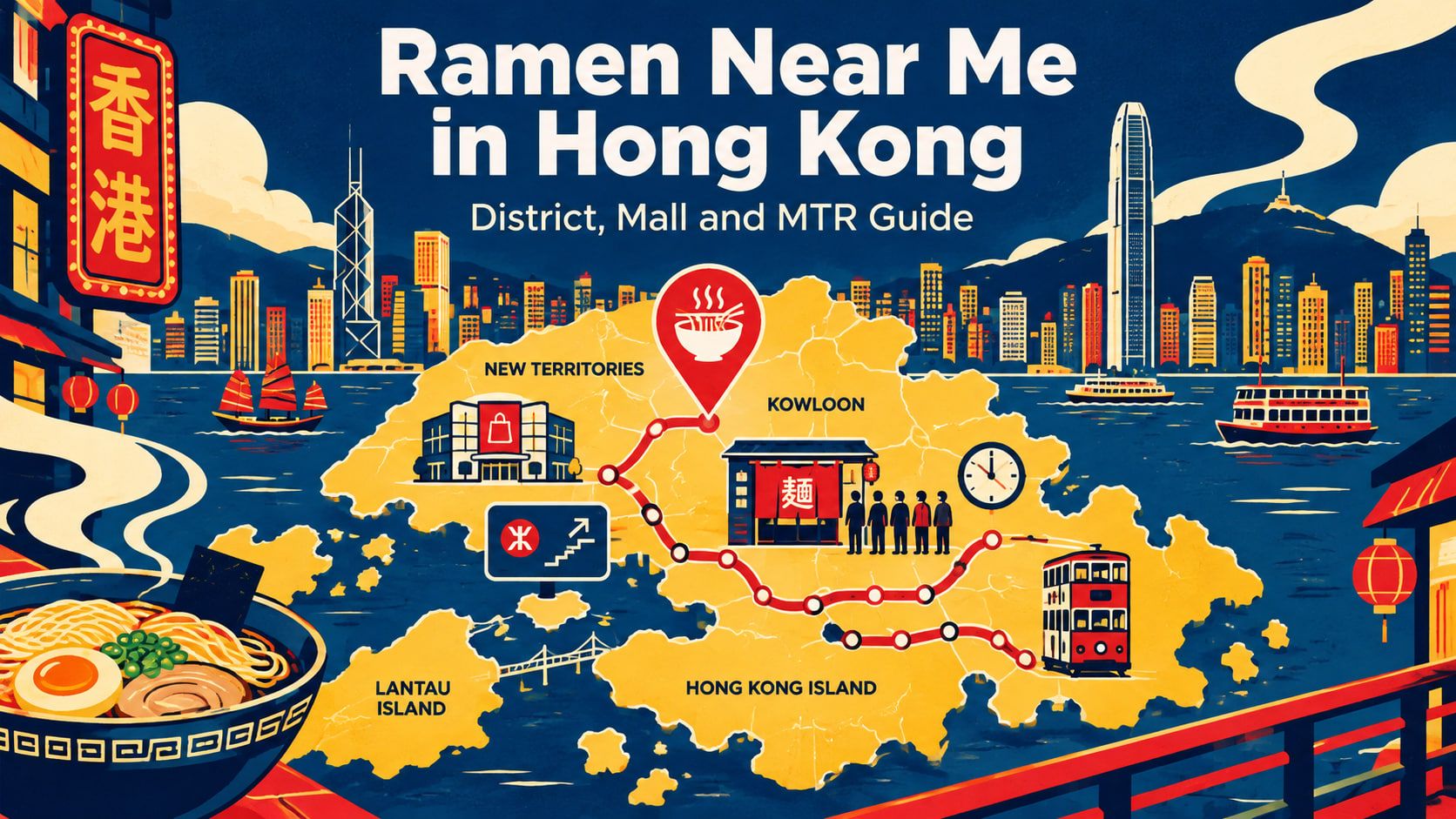
Use this location-first guide to choose an area, plan around an MTR exit and avoid arriving at a closed or over-queued ramen shop.

Choose ramen according to the moment: late shift, tight budget, solo lunch, family outing or rainy-night delivery.
Plan ramen in Causeway Bay through location checks, MTR access and practical decisions about timing and queues.
Plan a Central ramen meal around your route, available time and the operator details to confirm before travelling.
Explore ramen in Wan Chai with area planning, MTR access and checks on menus, hours and queues.
Plan ramen in Tsim Sha Tsui through station access, branch verification and a workable fallback for your visit.
Explore Mong Kok ramen with attention to the actual address, building access, opening arrangements and waiting time.
Plan a Sheung Wan ramen visit by checking the location, menu and service window before walking over.
Find your next Kwun Tong ramen enquiry through local access, meal timing and operator verification.