
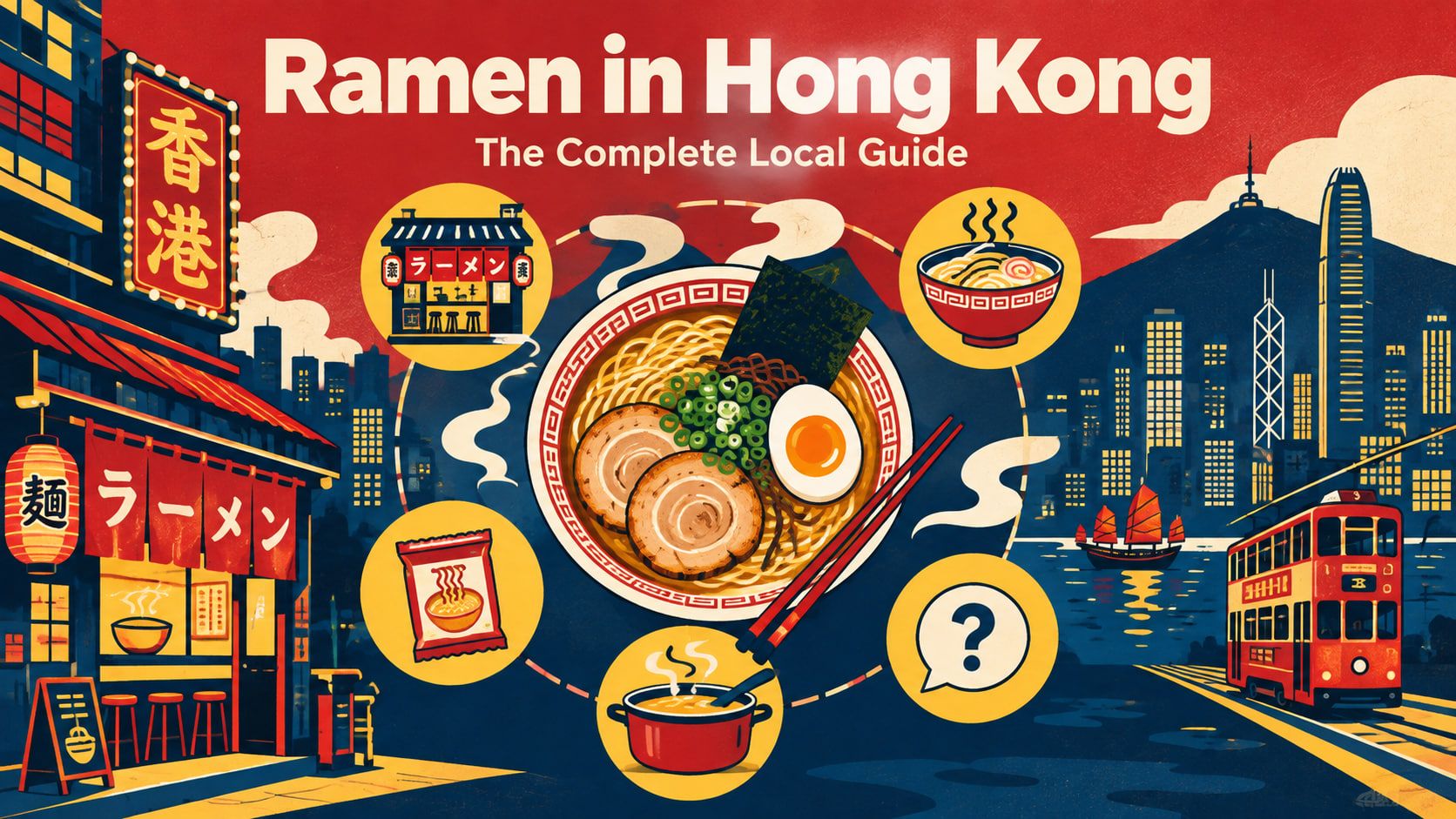
Ramen in Hong Kong: The Complete Local Guide
A Hong Kong-first ramen guide connecting local restaurants, Japanese styles, instant noodles, home cooking and the practical questions people ask before choosing a bowl.
Ramen in Hong Kong: A Guide to Restaurants, Styles, Home Cooking and Practical Planning
Highlight key: prices and charges · practical actions · limitations and cautions · locations and timing · styles and terminology
To find ramen in Hong Kong, start with three questions: where can you realistically eat, what kind of bowl do you want, and what must the meal accommodate? A nearby lunch, a late-night dinner, a family meal and a home-cooking kit need different checks. Choose the location and format first, then confirm the current menu, total cost and service arrangements before travelling.
This is Ramen.hk’s starting point for restaurant planning, ramen styles, ingredients, cooking, shopping, nutrition, Japan travel and restaurant work. It explains the decisions that matter and connects you to focused guides. It is not a ranked restaurant list, a live availability service or a claim that every linked restaurant or product has been personally tested.
Start here:
Need a meal nearby? Use the district guides.
Choosing a flavour? Compare broth, seasoning and eating format.
Eating late or with other people? Check last admission, seating and charges.
Cooking at home? Match the recipe or kit to your equipment and storage.
Managing an allergy or another dietary requirement? Confirm ingredients and preparation before ordering.
📍 1. Find ramen that fits your journey
Use the Hong Kong ramen location guide to narrow the search to an area that fits your day. Consider the station exit, final walk, possible wait and onward journey together. A restaurant that suits a relaxed evening may be impractical during a short lunch break.
- Hong Kong Island: explore Causeway Bay, Central, Wan Chai or Sheung Wan.
- Kowloon: compare routes around Tsim Sha Tsui, Mong Kok and Kwun Tong.
- New Territories: keep the search local with Sha Tin or Tsuen Wan.
- Mall-based planning: use the IFC and Central malls guide when the building or shopping itinerary is your starting point.
A district listing is a planning aid, not confirmation that a branch is open today. Before a special trip, match the restaurant name to the exact address and check the operator’s latest branch information. Do not assume that every shop in a station area is beside an exit or accessible by the same route.
🧭 2. Choose for the occasion, not just the bowl
The dining-situation hub starts with practical constraints: arriving late, eating alone, bringing children, sitting together or ordering food home. Identify any non-negotiable requirement before choosing a style or brand.
| Your situation | What to confirm | Focused guide |
|---|---|---|
| Late-night meal | Last admission, last orders, surcharges and the journey home. | Late-night ramen |
| Solo dinner | Counter or table seating, queue procedure and ordering method. | Solo ramen |
| Meal with children | Access, suitable seating, utensils, portions and ingredients. | Family ramen planning |
| Limited budget | The complete order price, including extras and charges. | Lower-budget ramen |
| Delivery or takeaway | Delivery coverage, fees, packaging and preparation instructions. | Ramen delivery |
For popular shops, read the ramen queue guide and confirm whether the branch uses a physical line, tickets, a waiting list or reservations. Closing time, last orders and last admission are different checks. A published closing time alone is not a promise that you can still join the queue.
🏪 3. Compare restaurants using branch-level information
Start with the Hong Kong ramen restaurant guides when you have a particular operator in mind. Use the exact branch’s current menu and announcements to check what is available. A brand name, an overseas website or an old menu photograph cannot by itself confirm a current Hong Kong branch.
For example, the Ichiran, Ippudo and Butao pages provide routes into operator-specific questions. Their inclusion here is not a ranking, an endorsement or confirmation of a particular branch’s current trading status.
Compare the full meal price
Check the base bowl, toppings, extra noodles, drinks, service charge, minimum spend and any time-based surcharge. Compare equivalent orders: a plain bowl and a loaded set meal are not the same purchase. Delivery-platform prices and promotions may also differ from dine-in prices.
Use the Hong Kong ramen price guide for price-comparison questions. This overview does not present an unsourced citywide average or promise a fixed price at a named shop.
A useful enquiry: “Are you serving at this branch today, and what time is last admission? We have [number] people and need [seating requirement]. What is the total price for [order], including service charges or late-night fees? We also need to confirm [allergy or dietary requirement].”
🍜 4. Understand styles: broth, seasoning and format
The most useful starting distinction is that ramen names do not all describe the same part of a bowl. Tonkotsu describes a pork-bone broth; shoyu, shio and miso describe seasoning approaches; tsukemen and mazesoba describe different eating formats. A bowl can therefore combine a pork-bone broth with soy-sauce seasoning.
- Tonkotsu ramen: explore the pork-bone broth category.
- Shoyu, shio and miso ramen: compare seasoning directions without assuming identical stock recipes.
- Tsukemen: noodles are served separately from the dipping soup.
- Mazesoba: explore sauce-mixed noodles rather than a conventional bowl of noodle soup.
- Chicken paitan: learn about the rich chicken-broth category, while checking each shop’s complete recipe separately.
Continue to the ramen styles hub for regional and specialist categories. If you are choosing between formats, use the comparison guides, including tsukemen versus ramen and shoyu versus shio.
A style name is not an ingredient declaration, a nutritional assessment or a dietary certification. Use it to understand the menu, then ask about the actual preparation when ingredients matter.
🥣 5. Learn what goes into the bowl
The ramen anatomy guide breaks the meal into components. This is useful both for reading menus and for assembling ramen at home: sharing a style name does not mean two bowls use the same noodles, stock, seasoning or toppings.
- Noodles: consider texture, thickness, portion and cooking instructions.
- Broth: identify the stock and its ingredients.
- Tare: understand the concentrated seasoning used to flavour the bowl.
- Aroma oil: distinguish the finishing oil from the broth and seasoning.
- Chashu, ajitama and other toppings: check what is included and what costs extra.
For unfamiliar menu terms or ordering systems, use the ramen glossary and the ticket-machine guide. A photograph can show presentation, but it cannot establish a complete ingredient list or the current portion size.
❤️ 6. Check sodium, portions and dietary requirements
What the Hong Kong sodium evidence actually shows
A joint Centre for Food Safety and Consumer Council study published in February 2018 tested 100 restaurant noodle-in-soup samples collected from April to June 2017. The sample covered ten dish categories; it was not a survey of 100 ramen bowls.
Across all ten categories, a whole portion including soup averaged 2,700 mg sodium. Within the ten samples of BBQ pork ramen in pork-bone soup, the average was 2,600 mg per whole portion, with a range of 2,000–3,900 mg. These are historical sample results, not measurements of current menus, individual brands or every bowl sold in Hong Kong.
The study advises asking for less salt or seasoning and trying not to consume the soup. It also found that leaving the soup did not remove all sodium from the meal. For practical interpretation, read the ramen sodium guide, the calorie guide and the wider nutrition and health hub.
Dietary requirements need ingredient-level answers
Check noodles, stock, tare, aroma oil and toppings separately. Removing a visible topping does not establish that the remaining dish meets an allergy, vegan, gluten-free or halal requirement. Ask whether the restaurant can confirm ingredients and manage relevant cross-contact risks.
Use the focused guides to ramen allergens, vegan ramen, gluten-free ramen and halal ramen to organise your questions. A guide cannot guarantee that a particular meal is safe or suitable for you. For an individual medical diet or condition, seek advice from your treating clinician or a registered dietitian.
🏠 7. Make ramen at home without making everything from scratch
Start with the home ramen guide. Choose a method that fits your saucepan capacity, hob space, available time and storage. Purchased noodles, a prepared soup and one or two toppings are a reasonable starting point; making broth, noodles and toppings from scratch can come later.
- Read the complete recipe or product instructions before starting.
- Check the number of portions, water quantities, equipment and storage requirements.
- Prepare the toppings and soup before cooking noodles that need immediate serving.
- Cook the noodles according to their own instructions, including any separate boiling or draining step.
- Assemble and serve promptly rather than leaving cooked noodles waiting while you finish other components.
Begin with easy shoyu ramen, then explore ramen eggs or another component separately. Use home ramen troubleshooting for assembly and texture problems.
Fresh noodles, dried noodles, instant noodles and chilled kits do not share one universal cooking time or storage method. Follow the relevant instructions, and use the food-safety guide, broth-freezing guide and reheating guide for the specific task.
📦 8. Buy the right noodles, kits and equipment
Use the instant-noodle hub for packets, cups and sauce-mixed products, and the shopping hub for ingredients, kits and equipment. Compare what the product includes, how many portions it makes and what you still need to provide.
- For packet and café-style context, explore Nissin Demae Iccho and cha chaan teng instant noodles.
- For another preparation format, use the Buldak guide and follow the instructions for the exact product, not a different flavour or pack.
- For complete or partial meal packs, check ramen kits for included components and storage questions.
- For retailer planning, read the Don Don Donki ramen guide and check the official Hong Kong retailer site for branch information. A branch listing does not establish stock of a particular noodle or kit.
- For equipment, use the ramen bowl guide after deciding the portion and preparation method you need.
The CFS instant-noodle article published in March 2010 recommends comparing sodium, total fat and saturated fat, reducing seasoning and drinking less soup. Treat its product study as historical evidence, not a current ranking. For a purchase today, read the current pack and compare equivalent quantities, checking whether the figures cover one serving or the whole product.
🇯🇵 9. Fit ramen into a Japan itinerary
The Japan ramen travel hub starts with access, time available, ordering and the rest of your itinerary. Use Tokyo Ramen Street for station-based planning or Fukuoka and Hakata for a regional route.
Check restaurant, museum and tour arrangements individually: a dining visit, an admission ticket and a booked activity are different purchases. Leave flexibility before a train or flight rather than treating an online queue estimate as a guarantee.
For food purchases to bring home, use the ramen souvenir guide to identify the product’s ingredients and storage needs, then check applicable Hong Kong import requirements with the relevant authority. Do not treat sealed packaging alone as confirmation that a food item may be imported.
💼 10. Explore restaurant jobs and opening a shop
The jobs and careers hub separates service, kitchen support and cooking roles. Before accepting an offer, clarify the employer, duties, pay, roster and training arrangements. A job advertisement describes an opportunity at a particular time; it is not a guarantee of progression or future earnings.
Use the restaurant labour-rights guide to organise employment questions and locate official information. For a business project, start with opening a ramen shop, then investigate startup costs and restaurant licensing separately.
GovHK’s licensing and permits portal provides routes to restaurant licence types, application information, offices and fees. Confirm the proposed premises and intended operations with the relevant authorities before making a major commitment. A general guide is not confirmation that a particular premises or business model will be approved.
📅 11. Separate current changes from ramen background
Use the trends hub for questions about openings, closures and price changes. Check dates and distinguish a relocation, renovation, temporary closure or scheduled pop-up ending from a permanent closure.
For background, explore ramen culture and history. For a narrow question about a term, product or cooking problem, use the question index. These are different research tasks: a historical explanation does not verify a restaurant’s current trading status, and an opening announcement is not a quality assessment.
❓ 12. Frequently asked questions
Where should I start looking for ramen in Hong Kong?
Start with the district or station area that fits your journey, then compare the bowl style, total cost and seating requirements. Confirm the exact branch’s current hours and menu before travelling.
Which ramen style should I try first?
Choose the format first: noodle soup, noodles with dipping soup, or sauce-mixed noodles. Then look at the broth and seasoning. A basic bowl is a useful starting point if you want to learn your preferences before adding extras.
Is tonkotsu the same kind of label as shoyu?
No. Tonkotsu identifies a pork-bone broth category, while shoyu identifies soy-sauce seasoning. A bowl can combine both. Neither label tells you the complete recipe on its own.
How much does ramen cost in Hong Kong?
There is no single price that represents every restaurant and ordering channel. Compare the base bowl plus the extras and charges you will actually pay. Check whether a quoted amount is for dine-in, collection or delivery, and when it was recorded.
Does leaving the soup make ramen low in sodium?
Not necessarily. Leaving soup can reduce sodium intake, but noodles, seasoning and toppings can still contribute sodium. The historical Hong Kong study discussed above found substantial sodium remained in the food portion. It cannot tell you the exact content of a current order.
Can I make ramen in a small kitchen?
Yes. Choose a recipe or kit that matches your equipment and storage, and start with purchased noodles and a manageable soup preparation. You do not need to make every component from scratch.
Does a linked guide confirm that a restaurant is open or a product is in stock?
No. A link provides a research route, not live confirmation. Check restaurant arrangements with the operator and product availability with the retailer, particularly before a special journey.
🔎 Sources, scope and information limits
This page is an information overview rather than a first-hand tasting report. Its linked guides organise different reader questions; their presence does not establish that every restaurant, product or activity is currently available. No personal visits, recipe tests, professional credentials or medical review are claimed on this page.
The sodium figures above come from the CFS and Consumer Council study published in February 2018, using restaurant samples collected in 2017. The instant-noodle advice links to a CFS article published in March 2010. These dates matter: historical findings provide context, while current product labels and operator information are needed for present-day decisions.
Before acting on changeable information, verify the exact branch, date, ordering channel and applicable conditions. For health, employment, licensing or food-import decisions, consult the relevant authority or qualified professional. Restaurant listings, style names and general guides are not substitutes for individual confirmation.
Source links are provided beside the relevant material so readers can inspect the underlying information. This page does not claim a site-wide verification date or that every linked guide has been audited. Prices, opening hours, stock, booking arrangements and regulations may change.
"Hong Kong ramen ramen near me ramen by district Causeway Bay ramen Central ramen Wan Chai ramen Tsim Sha Tsui ramen Mong Kok ramen Tsuen Wan ramen late-night ramen cheap ramen ramen delivery solo ramen Michelin ramen
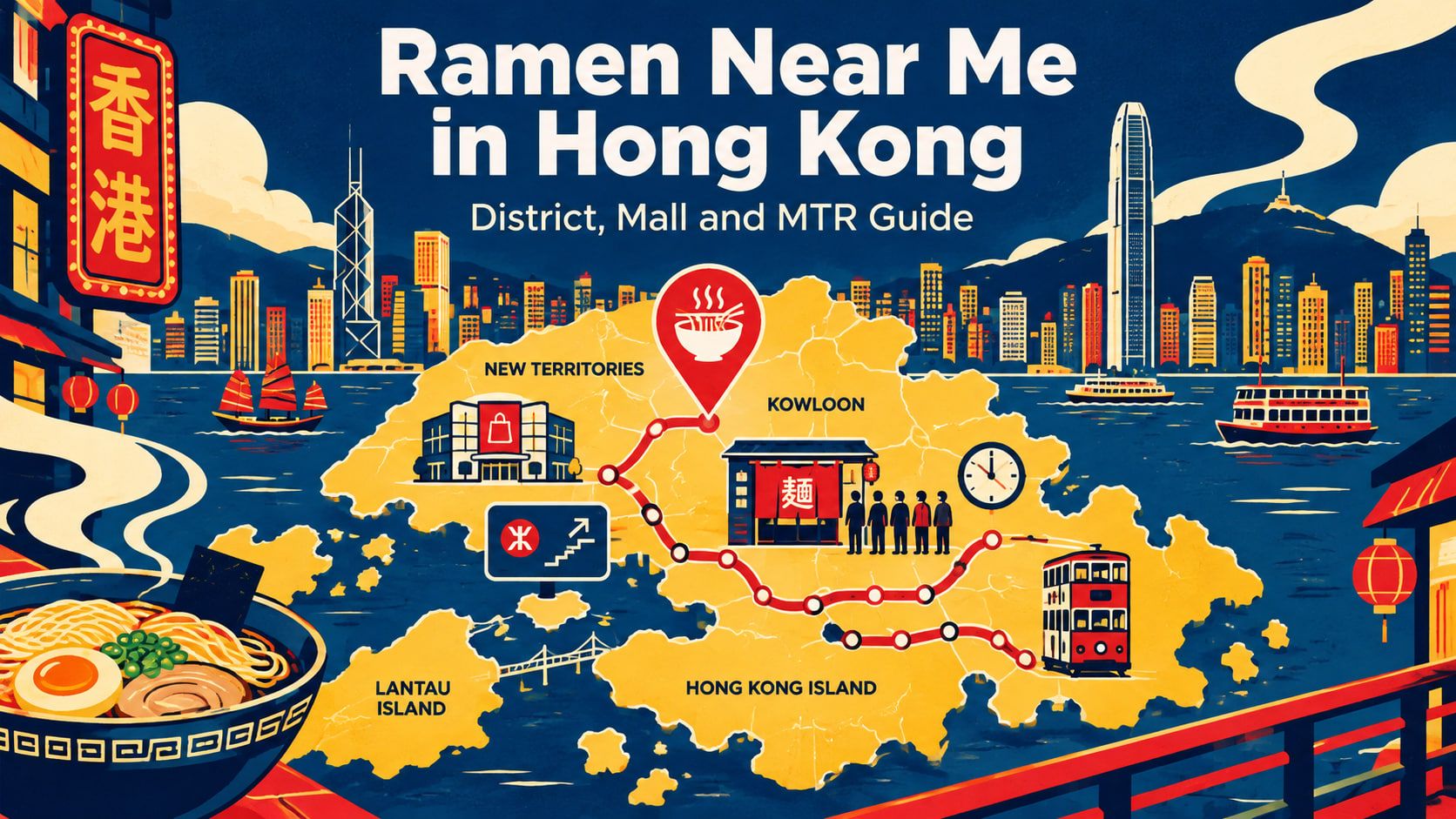
Use this location-first guide to choose an area, plan around an MTR exit and avoid arriving at a closed or over-queued ramen shop.

Choose ramen according to the moment: late shift, tight budget, solo lunch, family outing or rainy-night delivery.

Understand why ramen is eaten fast, slurped loudly, ordered by ticket and discussed with Japanese vocabulary.
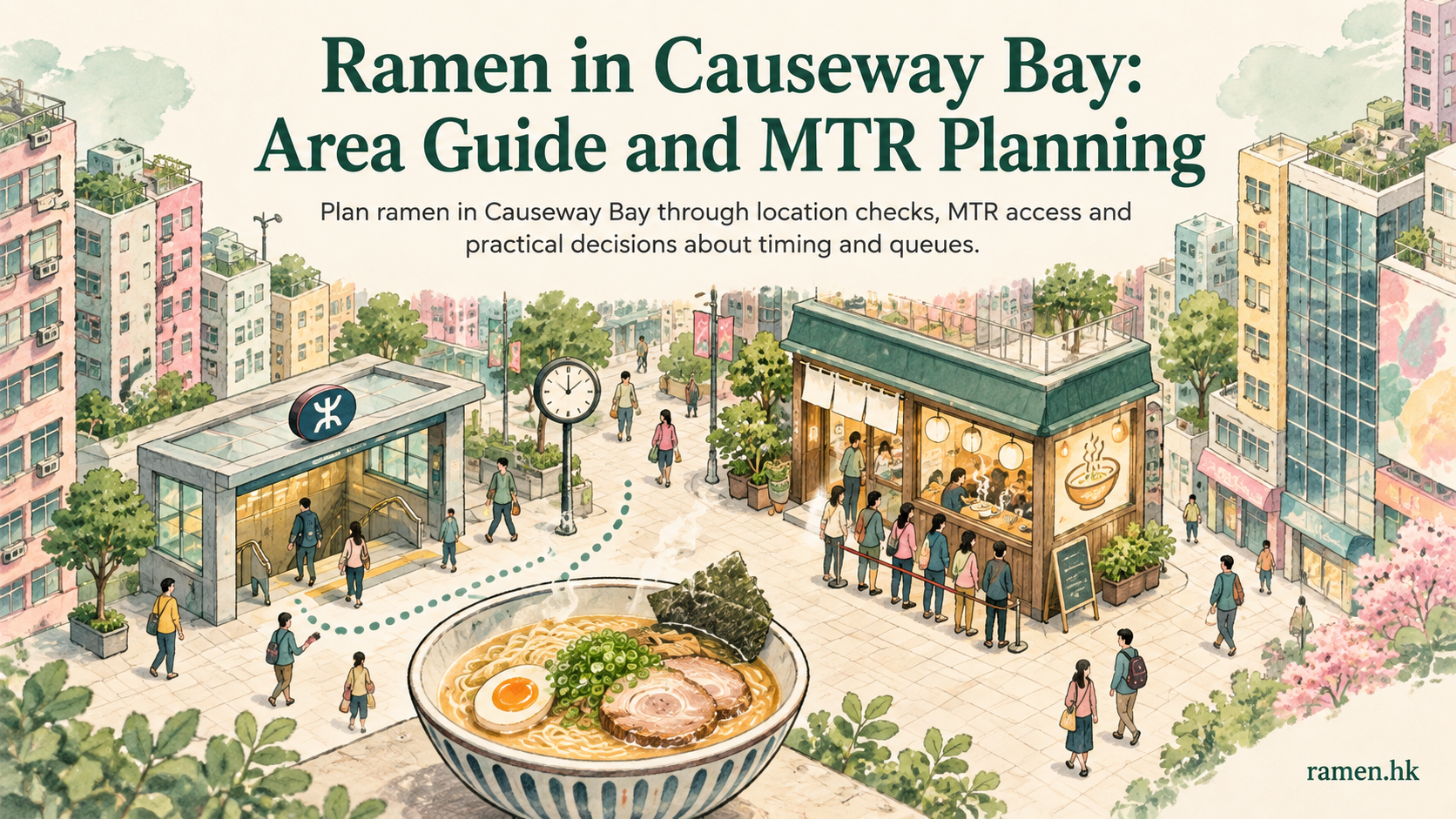
Plan ramen in Causeway Bay through location checks, MTR access and practical decisions about timing and queues.
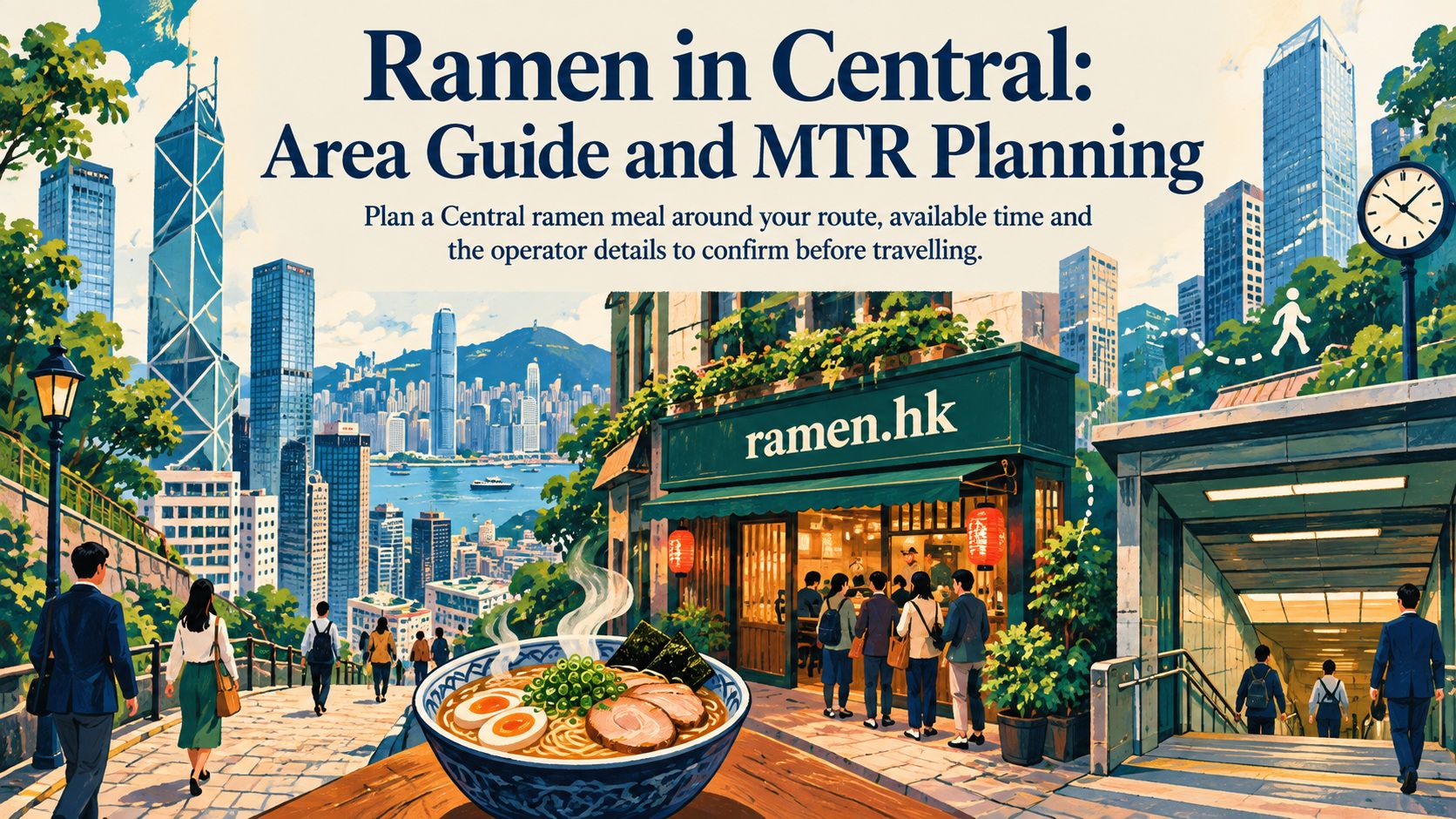
Plan a Central ramen meal around your route, available time and the operator details to confirm before travelling.
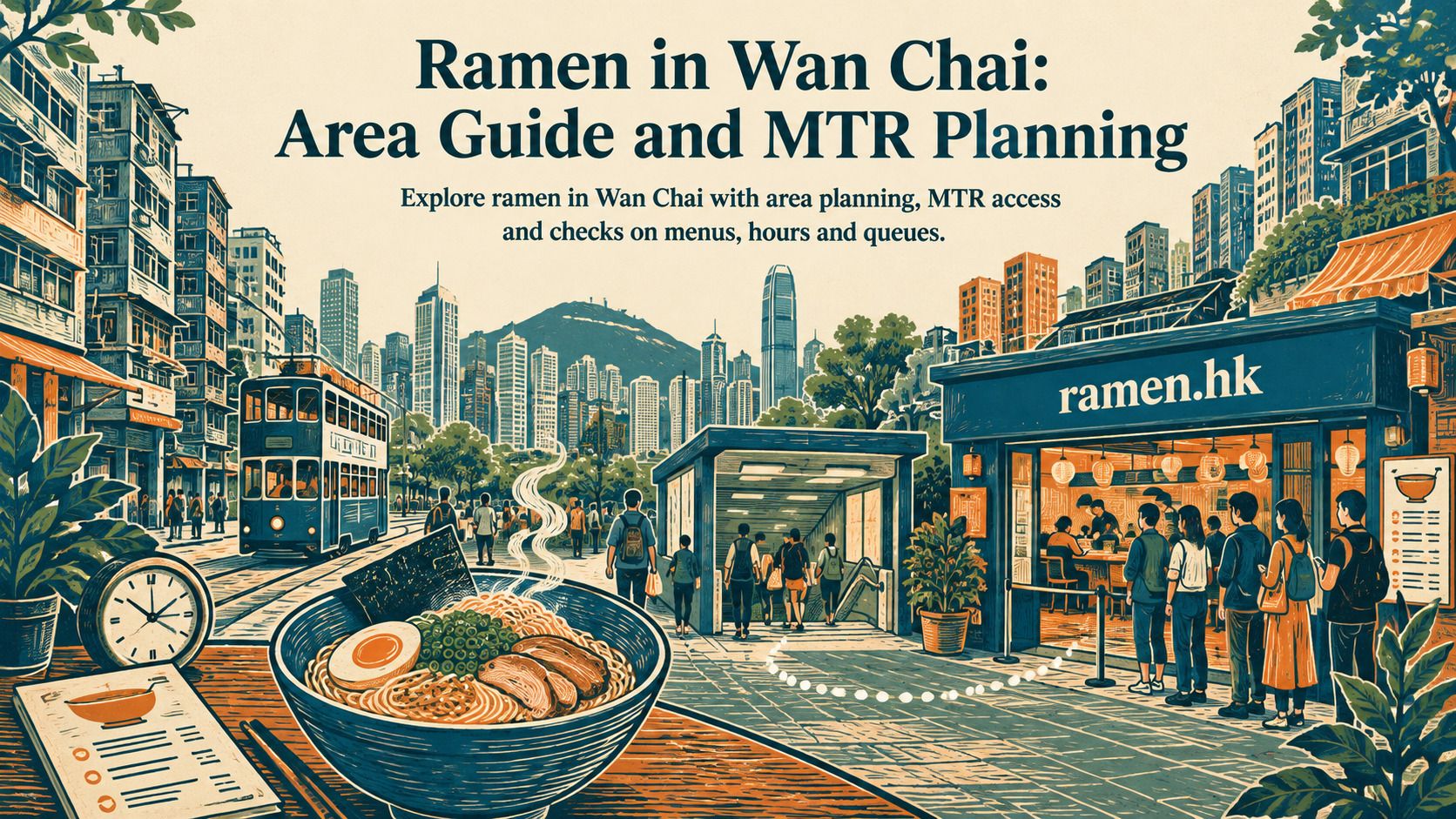
Explore ramen in Wan Chai with area planning, MTR access and checks on menus, hours and queues.
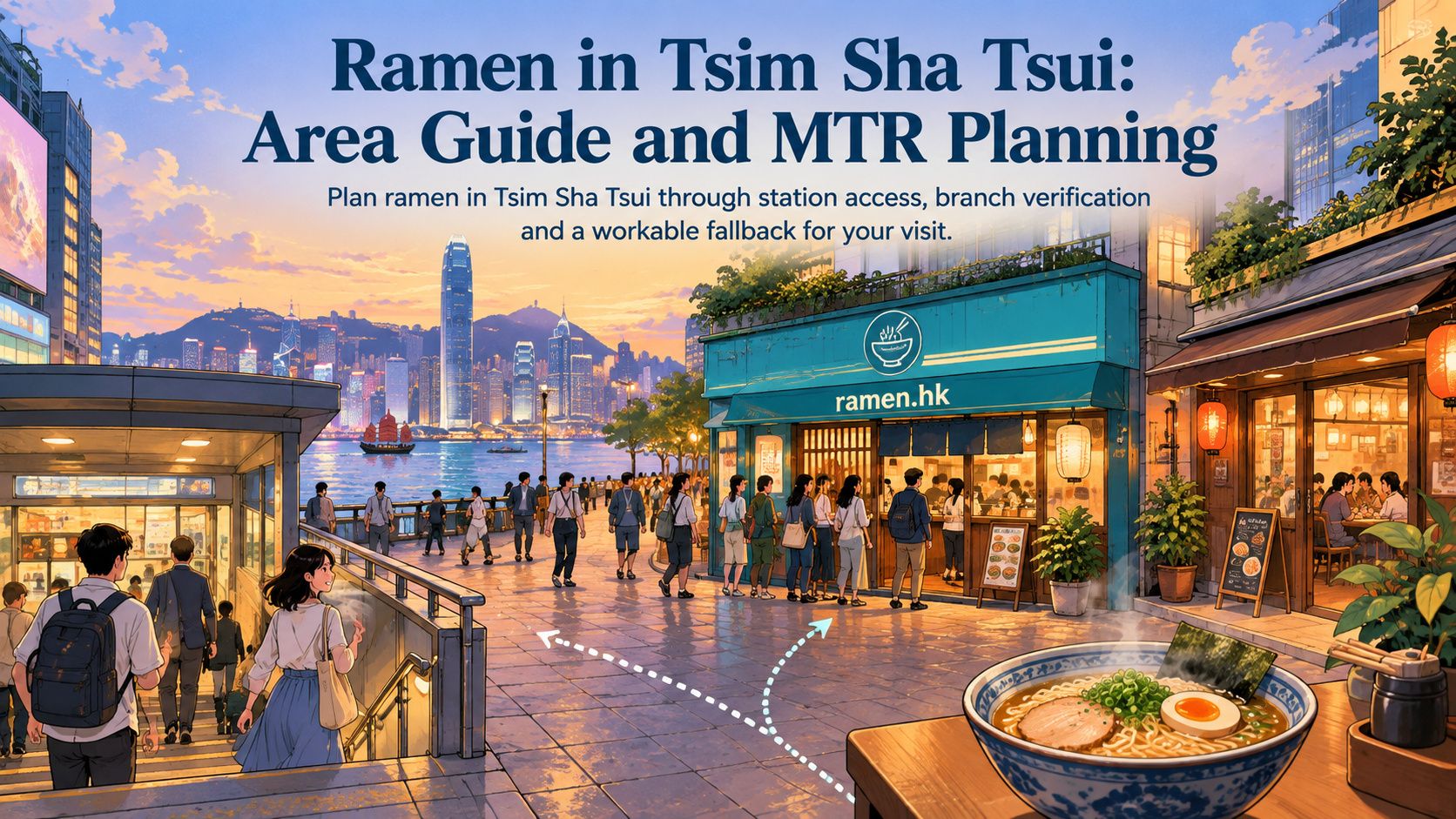
Plan ramen in Tsim Sha Tsui through station access, branch verification and a workable fallback for your visit.
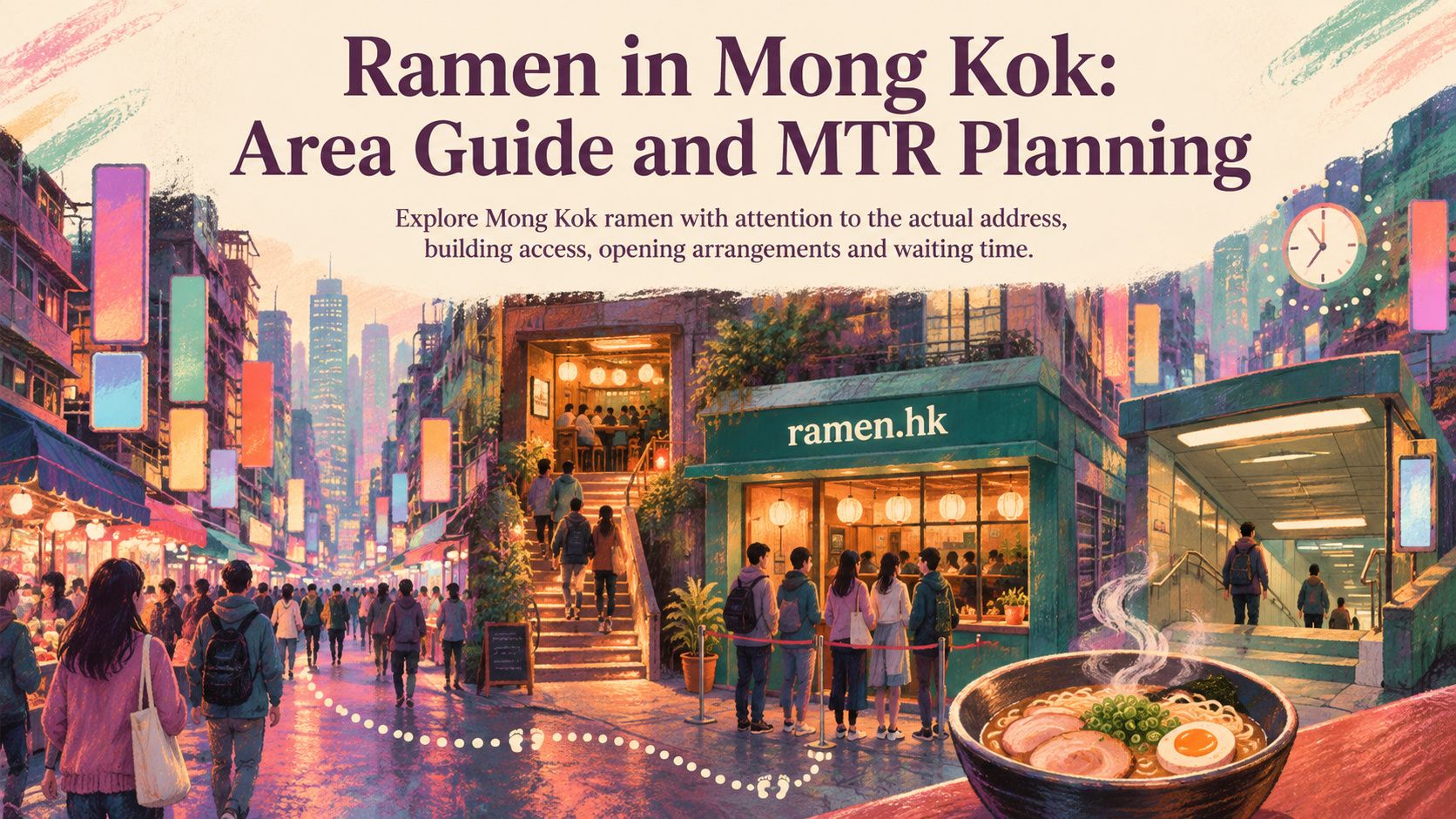
Explore Mong Kok ramen with attention to the actual address, building access, opening arrangements and waiting time.
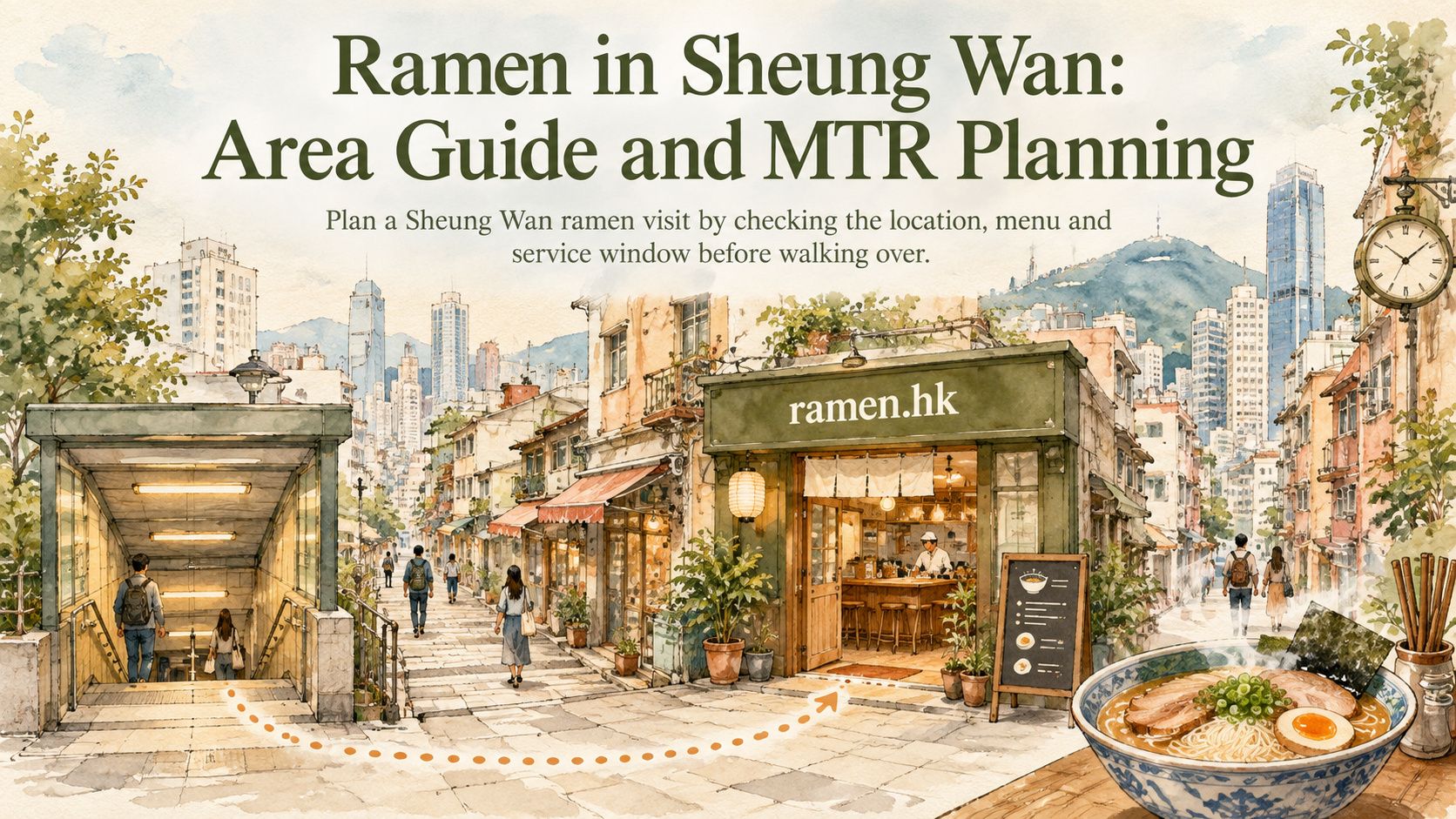
Plan a Sheung Wan ramen visit by checking the location, menu and service window before walking over.
Find your next Kwun Tong ramen enquiry through local access, meal timing and operator verification.