
Ramen vs Hong Kong Wonton Noodles: Two Noodle Cultures Compared
Explore ramen and Hong Kong wonton noodles through their ingredients, serving styles and practical meal differences.
Ramen vs Hong Kong Wonton Noodles: Two Noodle Cultures Compared
Ramen and Hong Kong wonton noodles are the two bowls most likely to be eaten weekly in the same city, yet they solve opposite problems: ramen is richness and customisation, wonton noodles are precision, clear broth and snap. This page explains trade-offs and characteristics; it is not a ranking.
Comparison hub: Ramen Comparisons. Style hub: Ramen Types and Regional Styles. Site hub: Ramen in Hong Kong: The Complete Local Guide.
The texture test. Good wonton noodles are thin, firm and barely in the broth; ramen noodles are thicker or chewier and designed to absorb soup. Both use alkaline water, but the target texture is different.
🍜 1. Noodles
Wonton noodles use fine egg noodles with a strong snap; ramen ranges from thin Hakata strands to thick tsukemen ropes; see ramen noodles.
🥣 2. Broth
Wonton soup is a clear dried-flounder and shrimp stock; ramen may be clear, creamy or heavily seasoned. Ramen’s tare adds identity and usually more sodium; see ramen sodium.
🦐 3. Toppings and price
Wonton noodles centre on shrimp-pork wontons and char siu; ramen on chashu, egg, menma and nori. A classic wonton bowl is generally cheaper than a Japanese-import ramen bowl; see ramen price tiers.
🏙️ 4. When to choose which
Wonton noodles for a fast light lunch; ramen for a fuller meal and regional Japanese styles. Ramen districts are in ramen near me.
Neither is automatically healthy. Clear broth can be very salty and ramen soup can carry much of a day’s sodium; portion and soup consumption matter more than the label.
🧭 What to read next
For the 拉麵 name confusion see ramen versus Lanzhou lamian; for how ramen arrived here see how ramen came to Hong Kong.
ramen comparison Ichiran vs Ippudo ramen vs udon ramen vs pho ramen vs Lanzhou lamian ramen vs wonton noodles ramen vs ramyeon tonkotsu vs paitan instant vs fresh ramen
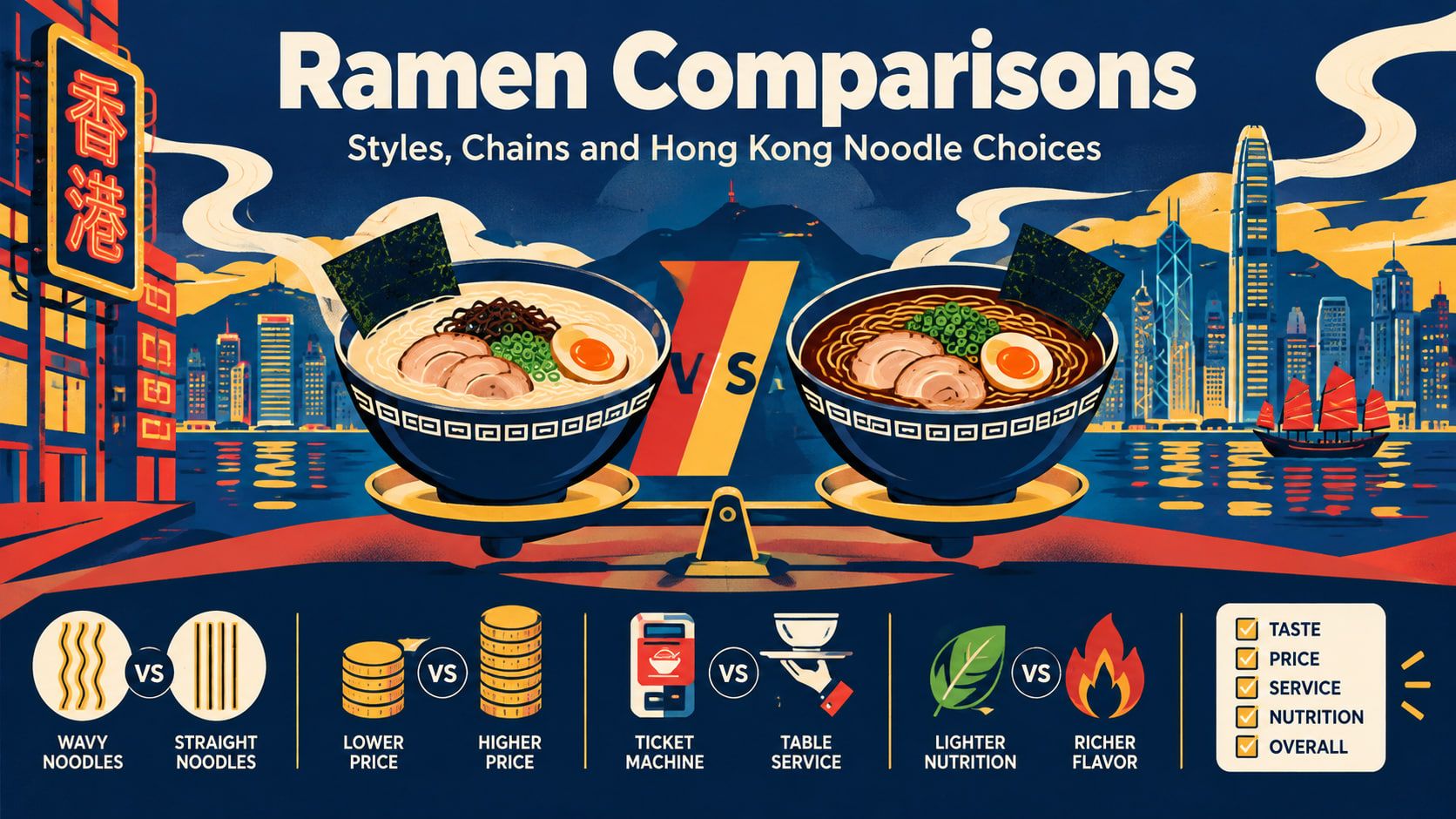
Choose with honest side-by-side trade-offs in broth, noodles, price tier, service format and nutrition—not a subjective winner.

Get the direct answer first, then follow links to the deeper guide on ingredients, culture, calories or cooking.
Compare Ichiran, Ippudo and Butao through published menus, customisation, seating and ordering logistics without a winner.
Compare ramen, udon and soba through noodle ingredients, serving formats and the dietary questions worth checking.
Compare ramen and pho through noodles, broth, toppings and eating format rather than declaring one superior.
Compare ramen and Lanzhou lamian through preparation, noodles, broth and the context behind their names.
Compare ramyeon and ramen through product formats, cooking methods and what the names commonly describe.
Compare tsukemen and ramen through dipping versus soup formats, noodle choices and the way each meal is eaten.
Compare mazesoba and ramen through sauce, soup, toppings and serving format without assuming soupless means lighter.
Compare tonkotsu and chicken paitan through broth ingredients, preparation and the dietary checks each requires.