Ramen Glossary: 50 Japanese Terms for Ordering
Decode ramen menu language with a plain-English glossary of broth, seasoning, noodles, toppings and refills.
Ramen Glossary: 50 Japanese Terms for Ordering
Japanese-run ramen shops in Hong Kong use the same vocabulary as Tokyo: on ticket machines, on order sheets and in the three questions staff ask at the counter. Fifty words cover almost every situation, and five of them — katame, kaedama, kotteri, assari, ajitama — cover most.
Component hub: Anatomy of a Ramen Bowl. Styles: Ramen Types and Regional Styles. Site hub: Ramen in Hong Kong: The Complete Local Guide.
The five that matter most. Katame (firm noodles). Kaedama (noodle refill). Kotteri / assari (rich / light). Ajitama (marinated egg). Sono mama (standard, as it comes) — the safest first-visit answer to any question.
📖 1. The glossary
- Aburi — Flame-seared, usually chashu.
- Abura — Oil or fat; “abura sukuname” = less oil.
- Ajitama / ajitsuke tamago — Marinated soft-boiled egg.
- Assari — Light, clean (opposite of kotteri).
- Barikata — Very firm noodles (Hakata).
- Chashu — Braised pork topping.
- Chashu-men — Bowl with extra chashu.
- Chintan — Clear simmered stock.
- Chiyu — Rendered chicken fat.
- Futsu — Standard (firmness, richness).
- Gyokai — Seafood-based (dashi or dip).
- Hiya-mori / atsu-mori — Cold / hot noodles for tsukemen.
- Iekei — Yokohama tonkotsu-shoyu “house style”.
- Kaedama — Noodle refill for leftover broth.
- Kansui — Alkaline solution that makes ramen noodles.
- Kata / katame — Firm noodles.
- Karame — Extra tare / stronger seasoning.
- Kikurage — Wood-ear mushroom.
- Koime / usume — Strong / weak (tare).
- Kotteri — Rich, heavy.
- Mayu — Black garlic oil.
- Mazesoba — Brothless mixed noodles.
- Menma — Fermented bamboo shoots.
- Miso — Fermented soybean paste tare.
- Naruto / narutomaki — Pink-spiral fish cake.
- Negi — Spring onion; shiro-negi white, ao-negi green.
- Niboshi — Dried baby sardines.
- Ninniku — Garlic; “ninniku iremasu ka?” = add garlic?
- Nori — Dried seaweed sheet.
- Oomori — Large portion.
- Paitan — White emulsified stock.
- Rayu — Chilli oil.
- Seabura — Pork back fat flakes.
- Shio — Salt tare.
- Shoyu — Soy-sauce tare.
- Soup-wari — Hot stock added to dilute a tsukemen dip.
- Sono mama — As it comes (standard).
- Takana — Pickled mustard greens (Hakata counters).
- Tare — Concentrated seasoning base.
- Tonkotsu — Pork-bone broth.
- Tori paitan — Chicken white broth.
- Tsukemen — Dipping noodles.
- Yasai — Vegetables; “yasai mashi” = extra vegetables.
- Yawa / yawarakame — Soft noodles.
- Yuzu — Japanese citrus.
- Zenbu / zen-mashi — Everything extra (Jiro-style).
- Okawari — Another serving.
- Omakase — Chef’s choice.
- Teishoku / setto — Set meal.
- Gochisousama — Thank you for the meal (said when leaving).
🎫 2. Using the words
Noodle, oil and tare questions are explained with the machine and sheet in how to use a ramen ticket machine and order sheet; the Jiro call-and-response is in Jiro-style ramen; Cantonese equivalents are in ramen terms in Cantonese and wider phrases in Japanese ramen vocabulary.
Shops define terms slightly differently. “Kotteri” at one counter is “futsu” at another; when in doubt, order standard and adjust on the second visit.
❓ FAQ
Do Hong Kong staff understand these words? At Japanese-run and import shops, yes; at local chains, point at the sheet.
What do I say when leaving? “Gochisousama deshita” is polite and always welcome.
Is “kaedama” free? Usually a small charge; some sets include one.
ramen noodles ramen broth ramen tare ramen toppings chashu ajitama menma nori ramen oil ramen glossary kansui kaedama ramen ticket machine
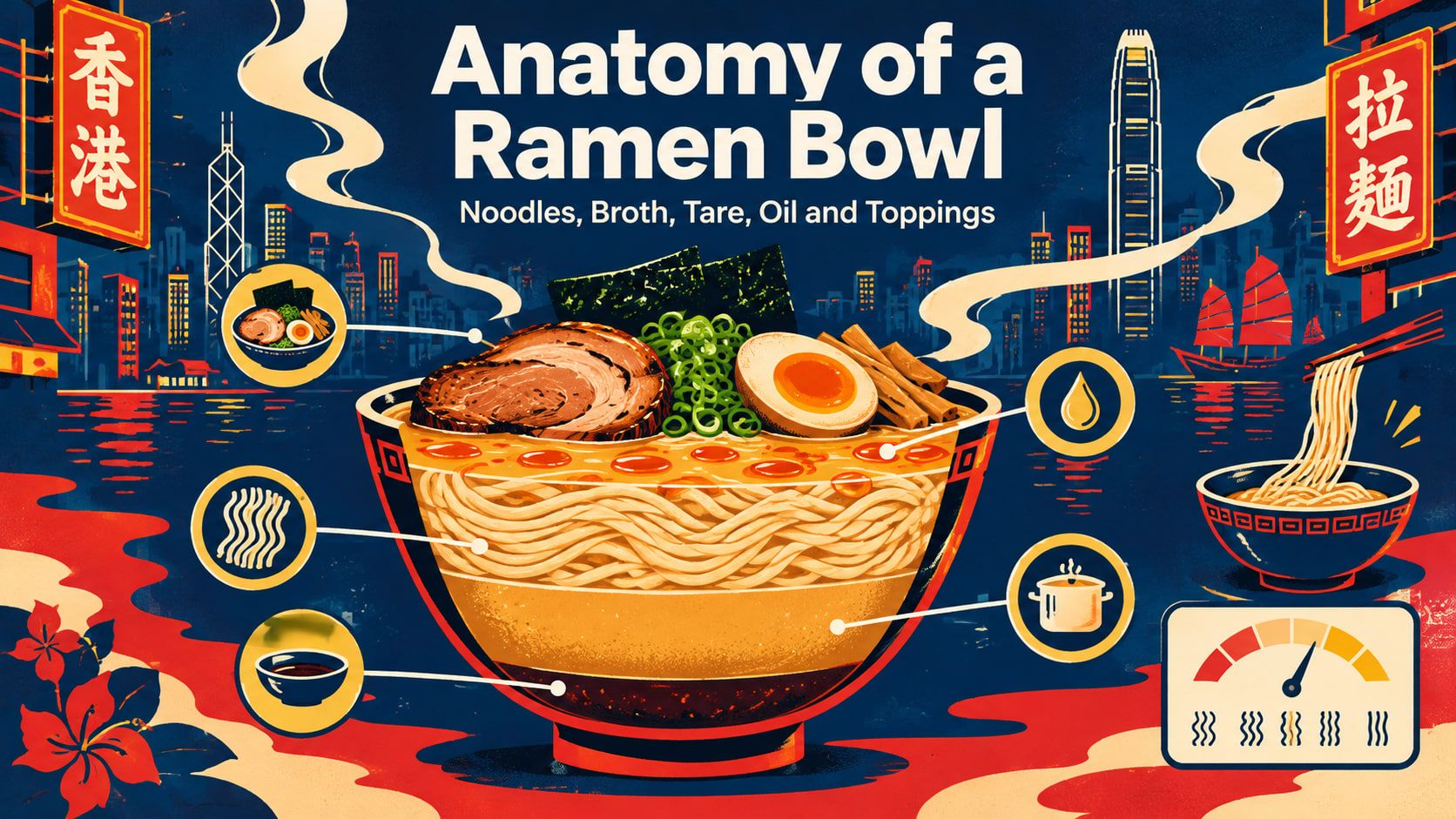
Understand the technical parts of a bowl so menu terms like chintan, paitan, kaedama and barikata become useful rather than confusing.

Get the direct answer first, then follow links to the deeper guide on ingredients, culture, calories or cooking.
Understand ramen noodles through ingredients, hydration, thickness and texture before buying or ordering.
Explore ramen broth through ingredients, clear and cloudy styles and the preparation choices behind the bowl.
Understand ramen tare as a seasoning component and learn what its menu names tell you—and what they do not.
Explore ramen aroma oil through its ingredients and role in the bowl, with questions for cooking and dietary checks.
Understand ramen chashu through cuts, preparation and portion choices before ordering or making it.
Explore ajitama ramen eggs through preparation, texture and the menu details that determine whether they are included.
Decode ramen toppings through their names, ingredients and role in the bowl before choosing extras.
Understand MSG in ramen through ingredient context and food-safety evidence rather than myths or blanket reassurance.