
Ramen vs Pho: Broth, Noodles and Nutrition
Compare ramen and pho through noodles, broth, toppings and eating format rather than declaring one superior.
Ramen vs Pho: Broth, Noodles and Nutrition
Ramen and pho look like the same idea, noodles in hot broth, but one is a Japanese wheat-noodle bowl built on tare and oil and the other a Vietnamese rice-noodle soup built on herbs and a clear aromatic stock. This page explains trade-offs and characteristics; it is not a ranking.
Comparison hub: Ramen Comparisons. Style hub: Ramen Types and Regional Styles. Site hub: Ramen in Hong Kong: The Complete Local Guide.
The fast decision. Choose ramen for springy wheat noodles, rich broth and chashu; choose pho for rice noodles, herbs, lime and a lighter-feeling broth. Decide on flavour and portion, not on a health halo: pho is often lower in fat, but neither is automatically low in sodium.
🍜 1. Noodles and broth
Ramen uses alkaline wheat noodles and stock plus tare; pho uses flat rice noodles in beef or chicken broth scented with star anise, cinnamon and charred onion. Ramen components are in anatomy of a ramen bowl.
🌿 2. Toppings and customisation
Ramen arrives composed with chashu, egg, nori and menma; pho arrives with a herb plate, sprouts, chilli and lime. Pho is customised at the table; ramen is calibrated by the chef.
📊 3. Calories and sodium
Tonkotsu ramen is generally higher in fat and calories; pho can still be salty because of fish sauce and stock. Portion, soup consumption and added oil decide more than the cuisine label. See ramen calories and is ramen healthy?.
🇭🇰 4. Finding each in Hong Kong
Ramen specialists cluster in Causeway Bay, Central and Tsim Sha Tsui; see ramen near me.
“Clear broth” is not “low salt”. Shoyu ramen, pho and wonton soup can all exceed a sensible daily sodium budget if you drink the bowl.
🧭 What to read next
Compare Hong Kong’s own standard in ramen versus wonton noodles and the Japanese family in ramen versus udon versus soba.
ramen comparison Ichiran vs Ippudo ramen vs udon ramen vs pho ramen vs Lanzhou lamian ramen vs wonton noodles ramen vs ramyeon tonkotsu vs paitan instant vs fresh ramen
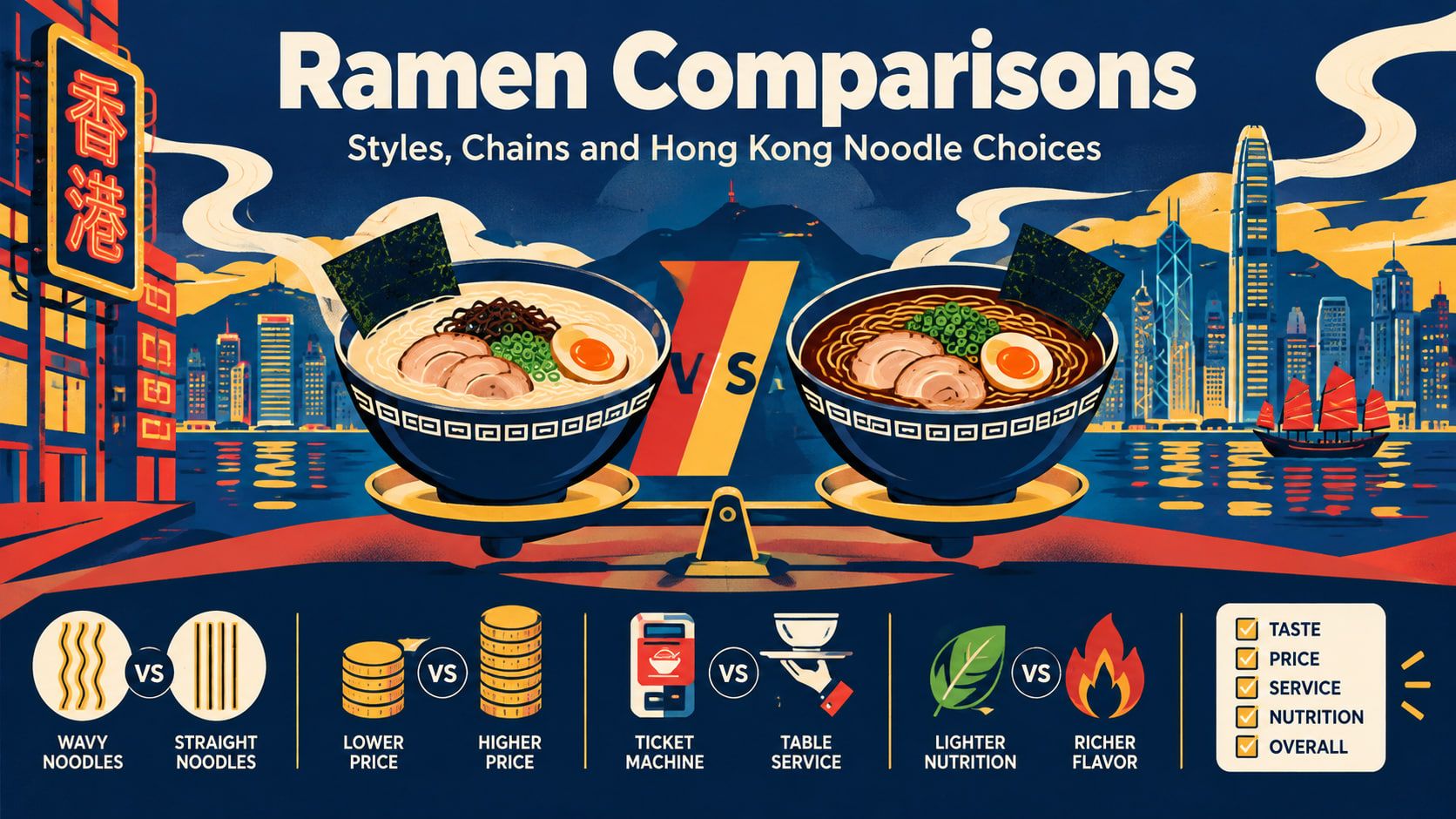
Choose with honest side-by-side trade-offs in broth, noodles, price tier, service format and nutrition—not a subjective winner.

Get the direct answer first, then follow links to the deeper guide on ingredients, culture, calories or cooking.
Compare Ichiran, Ippudo and Butao through published menus, customisation, seating and ordering logistics without a winner.
Compare ramen, udon and soba through noodle ingredients, serving formats and the dietary questions worth checking.
Compare ramen and Lanzhou lamian through preparation, noodles, broth and the context behind their names.
Explore ramen and Hong Kong wonton noodles through their ingredients, serving styles and practical meal differences.
Compare ramyeon and ramen through product formats, cooking methods and what the names commonly describe.
Compare tsukemen and ramen through dipping versus soup formats, noodle choices and the way each meal is eaten.
Compare mazesoba and ramen through sauce, soup, toppings and serving format without assuming soupless means lighter.
Compare tonkotsu and chicken paitan through broth ingredients, preparation and the dietary checks each requires.