
Ramen vs Udon vs Soba: Noodles, Broth and Texture
Compare ramen, udon and soba through noodle ingredients, serving formats and the dietary questions worth checking.
Ramen vs Udon vs Soba: Noodles, Broth and Texture
Ramen, udon and soba all arrive in a bowl of broth, but they are built from different flours, textures and eating cultures. This page explains trade-offs and characteristics; it is not a ranking.
Comparison hub: Ramen Comparisons. Style hub: Ramen Types and Regional Styles. Site hub: Ramen in Hong Kong: The Complete Local Guide.
The flour rule. Ramen: wheat plus kansui, springy and yellow. Udon: plain wheat, thick and soft-chewy. Soba: buckwheat blended with wheat, nutty and more fragile. The soup follows the noodle.
🍜 1. Ramen
Fresh alkaline wheat noodles, a tare-built broth, toppings and regional style. It is the most complex of the three and often the saltiest; see anatomy of a ramen bowl and ramen noodles.
🥢 2. Udon
Thick white wheat noodles in dashi, usually a clearer and simpler bowl; the choice when you want chew and comfort rather than fat. Udon is served hot, cold or stir-fried.
🌾 3. Soba
Buckwheat noodles with a nutty flavour, served cold with tsuyu or hot in a light broth. Most restaurant soba contains wheat, so it is not automatically gluten-free.
🧂 4. Health and ordering
All three can be high in sodium if you finish the broth. Ramen usually carries more fat and calories, especially tonkotsu; see ramen calories by style and ramen sodium.
Do not assume soba is gluten-free. Ask specifically if coeliac disease or wheat allergy is involved; see gluten-free ramen in Hong Kong.
🧭 What to read next
For ramen versus pho see ramen versus pho; for Hong Kong noodles see ramen versus wonton noodles.
ramen comparison Ichiran vs Ippudo ramen vs udon ramen vs pho ramen vs Lanzhou lamian ramen vs wonton noodles ramen vs ramyeon tonkotsu vs paitan instant vs fresh ramen
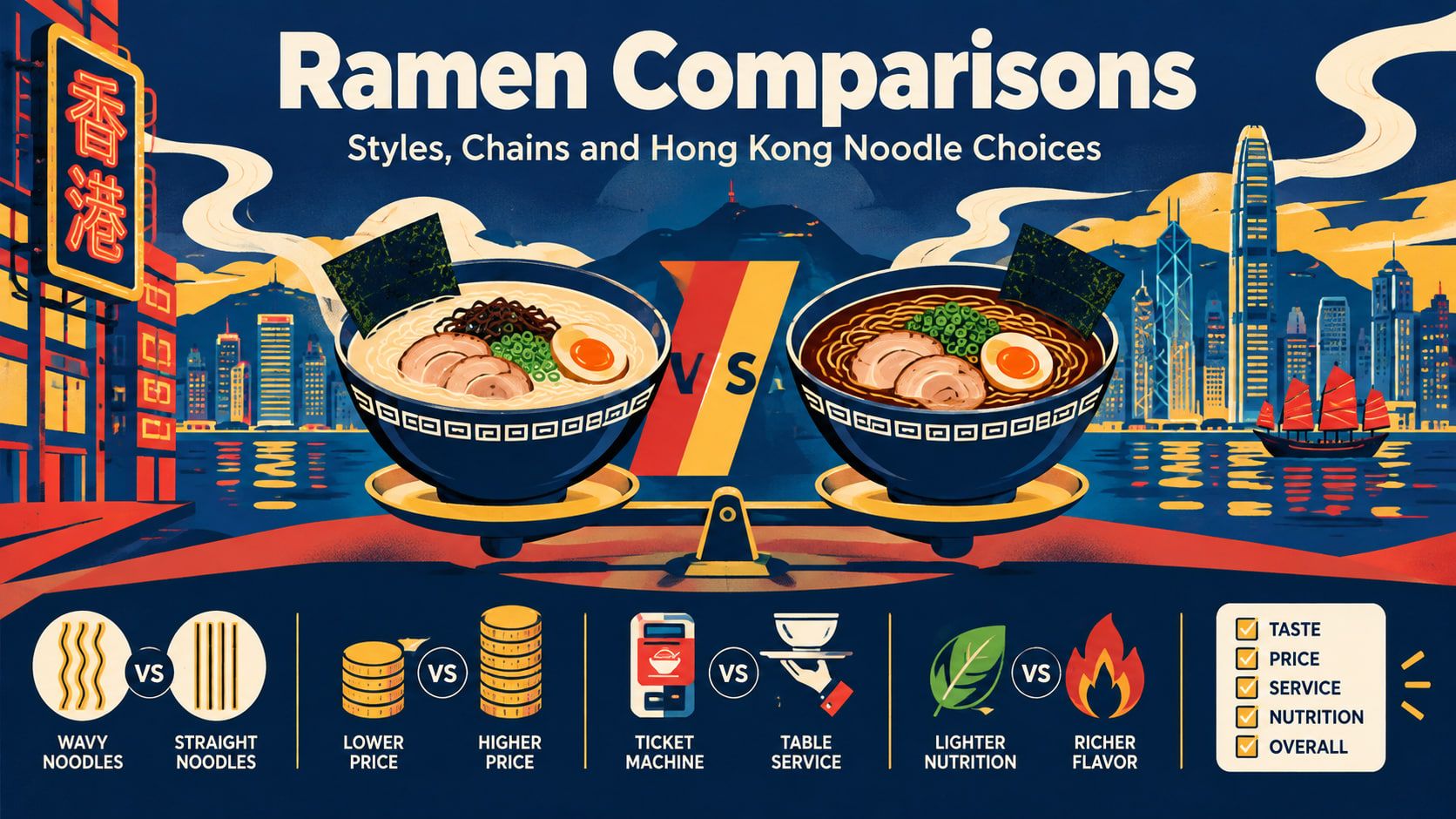
Choose with honest side-by-side trade-offs in broth, noodles, price tier, service format and nutrition—not a subjective winner.

Get the direct answer first, then follow links to the deeper guide on ingredients, culture, calories or cooking.
Compare Ichiran, Ippudo and Butao through published menus, customisation, seating and ordering logistics without a winner.
Compare ramen and pho through noodles, broth, toppings and eating format rather than declaring one superior.
Compare ramen and Lanzhou lamian through preparation, noodles, broth and the context behind their names.
Explore ramen and Hong Kong wonton noodles through their ingredients, serving styles and practical meal differences.
Compare ramyeon and ramen through product formats, cooking methods and what the names commonly describe.
Compare tsukemen and ramen through dipping versus soup formats, noodle choices and the way each meal is eaten.
Compare mazesoba and ramen through sauce, soup, toppings and serving format without assuming soupless means lighter.
Compare tonkotsu and chicken paitan through broth ingredients, preparation and the dietary checks each requires.