
Shrimp Ramen: Broth, Noodles, Toppings and Origin
Explore shrimp ramen through broth, aroma and toppings, with direct ingredient checks for shellfish concerns.
Shrimp Ramen: Broth, Noodles, Toppings and Origin
Shrimp (ebi) ramen builds its soup on roasted shrimp shells and heads, usually blended with pork or chicken stock, for a sweet, briny, orange bowl. It is a Hong Kong favourite with its own search demand, partly because the city already loves shrimp-roe and prawn-head flavours.
Style hub: Ramen Types and Regional Styles. Components: Anatomy of a Ramen Bowl. Site hub: Ramen in Hong Kong: The Complete Local Guide.
What to expect. An orange-tinted soup that smells of roasted shrimp; shio or miso tare; medium noodles; toppings of prawn, shrimp wonton, shrimp oil, nori and spring onion. Richness ranges from clear ebi-shio to thick ebi-tonkotsu and ebi-miso.
🍲 1. Broth and tare
Shrimp heads and shells are roasted or fried, then simmered into a pork or chicken base; a finishing shrimp oil adds aroma. Shellfish is therefore in the broth, not just the topping. See ramen broth and aroma oil.
🍜 2. Noodles and toppings
Medium straight noodles; toppings often include whole prawns, shrimp wontons, chashu and a soft egg. See ramen toppings.
📜 3. Origin
Shrimp-forward ramen is a modern Japanese specialist style, with Sapporo’s ebi-miso shops and Tokyo ebi-soba counters popularising it in the 2000s and 2010s; it sits alongside niboshi and other seafood-driven bowls.
🇭🇰 4. In Hong Kong and at home
Ramen Iroha lists a white salted shrimp ramen in Causeway Bay; see Ramen Iroha. For other seafood-led styles see niboshi ramen.
Shellfish allergy means the whole bowl, not just the prawn. The stock and oil contain shrimp; see ramen allergens.
❓ 5. FAQ
Is shrimp ramen fishy? Roasted shells give sweetness rather than fishiness; niboshi bowls are the stronger-tasting ones.
Does it contain pork? Usually, as a base stock; ask if it matters.
Which tare suits it? Shio shows the shrimp most clearly; miso makes it richer.
ramen types tonkotsu ramen shoyu ramen shio ramen miso ramen tsukemen mazesoba abura soba tantanmen chicken paitan shrimp ramen iekei ramen Hakata ramen Sapporo ramen
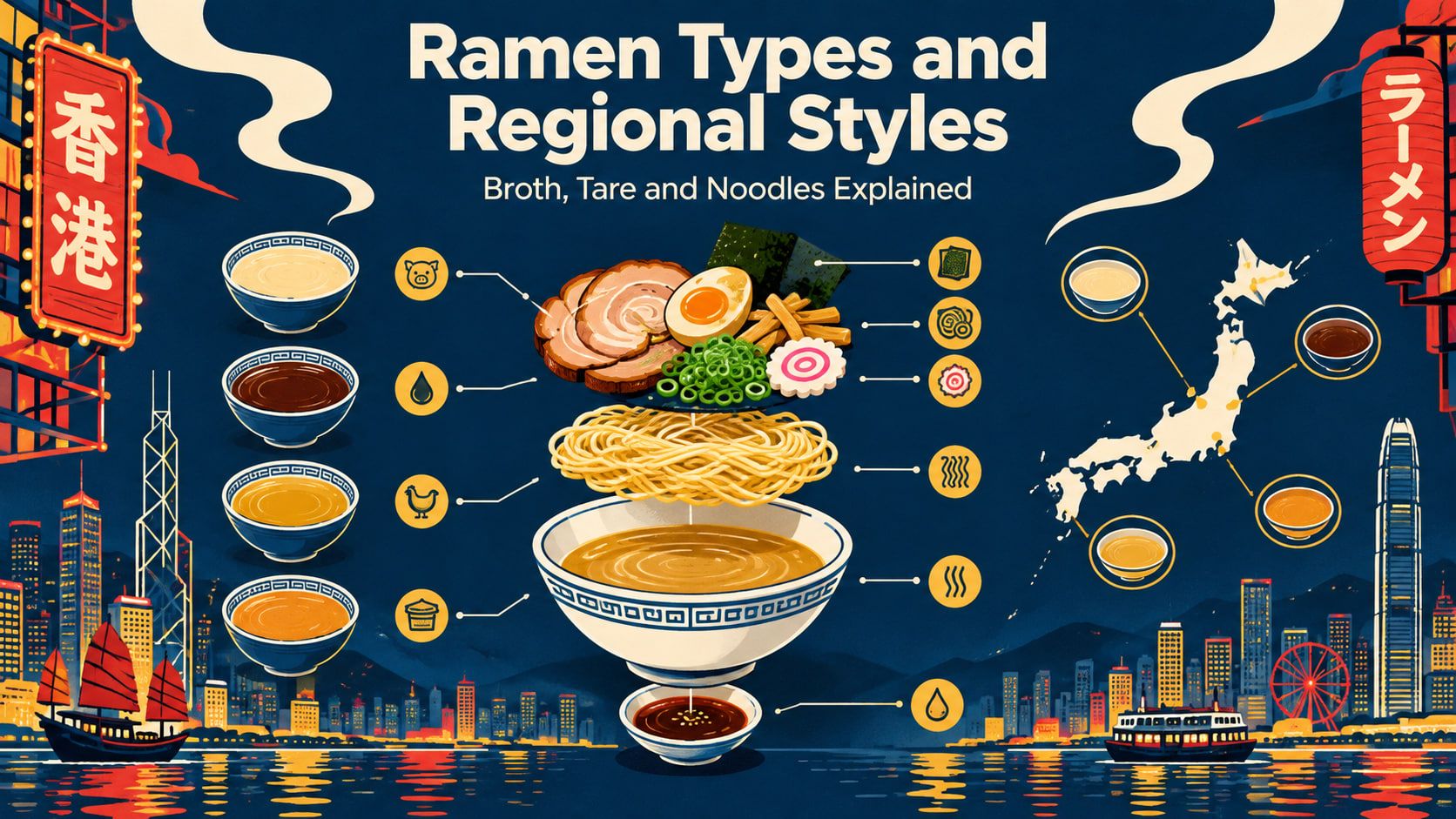
Learn to read any ramen menu confidently by understanding broth, tare, noodle texture, toppings and regional Japanese origins.

Plan a Japan ramen trip with city-specific styles, queues, museums and practical travel details.
Understand tonkotsu ramen through pork-bone broth, noodle options and the recipe details to ask about.
Explore shoyu ramen through soy-based seasoning, broth variations and the menu terms that help you choose.
Understand shio ramen through salt-based seasoning and broth choices without mistaking a clear appearance for low sodium.
Explore miso ramen through seasoning, noodle pairings and regional context before ordering or cooking it.
Understand tsukemen through its separate noodles and dipping broth, serving options and eating sequence.
Explore mazesoba through sauce, noodles and toppings, with practical guidance on mixing and ordering.
Understand abura soba through its soupless format, seasoning and the distinctions to check against mazesoba.
Explore tantanmen through sesame, chilli, recipe variations and the ingredient questions to ask before ordering.