
Niboshi Ramen: Broth, Noodles, Toppings and Origin
Explore niboshi ramen through dried-fish ingredients, flavour descriptions and the questions to ask at the counter.
Niboshi Ramen: Broth, Noodles, Toppings and Origin
Niboshi ramen builds its soup on dried baby sardines, giving a bitter, intensely savoury, sometimes muddy broth that divides diners more than any other style. It is the connoisseur’s bowl — and the one to try only when a shop names it as its speciality.
Style hub: Ramen Types and Regional Styles. Components: Anatomy of a Ramen Bowl. Site hub: Ramen in Hong Kong: The Complete Local Guide.
What to expect. A grey-brown or dark soup that smells of the sea; shoyu tare; thin to medium noodles; chashu, menma, spring onion and often a raw-onion garnish; versions range from light niboshi-shoyu to thick, sludgy “nodoguro” or “seabura” bowls.
🍲 1. Broth and tare
Niboshi are steeped or simmered, sometimes in huge quantities, into a pork, chicken or pure fish base; the bitterness comes from the heads and guts and is intentional. See ramen broth and the fish-and-pork blend used in tsukemen dips.
🍜 2. Noodles and toppings
Thin to medium noodles; toppings are restrained and often include raw onion to cut the fish. See ramen toppings.
📜 3. Origin
Dried-fish stocks are old in Japanese cooking, but niboshi-forward ramen as a genre is associated with Aomori (Tsugaru) and with Tokyo specialists from the 2000s onward.
🇭🇰 4. In Hong Kong and at home
Niboshi bowls are rare in Hong Kong and usually appear as limited specials; see new ramen openings and the Japan pages under ramen in Japan. For the milder seafood option see shrimp ramen.
Fish allergy and purines. The broth is concentrated fish; it is unsuitable for fish allergy and is high in purines, relevant to gout — see ramen allergens.
❓ 5. FAQ
Why is it bitter? Whole dried sardines, including heads and guts, are used in quantity.
Is it fishy? Yes, by design; it is the opposite of a mild shio bowl.
Where should I try it first? At a shop that names niboshi as its speciality, ideally in Japan.
ramen types tonkotsu ramen shoyu ramen shio ramen miso ramen tsukemen mazesoba abura soba tantanmen chicken paitan shrimp ramen iekei ramen Hakata ramen Sapporo ramen
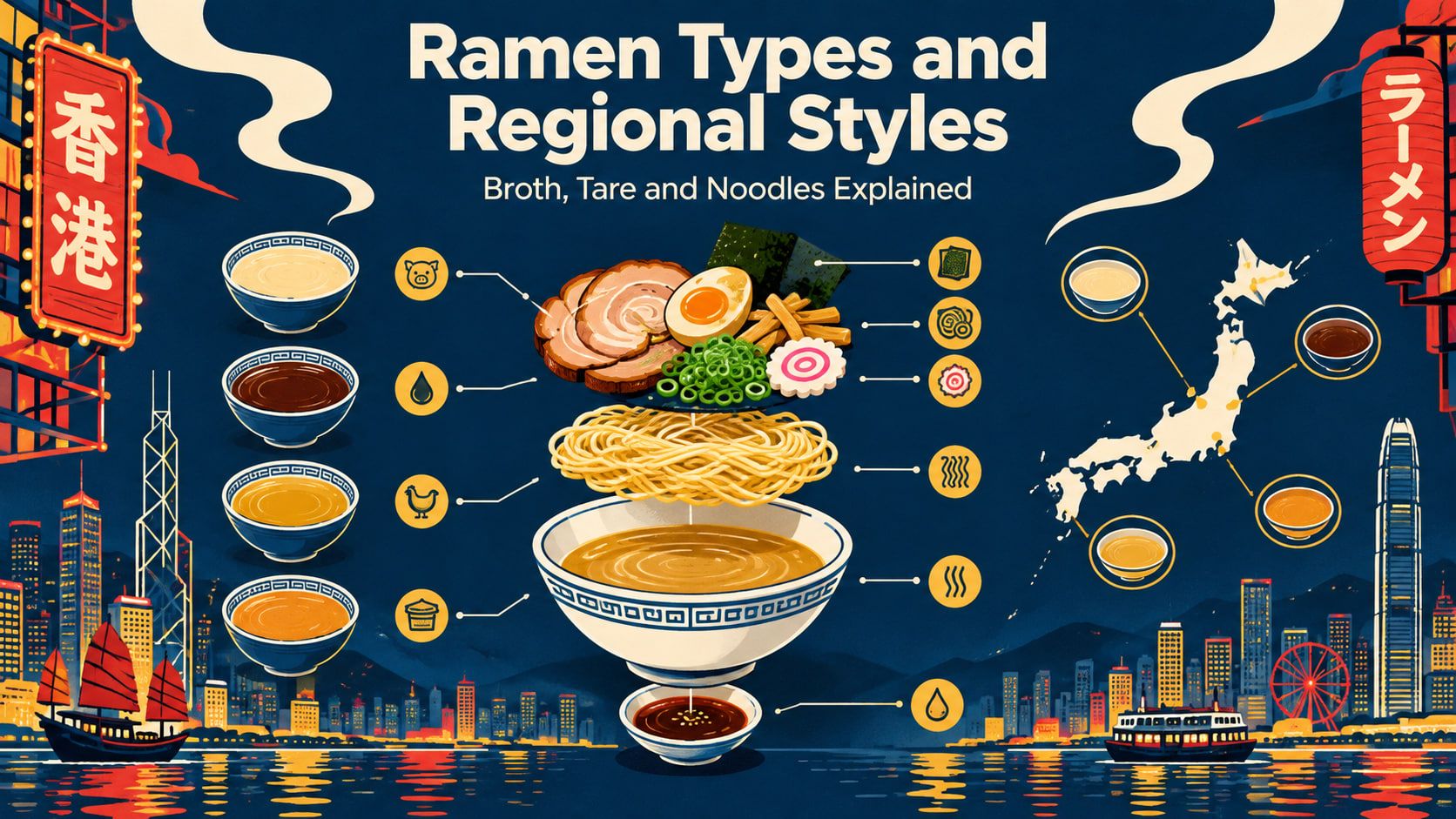
Learn to read any ramen menu confidently by understanding broth, tare, noodle texture, toppings and regional Japanese origins.

Plan a Japan ramen trip with city-specific styles, queues, museums and practical travel details.
Understand tonkotsu ramen through pork-bone broth, noodle options and the recipe details to ask about.
Explore shoyu ramen through soy-based seasoning, broth variations and the menu terms that help you choose.
Understand shio ramen through salt-based seasoning and broth choices without mistaking a clear appearance for low sodium.
Explore miso ramen through seasoning, noodle pairings and regional context before ordering or cooking it.
Understand tsukemen through its separate noodles and dipping broth, serving options and eating sequence.
Explore mazesoba through sauce, noodles and toppings, with practical guidance on mixing and ordering.
Understand abura soba through its soupless format, seasoning and the distinctions to check against mazesoba.
Explore tantanmen through sesame, chilli, recipe variations and the ingredient questions to ask before ordering.