
Tonkotsu vs Chicken Paitan: Creamy Broths Compared
Compare tonkotsu and chicken paitan through broth ingredients, preparation and the dietary checks each requires.
Tonkotsu vs Chicken Paitan: Creamy Broths Compared
Both are paitan, white broths boiled hard until collagen and fat emulsify, but one is pork and the other chicken, and that changes flavour, weight, cooking time and who can eat it. This page explains trade-offs and characteristics; it is not a ranking.
Comparison hub: Ramen Comparisons. Style hub: Ramen Types and Regional Styles. Site hub: Ramen in Hong Kong: The Complete Local Guide.
Choose tonkotsu for the deepest pork richness and the Hakata tradition. Choose chicken paitan for a cleaner creaminess, a lighter finish and a bowl that avoids pork.
🐖 1. Tonkotsu
Pork trotters and neck bones boiled for many hours; strong aroma, heavy body, thin straight noodles. See tonkotsu ramen and Hakata ramen.
🐔 2. Chicken paitan
Carcasses, feet and wings emulsified in a shorter time; sweeter, cleaner and easier at home (about 90 minutes in a pressure cooker). See chicken paitan ramen and the chicken paitan recipe.
📊 3. Fat, calories and sodium
Tonkotsu usually carries more fat and calories; sodium depends on tare, not the broth animal. See ramen calories and ramen sodium.
🕌 4. Dietary and religious
Chicken paitan avoids pork but is not automatically halal (tare, oil, shared equipment); see halal-friendly ramen.
Menu labels blur. Some Hong Kong shops call a chicken paitan “tonkotsu-style”; ask which animal the stock is made from if it matters to you.
🧭 What to read next
For the chains that define tonkotsu locally see Ichiran versus Ippudo versus Butao; for Ramen Jo’s whipped chicken broth see the Ramen Jo menu.
ramen comparison Ichiran vs Ippudo ramen vs udon ramen vs pho ramen vs Lanzhou lamian ramen vs wonton noodles ramen vs ramyeon tonkotsu vs paitan instant vs fresh ramen
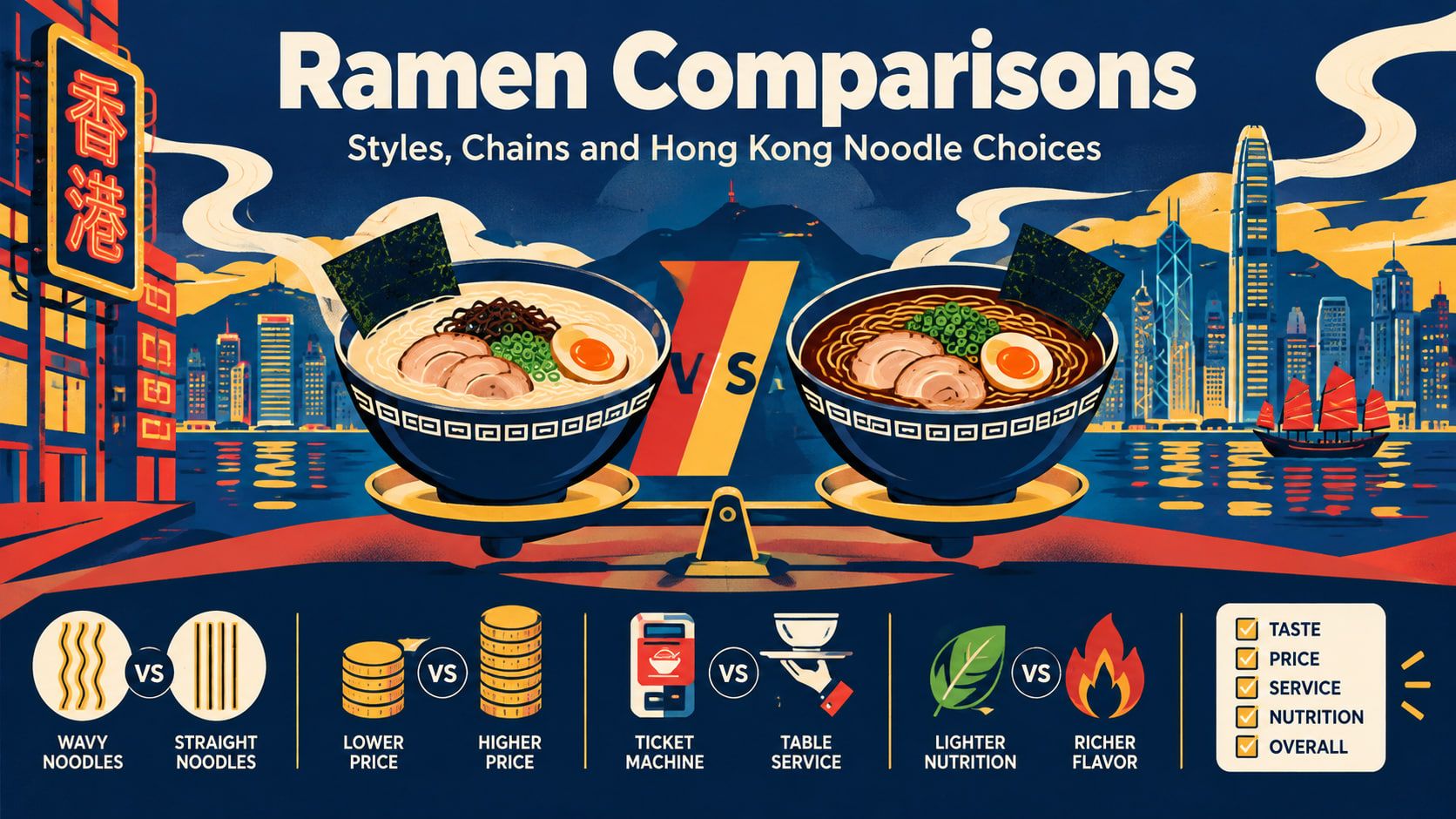
Choose with honest side-by-side trade-offs in broth, noodles, price tier, service format and nutrition—not a subjective winner.

Get the direct answer first, then follow links to the deeper guide on ingredients, culture, calories or cooking.
Compare Ichiran, Ippudo and Butao through published menus, customisation, seating and ordering logistics without a winner.
Compare ramen, udon and soba through noodle ingredients, serving formats and the dietary questions worth checking.
Compare ramen and pho through noodles, broth, toppings and eating format rather than declaring one superior.
Compare ramen and Lanzhou lamian through preparation, noodles, broth and the context behind their names.
Explore ramen and Hong Kong wonton noodles through their ingredients, serving styles and practical meal differences.
Compare ramyeon and ramen through product formats, cooking methods and what the names commonly describe.
Compare tsukemen and ramen through dipping versus soup formats, noodle choices and the way each meal is eaten.
Compare mazesoba and ramen through sauce, soup, toppings and serving format without assuming soupless means lighter.