
Fukuoka and Hakata Ramen: Tonkotsu, Yatai and Kaedama
Plan Hakata ramen in Fukuoka through city guides, ordering vocabulary and current shop or stall arrangements.
Hakata Ramen in Fukuoka: Yatai, Kaedama and Queue Planning
Fukuoka is the home of Hakata ramen, the thin-noodle tonkotsu style that most Hong Kong diners know through chains such as Ichiran and Ippudo, and it is one of the few Japanese cities where you can eat it at an open-air yatai stall as well as in a shop. The Fukuoka City official tourist guide says over 100 food stalls open from 18:00 each evening, and a stall may simply not open if the weather is stormy or the owner is unwell, so plan a yatai night as a flexible evening rather than a fixed booking. The stalls are concentrated in Tenjin and Nakasu, with a further group at Nagahama.
This page is for Hong Kong visitors flying into Fukuoka for a short trip who want to understand how Hakata ramen differs from the version served at home, how yatai work, and where the queues form. It sits under ramen travel in Japan and the style itself is explained on Hakata ramen. It is a planning guide, not a list of recommended stalls.
The kaedama rule. Hakata ramen is served in small portions with thin noodles so that you can order kaedama, an extra serving of noodles, while the soup is still hot. Leave enough soup for the refill, decide your noodle firmness before you sit down, and expect the first bowl to be smaller than a Hong Kong bowl.
🍜 1. What makes it Hakata ramen
The defining features are a pork-bone broth that is cooked hard enough to turn milky and opaque, very thin straight noodles, and a firmness choice ranging from soft to extra firm. Kaedama, which Ichiran's official system guide describes as Hakata's own way of enjoying more noodles in one serving, exists because thin noodles soften quickly. Toppings are usually restrained: chashu, spring onion, wood-ear mushroom and often pickled ginger and sesame at the counter. The broader category is covered on tonkotsu ramen.
Fukuoka-origin chains with Hong Kong branches include Ichiran and Ippudo, so the Hong Kong pages Ichiran Hong Kong and Ippudo Hong Kong are useful for comparing what you already know with the bowls served in Fukuoka. The Fukuoka-specific ordering system at Ichiran's shops is explained on Ichiran in Japan.
📍 2. Yatai: where, when and how they work
The Japan National Tourism Organization describes yatai as temporary stalls set up every evening and concentrated in Tenjin and Nakasu, each seating around ten people shoulder to shoulder. Visit Fukuoka adds Nagahama as a third area and notes that the stalls are coordinated through the Fukuoka City Portable Eatery Association. The city government licenses the stalls and assigns their locations, and the Fukuoka City official guide publishes a stall roster, which is the right place to check what is currently operating.
- Tenjin stalls sit along city streets near shopping areas and suit a first visit or a shopping evening.
- Nakasu stalls line the riverside and are the most photographed, which also makes them the most crowded.
- Nagahama is quieter and historically linked to the thin-noodle, quick-turnover ramen style.
- Ramen, yakitori and oden are the staples; some stalls also serve yaki-ramen, a stir-fried version.
- A seat usually opens only when a whole party leaves, so pairs and solo diners are easier to seat than groups.
🎟️ 3. Ordering and paying
Yatai generally take orders verbally at the counter and are often cash only, with the bill settled at the end. Ramen shops in Fukuoka more often use a ticket machine; the steps are on how to use a ramen ticket machine. The words for firmness and extra noodles matter more here than anywhere else in Japan, and they are listed on Japanese ramen vocabulary. Counter manners, including how to handle a shared condiment tray, are on ramen etiquette.
⏰ 4. Queue timing
Yatai open in the evening, so they are not a lunch option. The riverside Nakasu stalls fill fastest, typically from early evening and again late at night when bars empty. Ramen shops in Hakata Station and Tenjin follow the usual lunch surge from about 12:00. Third-party guides mention closing times around 02:00 for many stalls, but this varies by owner and weather, and the city guide's warning about stalls not opening should be taken at face value. Have two or three stalls in mind and walk between them rather than fixing on one.
🥣 5. Dietary and sodium notes
Hakata ramen is almost entirely pork-based, including stalls that look like they are serving chicken or seafood dishes alongside. Visitors avoiding pork should ask before ordering and should not assume a clear-looking broth is pork-free. Sesame, egg and wheat are common. Use ramen allergens for the questions. Because the broth is rich and the bowl is designed to be followed by kaedama, sodium can add up quickly; see ramen sodium and consider skipping the second refill or leaving soup behind.
🧳 6. Bringing Hakata ramen home
Hakata Station and the airport sell boxed ramen from well-known shops. Dried or semi-dried noodles with liquid soup pouches are the simplest. Any kit containing chilled chashu, raw-meat products or egg is regulated under Hong Kong's Imported Game, Meat, Poultry and Eggs Regulations; the Centre for Food Safety states there is no personal-use exemption from the health-certificate requirement. Read ramen souvenirs from Japan first. If you are travelling on to another city, ramen in Osaka covers the usual next stop.
Stall openings are weather-dependent. The Fukuoka City official guide states that a yatai may not open in stormy weather or if the owner is unwell. Typhoon-season visitors from Hong Kong should treat a yatai evening as optional, keep a ramen shop as a backup, and check the official stall roster and any weather warnings on the day.
❓ 7. FAQ
What time do Fukuoka yatai open? The Fukuoka City official guide says stalls open from 18:00. Closing times vary by stall and are not published centrally.
Where are the yatai? Mainly Tenjin and Nakasu, with a further group at Nagahama. The city's official guide maintains a stall roster.
What is kaedama? An extra serving of noodles added to your remaining soup. It originated in Hakata because thin noodles soften quickly.
Do yatai accept cards? Many are cash only. Carry yen and expect to pay at the end of your meal.
Can I bring Hakata ramen kits into Hong Kong? Dried noodles and soup pouches are generally straightforward. Kits with meat, poultry or egg products are regulated by the Centre for Food Safety and require a health certificate or prior permission; check the current rules before buying.
best ramen Tokyo best ramen Osaka Fukuoka ramen Sapporo ramen Tokyo Ramen Street Ichiran Tokyo ramen tour Japan Cup Noodles Museum Yokohama Ramen Museum ramen souvenirs Japan
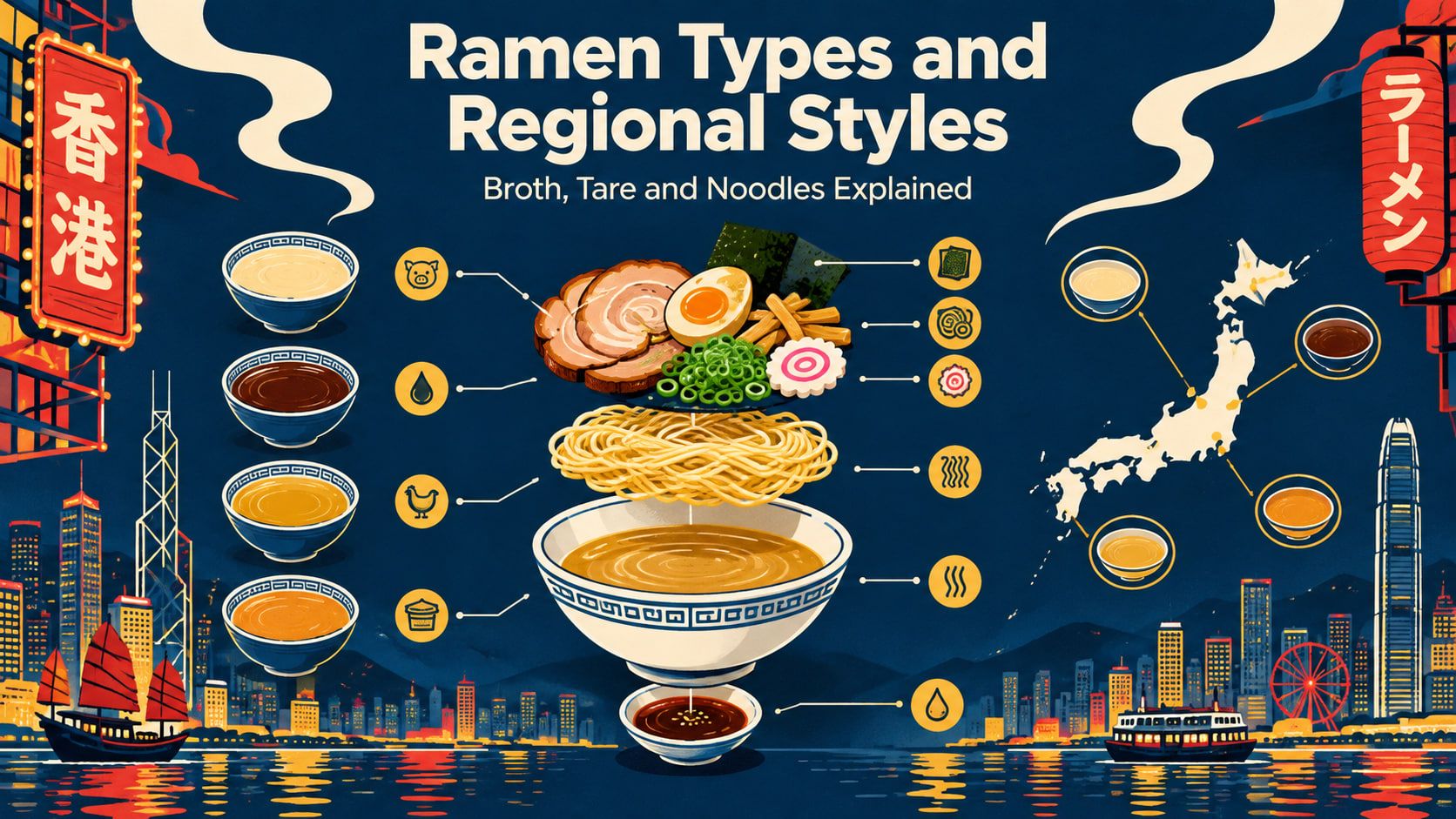
Learn to read any ramen menu confidently by understanding broth, tare, noodle texture, toppings and regional Japanese origins.

Plan a Japan ramen trip with city-specific styles, queues, museums and practical travel details.
Understand tonkotsu ramen through pork-bone broth, noodle options and the recipe details to ask about.
Explore shoyu ramen through soy-based seasoning, broth variations and the menu terms that help you choose.
Understand shio ramen through salt-based seasoning and broth choices without mistaking a clear appearance for low sodium.
Explore miso ramen through seasoning, noodle pairings and regional context before ordering or cooking it.
Understand tsukemen through its separate noodles and dipping broth, serving options and eating sequence.
Explore mazesoba through sauce, noodles and toppings, with practical guidance on mixing and ordering.
Understand abura soba through its soupless format, seasoning and the distinctions to check against mazesoba.
Explore tantanmen through sesame, chilli, recipe variations and the ingredient questions to ask before ordering.