
Mazesoba vs Ramen: Brothless or Soup?
Compare mazesoba and ramen through sauce, soup, toppings and serving format without assuming soupless means lighter.
Mazesoba vs Ramen: Brothless or Soup?
Mazesoba drops the soup entirely: thick noodles tossed at the table with tare, oil, minced pork, raw yolk, garlic and chives. Ramen is defined by its broth. This page explains trade-offs and characteristics; it is not a ranking.
Comparison hub: Ramen Comparisons. Style hub: Ramen Types and Regional Styles. Site hub: Ramen in Hong Kong: The Complete Local Guide.
Choose mazesoba for intensity per bite, a meal that travels and a lower total sodium load because there is no soup to drink. Choose ramen for warmth, broth character and the classic experience.
🥣 1. What mazesoba is
A Nagoya-born “Taiwan mazesoba” format, now Kokoro Tokyo Mazesoba’s whole menu in Hong Kong; finish the last sauce with a spoon of rice. See mazesoba and Kokoro Tokyo Mazesoba.
🍜 2. Texture and richness
Without broth, the noodle and the oil carry everything, so mazesoba feels richer per mouthful though the total volume is smaller. The oil-based cousin is abura soba.
🧂 3. Sodium and calories
Mazesoba usually has less total sodium than a finished ramen bowl because there is no soup, but more fat per bite; see ramen calories by style.
🏠 4. At home and on delivery
It is the easiest format to cook and the best to deliver; see mazesoba at home and ramen delivery.
Mix before judging. An unmixed mazesoba tastes unbalanced; the yolk and tare must coat every strand.
🧭 What to read next
For the dipping format see tsukemen versus ramen; for Central options see ramen in Central.
ramen comparison Ichiran vs Ippudo ramen vs udon ramen vs pho ramen vs Lanzhou lamian ramen vs wonton noodles ramen vs ramyeon tonkotsu vs paitan instant vs fresh ramen
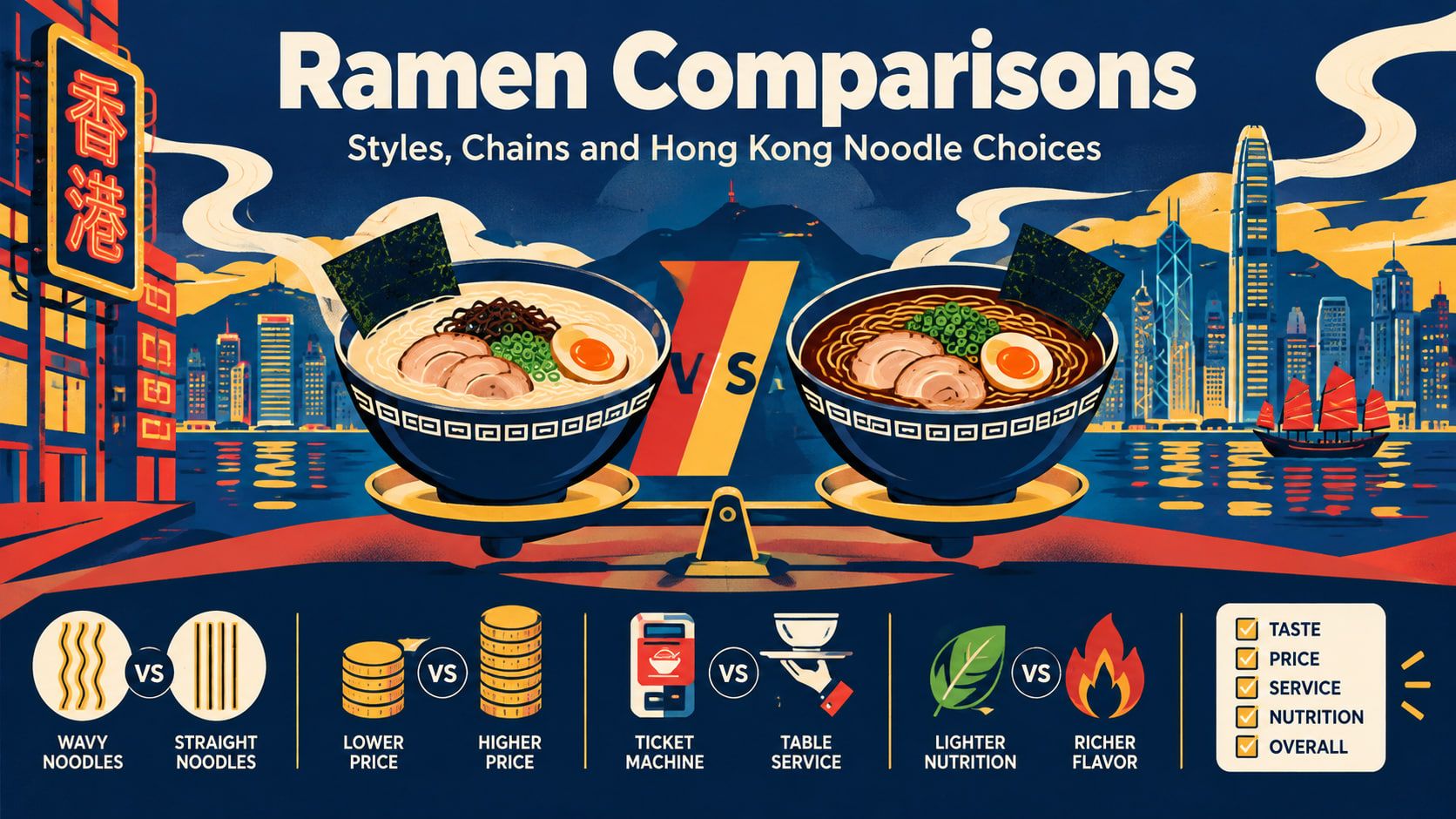
Choose with honest side-by-side trade-offs in broth, noodles, price tier, service format and nutrition—not a subjective winner.

Get the direct answer first, then follow links to the deeper guide on ingredients, culture, calories or cooking.
Compare Ichiran, Ippudo and Butao through published menus, customisation, seating and ordering logistics without a winner.
Compare ramen, udon and soba through noodle ingredients, serving formats and the dietary questions worth checking.
Compare ramen and pho through noodles, broth, toppings and eating format rather than declaring one superior.
Compare ramen and Lanzhou lamian through preparation, noodles, broth and the context behind their names.
Explore ramen and Hong Kong wonton noodles through their ingredients, serving styles and practical meal differences.
Compare ramyeon and ramen through product formats, cooking methods and what the names commonly describe.
Compare tsukemen and ramen through dipping versus soup formats, noodle choices and the way each meal is eaten.
Compare tonkotsu and chicken paitan through broth ingredients, preparation and the dietary checks each requires.