
Tsukemen vs Ramen: Dipping Noodles or Soup?
Compare tsukemen and ramen through dipping versus soup formats, noodle choices and the way each meal is eaten.
Tsukemen vs Ramen: Dipping Noodles or Soup?
Tsukemen is ramen taken apart: thick noodles served separately, often cold, beside a small bowl of concentrated hot dip. Ramen keeps everything in one bowl. This page explains trade-offs and characteristics; it is not a ranking.
Comparison hub: Ramen Comparisons. Style hub: Ramen Types and Regional Styles. Site hub: Ramen in Hong Kong: The Complete Local Guide.
Choose tsukemen when you want chewier, thicker noodles, a slower meal and control over how much soup you take in. Choose ramen when you want heat, speed and a bowl you can drink from.
🥢 1. How tsukemen is eaten
Dip a few strands, eat, repeat; ask for soup-wari (hot stock) to dilute and drink the dip at the end. Ramen Jo, Tsukemen Tetsu and Ramen Taifu lead the format locally; see tsukemen and Ramen Jo.
🍜 2. Noodles
Tsukemen noodles are the thickest in the ramen family and are rinsed to firm them; ramen noodles are matched to the broth. See ramen noodles.
🧂 3. Sodium and portion
The dip is extremely concentrated, so drinking it undiluted is saltier than most ramen soup; dipping and leaving the dip is lower. Noodle portions are often larger. See ramen sodium.
🛵 4. Delivery and summer
Tsukemen travels and suits hot weather because the noodles are cold; see ramen delivery and cold ramen.
Tsukemen portions are large. Standard servings commonly exceed a ramen bowl’s noodle weight; order the small size first.
🧭 What to read next
For the brothless option see mazesoba versus ramen; for where to eat it see ramen in Causeway Bay.
ramen comparison Ichiran vs Ippudo ramen vs udon ramen vs pho ramen vs Lanzhou lamian ramen vs wonton noodles ramen vs ramyeon tonkotsu vs paitan instant vs fresh ramen
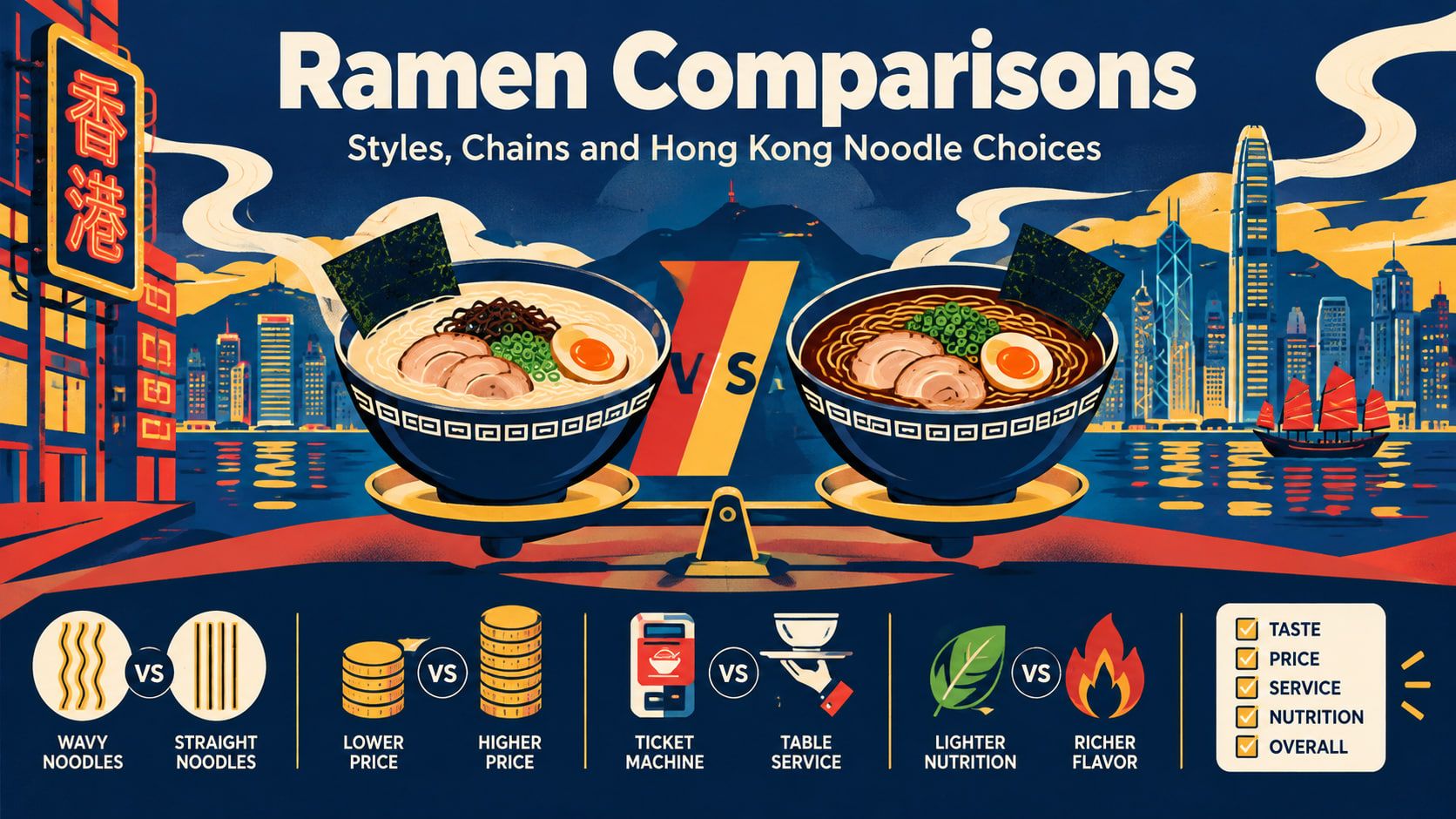
Choose with honest side-by-side trade-offs in broth, noodles, price tier, service format and nutrition—not a subjective winner.

Get the direct answer first, then follow links to the deeper guide on ingredients, culture, calories or cooking.
Compare Ichiran, Ippudo and Butao through published menus, customisation, seating and ordering logistics without a winner.
Compare ramen, udon and soba through noodle ingredients, serving formats and the dietary questions worth checking.
Compare ramen and pho through noodles, broth, toppings and eating format rather than declaring one superior.
Compare ramen and Lanzhou lamian through preparation, noodles, broth and the context behind their names.
Explore ramen and Hong Kong wonton noodles through their ingredients, serving styles and practical meal differences.
Compare ramyeon and ramen through product formats, cooking methods and what the names commonly describe.
Compare mazesoba and ramen through sauce, soup, toppings and serving format without assuming soupless means lighter.
Compare tonkotsu and chicken paitan through broth ingredients, preparation and the dietary checks each requires.