
Tsukemen: Broth, Noodles, Toppings and Origin
Understand tsukemen through its separate noodles and dipping broth, serving options and eating sequence.
Tsukemen: Broth, Noodles, Toppings and Origin
Tsukemen is ramen taken apart: thick noodles served on their own, often cold, beside a small bowl of concentrated hot dipping soup. It is the style that made Ramen Jo and Ramen Taifu local names, and it is the easiest ramen to eat slowly in a Hong Kong summer.
Style hub: Ramen Types and Regional Styles. Components: Anatomy of a Ramen Bowl. Site hub: Ramen in Hong Kong: The Complete Local Guide.
What to expect. A plate or bowl of thick, chewy noodles rinsed in cold water; a strong, sticky dip usually built on pork and fish; chashu and egg in or beside the dip; soup-wari (hot stock) offered at the end to thin the dip so you can drink it.
🍲 1. Broth and tare
The dip is a reduced, intensely seasoned version of ramen broth — often a gyokai-tonkotsu blend of pork bones and dried fish — with extra tare so it still tastes right on a cold noodle. Because it is concentrated, drinking it undiluted is saltier than most ramen soup; see ramen sodium and ramen broth.
🍜 2. Noodles and toppings
Noodles are the thickest in the ramen family, firm and glossy from the cold rinse; portions are measured by noodle weight and often start larger than a ramen bowl. Toppings sit in the dip: chashu, ajitama, menma, nori, sometimes a lime wedge or fish powder. See ramen noodles.
📜 3. Origin
Tsukemen is credited to Kazuo Yamagishi at Taishoken in Higashi-Ikebukuro, Tokyo, who put a staff meal of cold noodles and dipping soup on the menu as morisoba around 1955. It became a mainstream Tokyo style in the 2000s.
🇭🇰 4. In Hong Kong and at home
In Hong Kong the format is led by Ramen Jo on Caroline Hill Road and Ramen Taifu; see Ramen Jo, Ramen Taifu and the decision page tsukemen versus ramen. It also delivers well: ramen delivery.
Order the small portion first. Standard tsukemen servings commonly exceed a ramen bowl’s noodle weight, and the dip is designed to be strong.
❓ 5. FAQ
Hot or cold noodles? Cold (hiya-mori) is standard for texture; hot (atsu-mori) is offered in winter.
What is soup-wari? Hot stock added to the leftover dip so it can be drunk as a soup.
Is tsukemen ramen? Yes, by ingredients and lineage; the service format is what differs.
ramen types tonkotsu ramen shoyu ramen shio ramen miso ramen tsukemen mazesoba abura soba tantanmen chicken paitan shrimp ramen iekei ramen Hakata ramen Sapporo ramen
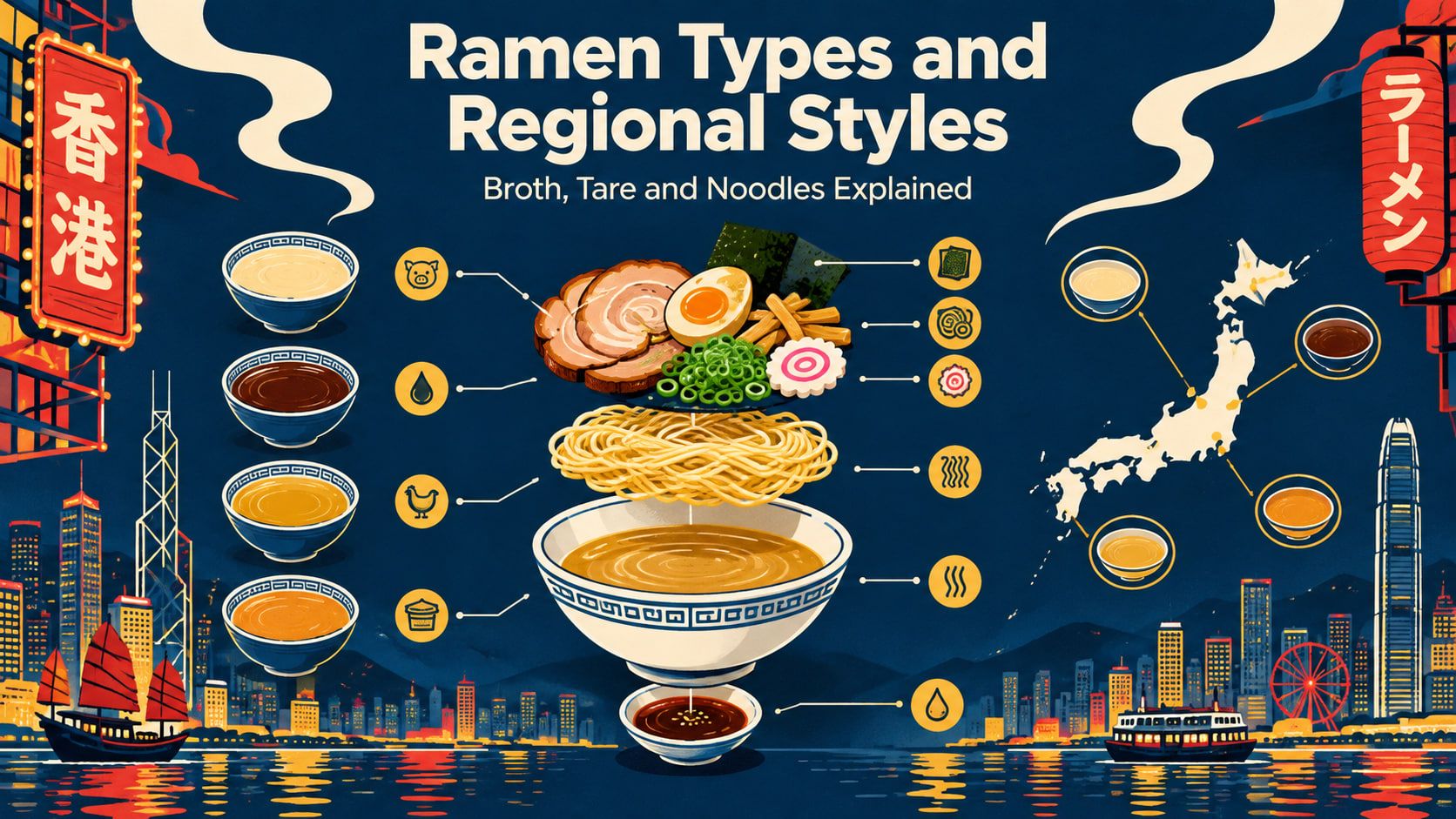
Learn to read any ramen menu confidently by understanding broth, tare, noodle texture, toppings and regional Japanese origins.

Plan a Japan ramen trip with city-specific styles, queues, museums and practical travel details.
Understand tonkotsu ramen through pork-bone broth, noodle options and the recipe details to ask about.
Explore shoyu ramen through soy-based seasoning, broth variations and the menu terms that help you choose.
Understand shio ramen through salt-based seasoning and broth choices without mistaking a clear appearance for low sodium.
Explore miso ramen through seasoning, noodle pairings and regional context before ordering or cooking it.
Explore mazesoba through sauce, noodles and toppings, with practical guidance on mixing and ordering.
Understand abura soba through its soupless format, seasoning and the distinctions to check against mazesoba.
Explore tantanmen through sesame, chilli, recipe variations and the ingredient questions to ask before ordering.
Understand chicken paitan through broth preparation and the checks needed before assuming a bowl is pork-free.