How Ramen Came to Hong Kong: Chains, Queues and Local Adoption
Trace ramen’s Hong Kong story through restaurant culture, packaged noodles and the sources behind local milestones.
How Ramen Came to Hong Kong: Chains, Queues and Local Adoption
Ramen reached Hong Kong first through instant noodles in the late 1960s, then through Japanese restaurants, and finally as a dedicated chain-and-specialist-shop category that reshaped mall dining from the 2010s. The local story is not simply Japan exporting a bowl: Doll noodles turned into the Cantonese generic term 公仔麵, Demae Iccho became a cha chaan teng upgrade, and Ippudo’s 2011 Tsim Sha Tsui opening demonstrated how a Japanese ramen queue could become part of Hong Kong mall culture. Hong Kong diners adopted the category through their own habits.
This page is for readers who want the local timeline rather than a static list of shops. It sits under ramen culture and history and complements the wider history of ramen.
The two-track rule. Hong Kong's ramen history has two tracks: packet noodles at home and in cha chaan tengs, and restaurant ramen in Japanese dining and shopping districts. They influence one another but are not the same food.
📦 1. The instant noodle foundation
Winner Food Products launched Doll noodles in 1968, and the brand became so widespread that 公仔麵 entered Cantonese as the generic word for instant noodles. Nissin's Demae Iccho arrived in the late 1960s and built a separate Hong Kong flavour range around the signature sesame oil. Sources differ on its precise local launch year, but agree it was early. Nissin set up its Hong Kong subsidiary in 1984, opened a Tai Po plant in 1985 and acquired Winner in 1989, joining the local and Japanese brands in one group. The detail is on the Doll noodles page and the Demae Iccho page.
🍳 2. Cha chaan teng adoption
Cha chaan tengs made the packet noodle restaurant food. A three-minute noodle in clear soup, with a fried egg, luncheon meat or satay beef, toast and milk tea, matched the city's quick breakfast and tea-set rhythm. The named Demae Iccho upgrade signalled a specific sesame-oil flavour and justified a small menu supplement. It remains a local eating habit rather than Japanese ramen, explained on cha chaan teng instant noodles and the Demae Iccho breakfast.
🍜 3. From Japanese dining to ramen chain
Japanese food has been part of Hong Kong's restaurant scene for decades, but specialist ramen became more visible as shopping malls expanded, travel to Japan became routine and regional Japanese brands sought Asian locations. Shopping centres provided clean, high-footfall, air-conditioned sites, but also meant rents, queues and opening hours were tied to mall operations. That helped create a ramen experience familiar to Hong Kong diners: ticket, queue, quick meal, then move on.
Ippudo opened its first Hong Kong branch at Silvercord in Tsim Sha Tsui on 18 July 2011, according to contemporary reporting and brand histories. It was notable not because it was the only Japanese noodle shop, but because a globally known Hakata chain entered a high-traffic mall and drew sustained queues. The branch history belongs on the Ippudo Hong Kong page; current locations, menus and queues must be checked directly before travelling.
🚇 4. Districts, malls and queues
Causeway Bay, Central, Tsim Sha Tsui and Mong Kok developed the densest concentration of Japanese restaurants because they combine offices, tourists, shopping centres and MTR interchange traffic. Mall locations are a practical fallback in rain, humidity and typhoon warnings, but they are not necessarily cheaper and their last orders may precede the building closing time. District supply changes quickly, so use the current guides to ramen in Causeway Bay, ramen in Central and ramen in Tsim Sha Tsui rather than old review lists.
🇭🇰 5. How Hong Kong changed the experience
- Instant noodles and cha chaan teng breakfasts made packet texture, soup strength and value familiar reference points.
- Cantonese vocabulary sits alongside Japanese terms: 公仔麵, 湯麵, 撈麵 and 出前一丁 are as useful as shoyu or kaedama; see ramen terms in Cantonese.
- Mall dining shortened the acceptable meal window and made queues, queue tickets and table turnover part of normal expectations.
- Cross-harbour travel and MTR access affect where diners will queue, particularly for lunch and weekend dinner.
- Local menus often add chilli, black garlic, seafood, cheese or Hong Kong-friendly sides while retaining Japanese bowl structures.
🔄 6. What changed after 2020
Delivery, cloud kitchens and changing mall footfall altered how ramen reached diners, while staffing, rent and imported ingredients made the business harder. Brand openings and closures are too current to state without same-day verification. The useful reader question is not which shop is permanent, but whether the published branch page, timetable and map listing agree today. See the Hong Kong ramen queue guide for the practical side.
Old restaurant lists are not current evidence. Hong Kong ramen branches open, relocate and close regularly. Contemporary reporting is useful for history, but it does not verify a current address, opening hour, menu or queue system. Check the operator's current page and a current platform listing before setting out.
❓ 7. FAQ
When did ramen first arrive in Hong Kong? Instant noodles were established by the late 1960s; Japanese restaurant ramen developed over following decades and specialist chains became highly visible from the 2010s.
Why is instant noodle called 公仔麵? Doll noodles became so widely used that its brand name became the generic Cantonese term.
Was Ippudo the first ramen chain in Hong Kong? It was a prominent early international chain opening in 2011, but not the only Japanese noodle restaurant. 'First' claims require tighter historical evidence than we could find.
Why are so many ramen shops in malls? Malls supply footfall, air conditioning and predictable transport access, though rent and lease conditions also shape the location.
Has Hong Kong ramen become different from Japan? Yes, through local packet-noodle habits, Cantonese vocabulary, mall dining and menu adaptations, while still using Japanese ramen structures.
history of ramen ramen history Hong Kong ramen etiquette why slurp ramen ramen in anime ramen Japanese vocabulary ramen Cantonese terms ramen museum Michelin ramen
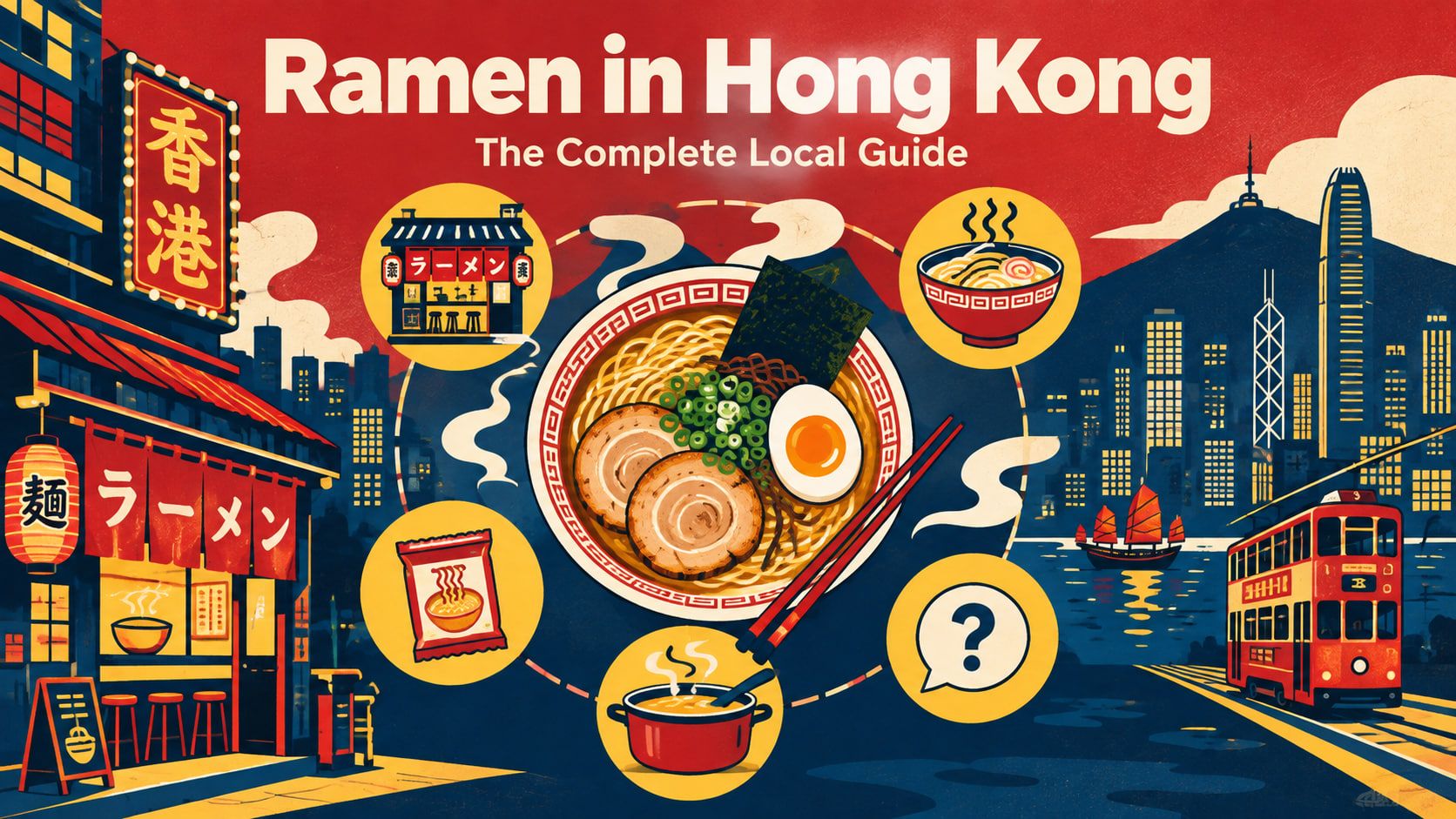
A Hong Kong-first ramen guide connecting local restaurants, Japanese styles, instant noodles, home cooking and the practical questions people ask before choosing a bowl.
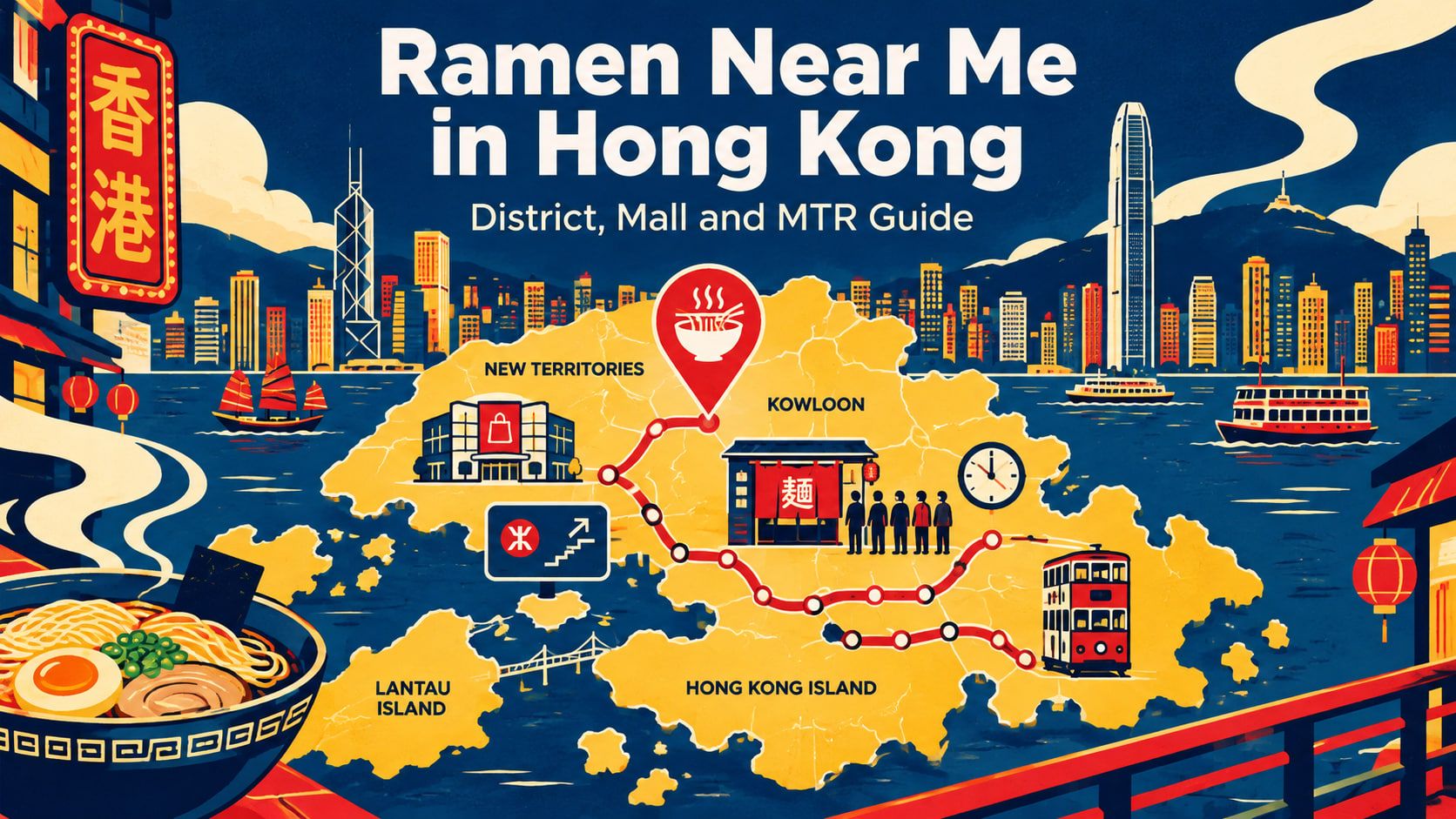
Use this location-first guide to choose an area, plan around an MTR exit and avoid arriving at a closed or over-queued ramen shop.

Choose ramen according to the moment: late shift, tight budget, solo lunch, family outing or rainy-night delivery.

Understand why ramen is eaten fast, slurped loudly, ordered by ticket and discussed with Japanese vocabulary.
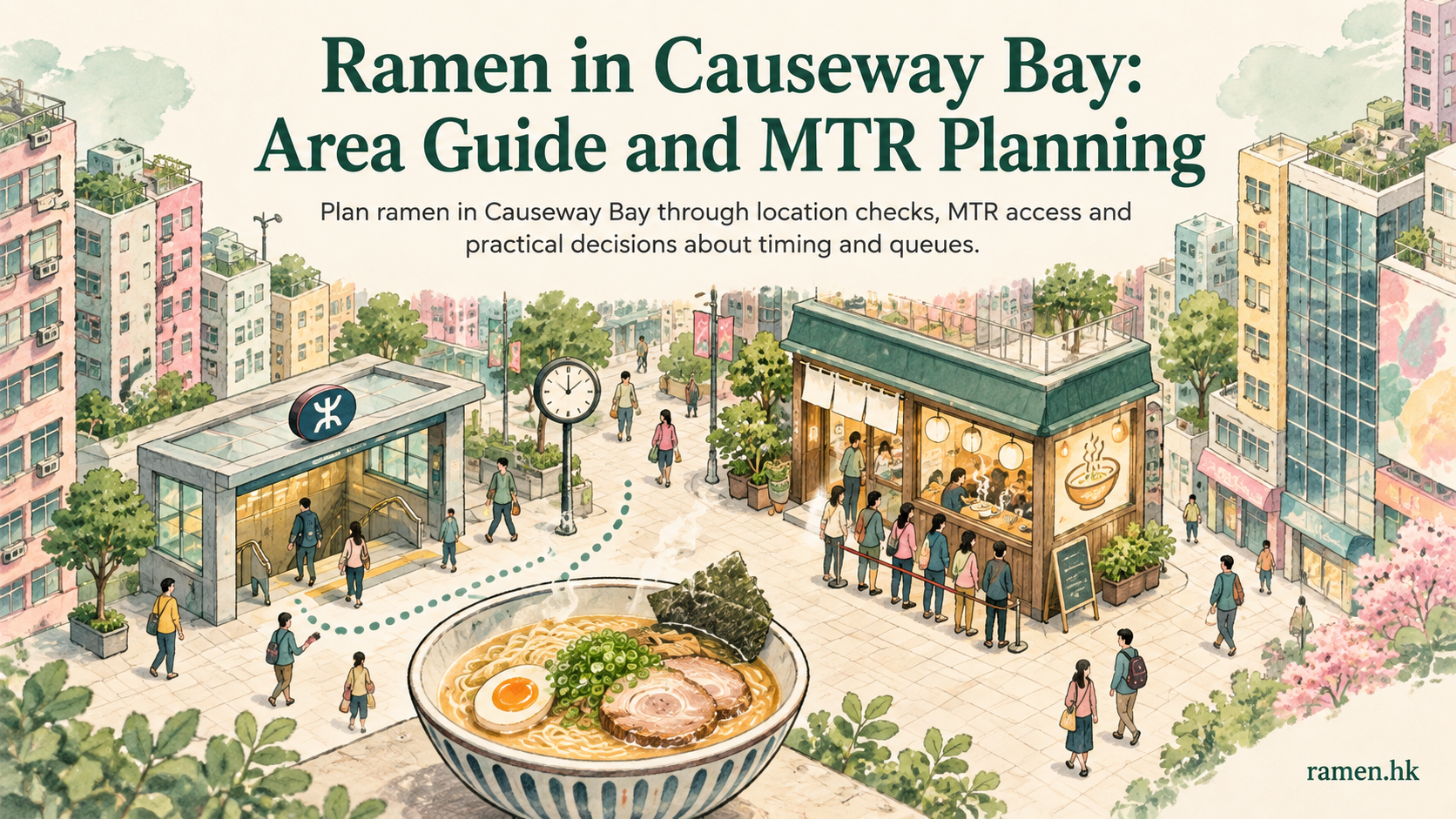
Plan ramen in Causeway Bay through location checks, MTR access and practical decisions about timing and queues.
Plan a Central ramen meal around your route, available time and the operator details to confirm before travelling.
Explore ramen in Wan Chai with area planning, MTR access and checks on menus, hours and queues.
Plan ramen in Tsim Sha Tsui through station access, branch verification and a workable fallback for your visit.
Explore Mong Kok ramen with attention to the actual address, building access, opening arrangements and waiting time.
Plan a Sheung Wan ramen visit by checking the location, menu and service window before walking over.