
History of Ramen: From Chinese Noodle Soup to Japanese Icon
Explore ramen history through noodle roots, Japanese development, regional traditions and the instant-noodle era.
History of Ramen: From Chinese Noodle Soup to Japanese Icon
Ramen is Japanese food with Chinese roots: wheat noodles and Chinese noodle soups entered Japan through open treaty ports in the nineteenth century, then fused with Japanese dashi, tare and regional ingredients. The first specialist ramen shop, Rairaiken, opened in Tokyo in 1910; post-war street stalls spread the dish nationally; and Momofuku Ando’s 1958 instant noodle turned it into a global pantry food. There was never one original recipe, only a set of components that each region changed.
This page is for readers who want the historical outline without pretending that one origin story settles every debate. It sits under ramen culture and history and links to Momofuku Ando and instant noodles for the packet-food chapter.
The five-part rule. Modern ramen is not simply Chinese noodles in Japanese soup. Japan's Ministry of Agriculture describes it as a fusion of noodles, dashi, tare, ingredients and fat or oil; changing any one creates a different regional style.
⚓ 1. Chinese noodles arrive
Japan opened treaty ports in 1859 after more than two centuries of relative closure. Chinese restaurants began to grow in port cities, particularly Yokohama, which opened its first Chinese restaurant in 1870 according to the Ministry of Agriculture's history. Chinese students and immigrants brought affordable wheat noodle soups that were initially called shina soba or chuka soba in Japanese. The Chinese antecedents varied by region; it is too simple to say ramen is directly descended from northern pulled lamian.
🏮 2. Rairaiken and the Tokyo bowl
Rairaiken opened in Asakusa in 1910 and is widely regarded as the first specialist ramen shop. Its founder, Kanichi Ozaki, recruited cooks from Yokohama Chinatown to develop a bowl for Japanese customers: Chinese-style wheat noodles in a clear chicken-and-pork stock, seasoned with soy sauce and topped with chashu, bamboo shoots, spring onion and nori. Ministry material says it served 3,000 bowls on busy days. The shop closed in 1976, but its mix of Chinese noodle technique and Japanese seasoning became the basic Tokyo shoyu pattern.
🛒 3. War, black markets and yatai
Ramen's national growth was not smooth. The 1923 Great Kanto Earthquake damaged Tokyo and Yokohama, but also encouraged portable yatai stalls. During the Second World War, most shops closed as wheat was controlled. After 1945, American wheat aid, rice shortages, returning Japanese soldiers and a flourishing black market made cheap noodle stalls practical again. The name ramen became more common in the 1950s and 1960s, replacing terms such as shina soba, which carried imperial-era baggage.
🗾 4. Regional styles take shape
- Sapporo miso: miso, lard and cold-climate toppings such as corn and butter.
- Hakata tonkotsu: thin straight noodles in a hard-boiled pork-bone broth, with kaedama extra noodles.
- Tokyo shoyu: clear soy-seasoned chicken and pork broth, curly noodles.
- Kitakata: broad, flat, high-water noodles in a clear pork-and-niboshi soup.
- Yokohama iekei: a later hybrid of tonkotsu, shoyu and thick noodles, explained on our ramen styles hub.
📦 5. Instant noodles change the scale
Ando's Chikin Ramen went on sale in 1958, followed by Cup Noodle in 1971. Flash-frying cooked noodles made them dry, shelf-stable and ready with hot water. These products were not restaurant ramen, but they made the word and its flavours familiar worldwide. The invention and its legends are separated on the Momofuku Ando page, and the local packet story is on how ramen came to Hong Kong.
🌍 6. Global ramen
From the 1980s, ramen travelled through Japanese corporate expansion, student travel, television, manga and later social media. International shops developed local ingredients and formats; Hong Kong became an early Asian market for Japanese chains. That does not make any overseas bowl less ramen. It reflects the dish's long history of adaptation. For the Tokyo context, see ramen in Tokyo; for how Hong Kong bowls compare with Japanese ones, see Hong Kong ramen versus Japan.
The history has no single uncontested origin. Museum, company and food-history accounts agree on the nineteenth-century Chinese influence, Rairaiken's 1910 opening and the 1958 instant noodle launch. They differ in how directly ramen descends from particular Chinese dishes and in the weight given to earlier Japanese wheat noodles. Treat neat one-line origin stories with caution.
❓ 7. FAQ
Is ramen Chinese or Japanese? It is a Japanese adaptation of Chinese wheat noodle soups, developed in Japan with Japanese broth, tare and regional ingredients.
What was ramen called before ramen? Shina soba and chuka soba were common terms. Ramen became widespread in the 1950s and 1960s.
What was the first ramen shop? Rairaiken in Asakusa, Tokyo, opened in 1910 and is widely credited as the first specialist shop.
Did instant noodles come before Cup Noodle? Yes. Chikin Ramen launched in 1958; Cup Noodle followed in 1971.
Why are there so many ramen styles? The five components can be changed independently, and regions adapted the bowl to local ingredients, climate and tastes.
history of ramen ramen history Hong Kong ramen etiquette why slurp ramen ramen in anime ramen Japanese vocabulary ramen Cantonese terms ramen museum Michelin ramen
A Hong Kong-first ramen guide connecting local restaurants, Japanese styles, instant noodles, home cooking and the practical questions people ask before choosing a bowl.
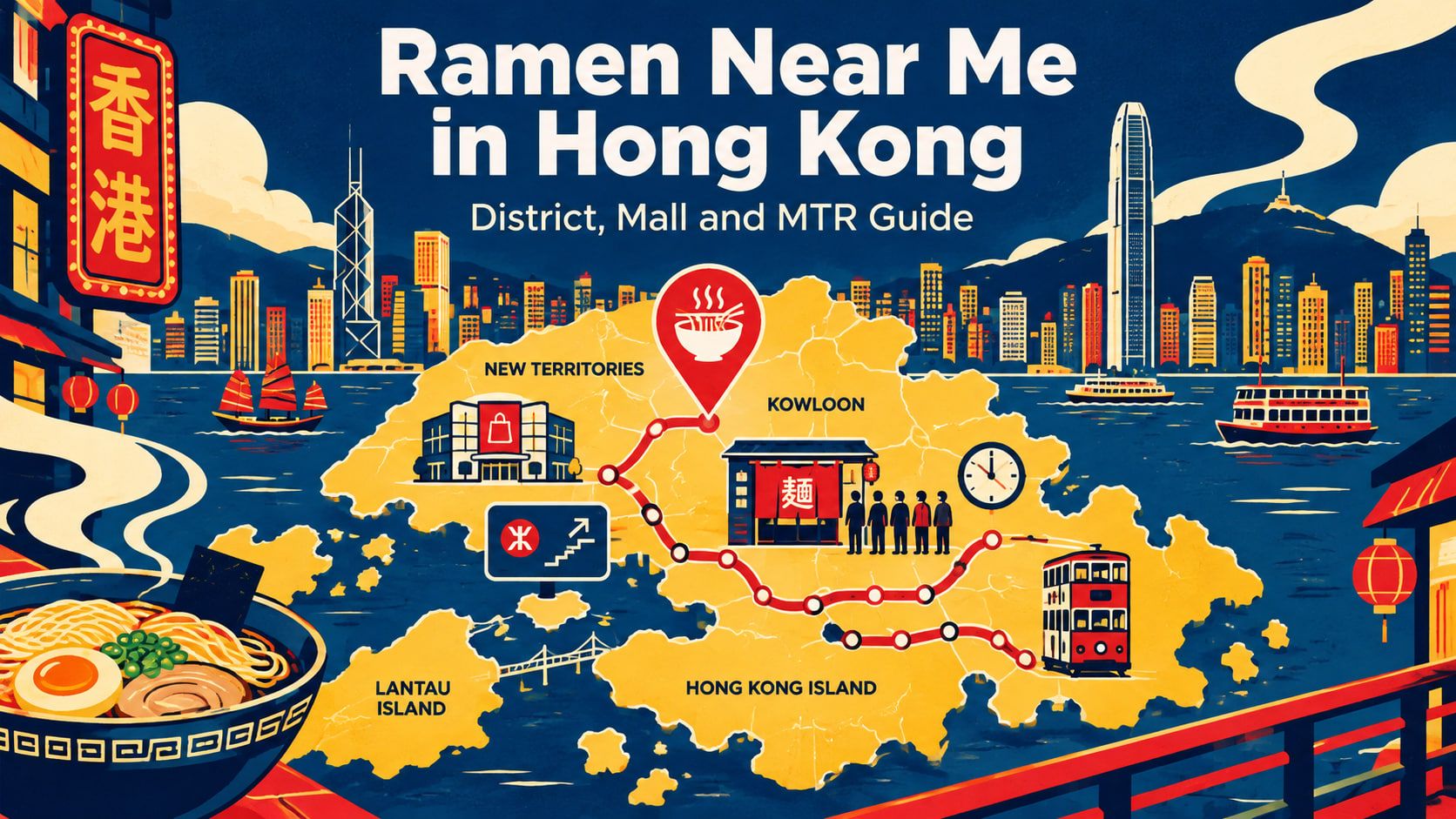
Use this location-first guide to choose an area, plan around an MTR exit and avoid arriving at a closed or over-queued ramen shop.

Choose ramen according to the moment: late shift, tight budget, solo lunch, family outing or rainy-night delivery.

Understand why ramen is eaten fast, slurped loudly, ordered by ticket and discussed with Japanese vocabulary.
Plan ramen in Causeway Bay through location checks, MTR access and practical decisions about timing and queues.
Plan a Central ramen meal around your route, available time and the operator details to confirm before travelling.
Explore ramen in Wan Chai with area planning, MTR access and checks on menus, hours and queues.
Plan ramen in Tsim Sha Tsui through station access, branch verification and a workable fallback for your visit.
Explore Mong Kok ramen with attention to the actual address, building access, opening arrangements and waiting time.
Plan a Sheung Wan ramen visit by checking the location, menu and service window before walking over.