
Ramen Shop Rent in Hong Kong: District, Format and Lease Questions
Assess ramen shop rent through the actual lease, works, recurring charges and realistic seating and trading assumptions.
Ramen Shop Rent in Hong Kong: Districts, Deposits and Trade-offs
Rent is the cost that most often decides whether a Hong Kong ramen shop survives, and the useful comparison is not between districts alone but between a unit that already has a compliant kitchen exhaust, grease trap and restaurant licence and one that does not. The practical rule is to compare rent per seat per month after adding the works a unit needs, because a cheaper unlicensed shop can cost more than a licensed one once ventilation and fire-safety works are priced. The Rating and Valuation Department's private retail rent statistics are the neutral baseline for district comparison.
This page is for prospective Hong Kong operators comparing units and for anyone checking whether a franchise or consultant's rent assumption is realistic. It sits under opening a ramen shop in Hong Kong and should be read with ramen shop start-up costs. It gives tiers and checks rather than a fixed rent figure, because asking rents change monthly and differ by floor and frontage.
The rent-per-seat rule. Divide monthly rent plus amortised fit-out and works by realistic seats, then by the bowls each seat must sell per day to cover it. If the number is higher than your intended turnover at your price tier, the unit is wrong regardless of how good the location looks.
📊 1. Where to get rent evidence
- Rating and Valuation Department: publishes private retail average rents and rental indices by district as downloadable spreadsheets, updated monthly. Use these for trend and district comparison.
- Agents' asking rents: useful for current availability, but asking is not achieved rent; negotiate from the RVD baseline.
- Comparable leases: ask agents for recently signed shop leases of similar size on the same street.
- Market context: the Census and Statistics Department's provisional second-quarter 2026 figures show restaurant receipts up 0.4% in value while purchases rose 2.5%; thin growth means rent as a share of receipts needs careful control.
📍 2. District tiers for ramen
Causeway Bay, Central and Tsim Sha Tsui offer the heaviest footfall and the longest ramen queues in Hong Kong, but ground-floor street rents there sit at the top tier and many operators take upper-floor or mall units instead. Mong Kok, Wan Chai and Sheung Wan sit in a middle tier with strong lunch or evening trade depending on the street. Kwun Tong, Sha Tin and Tsuen Wan offer lower rents and office or residential catchments, with thinner evening trade in office areas. Reader-side district guides such as ramen in Causeway Bay, ramen in Central and ramen in Kwun Tong show how supply is already concentrated, which is a proxy for both demand and competition.
🏬 3. Mall versus street
- Mall units often come with a landlord-managed exhaust system, longer trading hours and marketing, but may carry turnover rent, fit-out guidelines, mandatory opening hours and higher management fees.
- Street units give control over hours and design, but exhaust routes, grease traps and Buildings Department compliance become your problem.
- Upper-floor units cut rent sharply but depend on signage, lift access and online discovery; ramen's queue culture helps less on the fourth floor.
- Basement units can be cheaper still, but ventilation and means-of-escape requirements can be harder to satisfy.
📝 4. Lease terms that change the real cost
Ask about deposit size, rent-free fit-out periods, who pays for exhaust and fire-services works, whether the landlord will consent to external ducting, rent review mechanisms, break clauses and reinstatement obligations at the end of the term. Reinstatement, meaning stripping the kitchen back to bare shell, is an end-of-lease cost that new operators often forget. Key money for a unit with an existing licence is a premium on top of rent. Confirm with FEHD that the existing licence type suits your menu before paying any premium; see restaurant licences in Hong Kong.
🧮 5. Testing a unit against your plan
- Take the RVD district average for the unit's class as a baseline.
- Add monthly amortisation of works and fit-out over the lease term.
- Add management fees, rates, government rent and utilities.
- Divide by realistic seats, then by trading days.
- Compare with your price tier and target turnover from ramen shop profit margins.
- Write the result into the business plan as a tier with a best and worst case.
⚠️ 6. Why ramen shops lose on rent
A third-party analysis citing FEHD data reported 17,154 restaurant licences on record at 30 April 2026, 255 fewer than a year earlier, with more than 2,000 closures against 1,779 openings in the period, and it named a ramen shop less than a year old among Kwun Tong closures. The figures are third-party and should be checked against FEHD's open data, but the pattern they describe is familiar: committing to a top-tier rent on projected rather than proven turnover. The wider causes are discussed on why ramen shops close in Hong Kong.
Treat rent figures as dated snapshots. Any rent quoted in an article, forum or franchise deck is out of date by the time you read it. Use the Rating and Valuation Department's current spreadsheets, recently signed comparables and a written quote for the works your unit needs. Do not sign a lease or pay key money before FEHD, Buildings Department and Fire Services Department checks.
❓ 7. FAQ
What is a typical rent for a ramen shop in Hong Kong? There is no reliable single figure. Use the Rating and Valuation Department's private retail rent statistics for the district and class, then add works and fees for the specific unit.
Is a mall unit better than a street unit? Malls can provide exhaust, hours and footfall but add fees, turnover rent and rules. Street units give control but shift compliance costs to you.
What is key money? A premium paid for a unit with an existing licence or fit-out. Confirm the licence type suits your menu before paying it.
What is reinstatement? An obligation to strip the unit back to its original condition at lease end. Budget for it from the start.
How do I know if the rent is too high? Work out rent per seat per day and compare it with the bowls each seat must sell at your price tier. If it exceeds realistic turnover, the unit is too expensive.
how to open a ramen shop Hong Kong ramen shop startup cost ramen franchise Hong Kong ramen franchise cost ramen restaurant business plan restaurant licence Hong Kong ramen noodle machine ramen supplier Hong Kong ramen bowls wholesale Hong Kong ramen shop rent Hong Kong
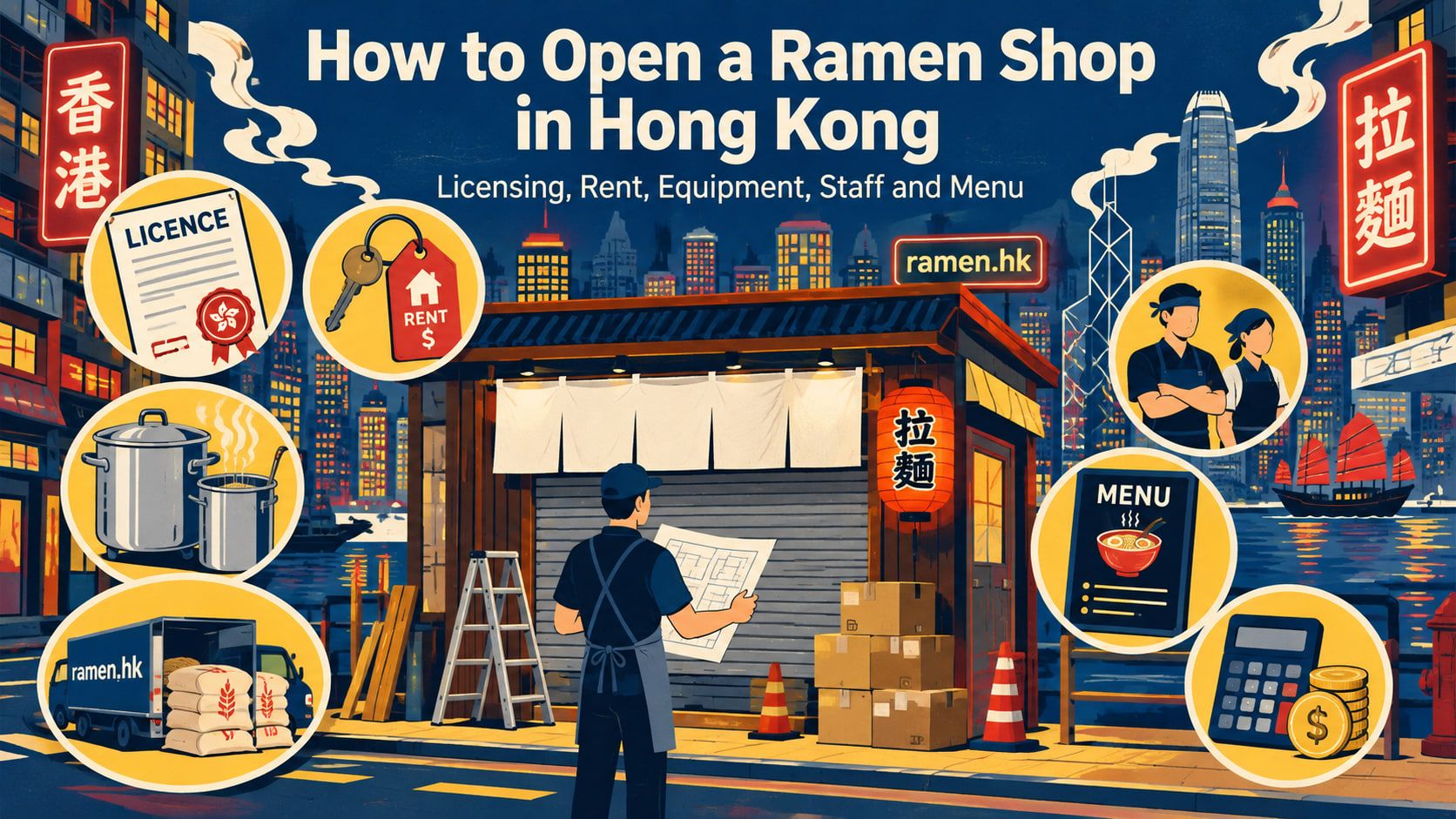
Plan a ramen business with licensing, rent, equipment, suppliers, staffing and menu decisions explained for Hong Kong reality.
Build ramen shop start-up costs from premises-specific quotes, licence needs, equipment and working-capital assumptions.
Understand Hong Kong restaurant licence options and premises checks before committing to a ramen shop lease.
Evaluate a Hong Kong ramen franchise through fees, support, supply obligations and professional agreement review.
Build a Hong Kong ramen business plan with traceable costs, clear assumptions and tests for operational risk.
Assess a ramen noodle machine through model-specific space, power, training, maintenance and production needs.
Choose Hong Kong ramen suppliers through specifications, traceability, delivery terms and contingency supply.
Source wholesale ramen bowls through serving capacity, handling, cleaning suitability and replacement availability.
Model ramen shop margins through actual purchasing, staffing, occupancy and turnover assumptions rather than borrowed percentages.
Explore why ramen shops close through operational risks while avoiding speculation about any individual business’s finances.