Shoyu vs Shio Ramen: How to Choose a Clear Broth
Compare shoyu and shio through seasoning approaches and recipe differences, not colour-based assumptions about salt.
Shoyu vs Shio Ramen: How to Choose a Clear Broth
Shoyu and shio are both tare, the seasoning added to the bowl before the broth, and both usually sit on a clear stock. One is soy sauce, the other salt, and the difference is less about strength than about what you taste. This page explains trade-offs and characteristics; it is not a ranking.
Comparison hub: Ramen Comparisons. Style hub: Ramen Types and Regional Styles. Site hub: Ramen in Hong Kong: The Complete Local Guide.
Choose shoyu for depth, colour and a savoury, slightly sweet soy profile. Choose shio to taste the stock itself: cleaner, paler and the most transparent style in the ramen family.
🫙 1. Shoyu
Soy-sauce tare blended with mirin, dashi and aromatics; Tokyo’s default, with Toyama black shoyu as the extreme served by Ramen Iroha. See shoyu ramen and Ramen Iroha.
🧂 2. Shio
Salt tare, often with kombu, dried fish or chicken; the broth’s quality is exposed. Afuri’s yuzu-shio is the Hong Kong example; see shio ramen and yuzu shio ramen.
📊 3. Sodium myth
Shio is not necessarily lower in sodium than shoyu; both tare are salt-driven. Ask for less tare if sodium matters; see ramen tare and ramen sodium.
🍜 4. Noodles and toppings
Both pair with medium or thin noodles and lighter toppings; menma and nori show better in clear broth than in tonkotsu.
“Light” is about colour, not salt. Do not order shio for health reasons alone; order it for flavour and then manage the soup.
🧭 What to read next
For both tare in home form see shoyu and shio tare recipes; for the full style map see ramen types.
ramen comparison Ichiran vs Ippudo ramen vs udon ramen vs pho ramen vs Lanzhou lamian ramen vs wonton noodles ramen vs ramyeon tonkotsu vs paitan instant vs fresh ramen
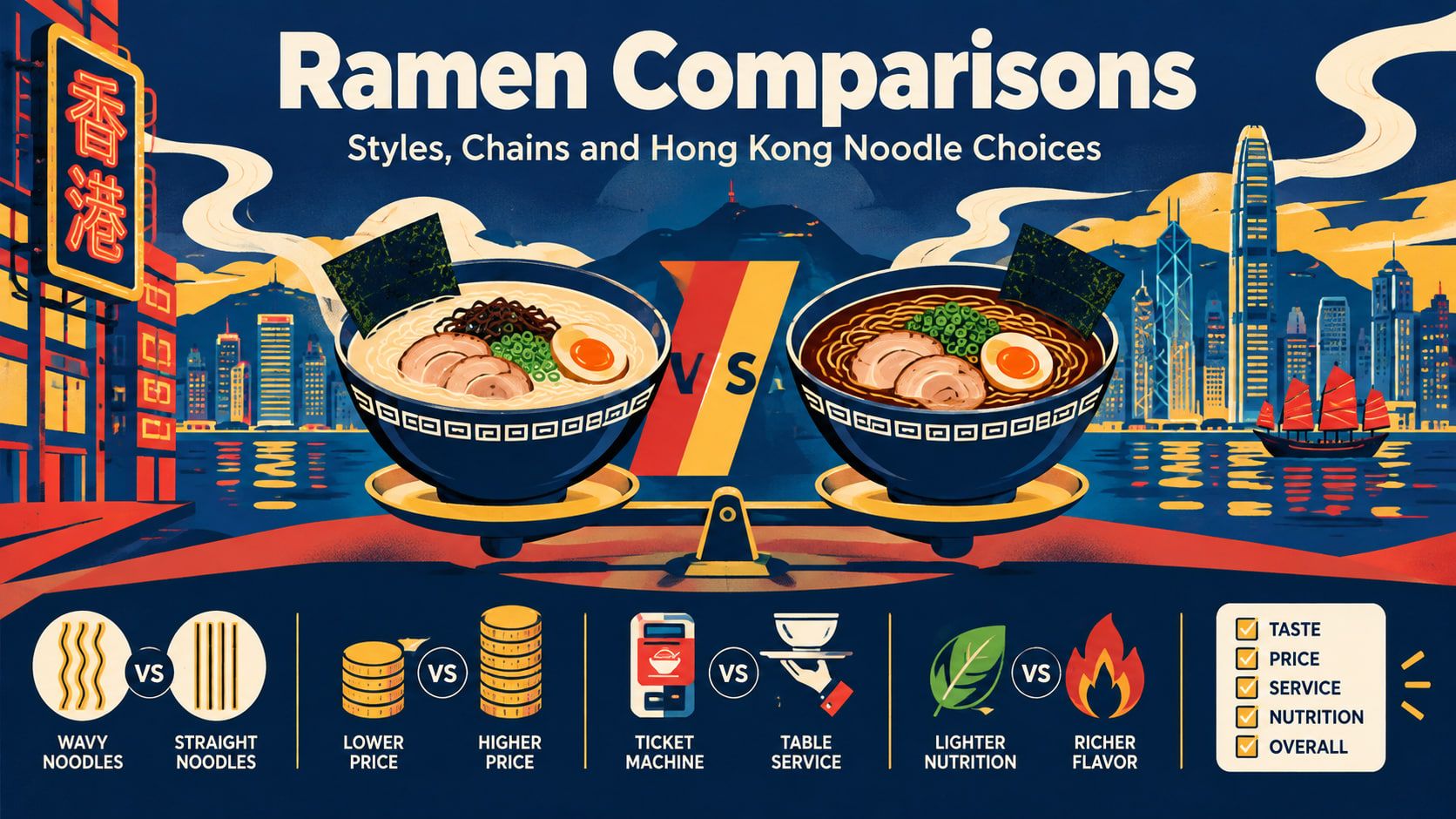
Choose with honest side-by-side trade-offs in broth, noodles, price tier, service format and nutrition—not a subjective winner.

Get the direct answer first, then follow links to the deeper guide on ingredients, culture, calories or cooking.
Compare Ichiran, Ippudo and Butao through published menus, customisation, seating and ordering logistics without a winner.
Compare ramen, udon and soba through noodle ingredients, serving formats and the dietary questions worth checking.
Compare ramen and pho through noodles, broth, toppings and eating format rather than declaring one superior.
Compare ramen and Lanzhou lamian through preparation, noodles, broth and the context behind their names.
Explore ramen and Hong Kong wonton noodles through their ingredients, serving styles and practical meal differences.
Compare ramyeon and ramen through product formats, cooking methods and what the names commonly describe.
Compare tsukemen and ramen through dipping versus soup formats, noodle choices and the way each meal is eaten.
Compare mazesoba and ramen through sauce, soup, toppings and serving format without assuming soupless means lighter.