Japanese Ramen vs Lanzhou Lamian: Why Both Are Called 拉麵
Compare ramen and Lanzhou lamian through preparation, noodles, broth and the context behind their names.
Japanese Ramen vs Lanzhou Lamian: Why Both Are Called 拉麵
In Hong Kong, 拉麵 is a genuine translation trap: it can mean Japanese ramen or Lanzhou hand-pulled lamian, two dishes that share a character and wheat flour and almost nothing else. This page explains trade-offs and characteristics; it is not a ranking.
Comparison hub: Ramen Comparisons. Style hub: Ramen Types and Regional Styles. Site hub: Ramen in Hong Kong: The Complete Local Guide.
The one-sentence difference. Japanese ramen is alkaline noodles in a tare-seasoned Japanese broth, often pork-based; Lanzhou lamian is hand-pulled noodles in a clear halal beef broth with chilli oil, coriander and radish.
🧵 1. The noodle
Lamian is pulled by hand to order, with thickness chosen at the counter. Ramen noodles are made with kansui, usually machine-cut, and matched to the broth; see ramen noodles.
🥣 2. The soup
Lanzhou broth is clear beef, traditionally described by the formula “one clear, two white, three red, four green, five yellow”. Ramen broth may be pork, chicken, fish or vegetable, then shaped by tare; see ramen broth and ramen tare.
🕌 3. Dietary meaning
Lanzhou lamian is usually halal because of its Hui Muslim tradition; Japanese ramen is often pork-based and may contain alcohol in the tare. See halal-friendly ramen.
🔎 4. Searching in Hong Kong
Use 日式拉麵 for the Japanese bowl and 蘭州拉麵 for hand-pulled beef noodles; the Cantonese terms are in ramen terms in Cantonese.
Do not call Lanzhou lamian “Chinese ramen”. It is a distinct Chinese tradition; the shared shorthand hides real cultural and dietary differences.
🧭 What to read next
For another local comparison see ramen versus wonton noodles; for the origin story see the history of ramen.
ramen comparison Ichiran vs Ippudo ramen vs udon ramen vs pho ramen vs Lanzhou lamian ramen vs wonton noodles ramen vs ramyeon tonkotsu vs paitan instant vs fresh ramen
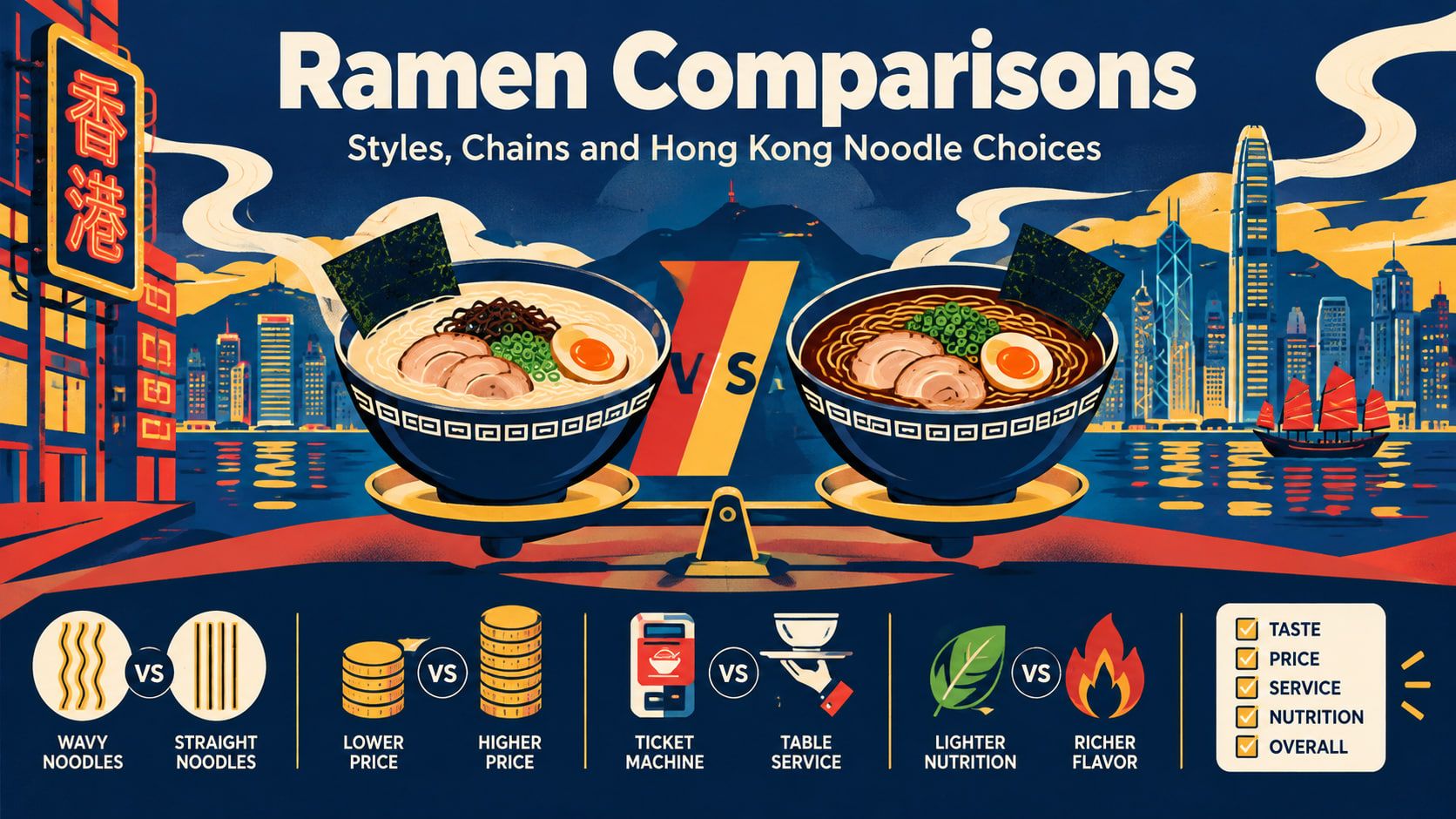
Choose with honest side-by-side trade-offs in broth, noodles, price tier, service format and nutrition—not a subjective winner.

Get the direct answer first, then follow links to the deeper guide on ingredients, culture, calories or cooking.
Compare Ichiran, Ippudo and Butao through published menus, customisation, seating and ordering logistics without a winner.
Compare ramen, udon and soba through noodle ingredients, serving formats and the dietary questions worth checking.
Compare ramen and pho through noodles, broth, toppings and eating format rather than declaring one superior.
Explore ramen and Hong Kong wonton noodles through their ingredients, serving styles and practical meal differences.
Compare ramyeon and ramen through product formats, cooking methods and what the names commonly describe.
Compare tsukemen and ramen through dipping versus soup formats, noodle choices and the way each meal is eaten.
Compare mazesoba and ramen through sauce, soup, toppings and serving format without assuming soupless means lighter.
Compare tonkotsu and chicken paitan through broth ingredients, preparation and the dietary checks each requires.