
Why Do People Slurp Ramen?
Explore why people slurp ramen and how eating customs leave room for individual preference.
Why Do People Slurp Ramen?
People slurp ramen for practical and sensory reasons: it cools very hot noodles and broth, helps draw aroma through the nose and lets a diner eat before the noodle texture changes. It is accepted in Japanese ramen shops but it is never required; eating quietly with chopsticks and a spoon is equally polite. The idea that slurping proves respect for the chef is a popular oversimplification, not a rule.
This page is for Hong Kong diners visiting Japan or wondering whether the sound is expected in a local ramen shop. It sits under ramen culture and history and pairs with our ramen etiquette guide.
The optional rule. Slurp if it is comfortable; do not force it. The only practical rule is to eat ramen while it is hot and the noodles still have the texture the shop intended.
🌡️ 1. Cooling hot noodles
Ramen is served near boiling so the bowl reaches the customer hot. Lifting a small bundle of noodles and drawing in air cools it faster than waiting for the whole bowl to cool. This matters most for thin Hakata noodles, which continue softening in the broth. A spoonful of soup with noodles can be cooled the same way, but it is not necessary.
👃 2. Aroma and flavour
Slurping brings air through the mouth and nose while you eat. That may make volatile aromas from garlic oil, chicken fat, sesame and soy tare more noticeable. It is a sensory advantage, not a scientific guarantee that the bowl will taste better. The ingredients behind those aromas are described on the aroma oil page and the tare page.
🇯🇵 3. Is it Japanese etiquette?
It is a normal behaviour in Japan, particularly at counter noodle shops, and is not treated as bad manners. But there is no universal Japanese requirement to make noise, no score for loudness and no need to copy other diners. In a quiet, formal restaurant or a shared Hong Kong table, match the room. The broader counter rules are on ramen etiquette.
🧠 4. Myths to drop
- Myth: refusing to slurp insults the chef. Reality: it does not.
- Myth: slurping means the food is delicious. Reality: it mostly means the food is hot and noodle-friendly.
- Myth: everyone in Japan slurps. Reality: habits vary by person, age, setting and food.
- Myth: only ramen is slurped. Reality: soba and udon are also commonly slurped; see ramen versus udon versus soba.
- Myth: you must finish the broth. Reality: you can leave it, and doing so lowers sodium intake.
🥢 5. A comfortable method
- Lift a small amount of noodles, not the whole bundle.
- Bring them close to your mouth so they do not splash.
- Take a quiet or audible pull as feels natural.
- Use the spoon for broth if that is easier.
- Pause before adding condiments; ramen is already seasoned.
🇭🇰 6. In Hong Kong versus Japan
Hong Kong diners are accustomed to soup noodles, wonton noodles and cha chaan teng instant noodles, so a quick, hot noodle meal is familiar. Local ramen shops generally accept whatever eating style is comfortable. The useful distinction is not slurping but queue and counter practice, particularly in busy mall branches. See Hong Kong ramen versus Japan for the wider differences.
Do not turn etiquette into pressure. People with sensory sensitivities, dental work, swallowing difficulty, braces, hot-food sensitivity or simply a preference for quiet eating should not force a slurp. Let the noodles cool slightly, cut them if necessary and eat in the way that is safe and comfortable.
❓ 7. FAQ
Is it rude not to slurp ramen? No. Quiet eating is acceptable in ramen shops in Japan and Hong Kong.
Does slurping cool ramen? Yes. Drawing in air cools a small mouthful faster than waiting for the whole bowl.
Why do noodles taste better when slurped? The airflow may make aroma more noticeable, but the effect varies and is not essential to enjoyment.
Should I slurp the soup too? You can, but a spoon is equally normal. Leaving much of the soup is sensible if sodium is a concern.
Is slurping common in Hong Kong? Some diners do, but it is not an expectation. Hong Kong noodle culture is diverse and eating styles vary.
history of ramen ramen history Hong Kong ramen etiquette why slurp ramen ramen in anime ramen Japanese vocabulary ramen Cantonese terms ramen museum Michelin ramen
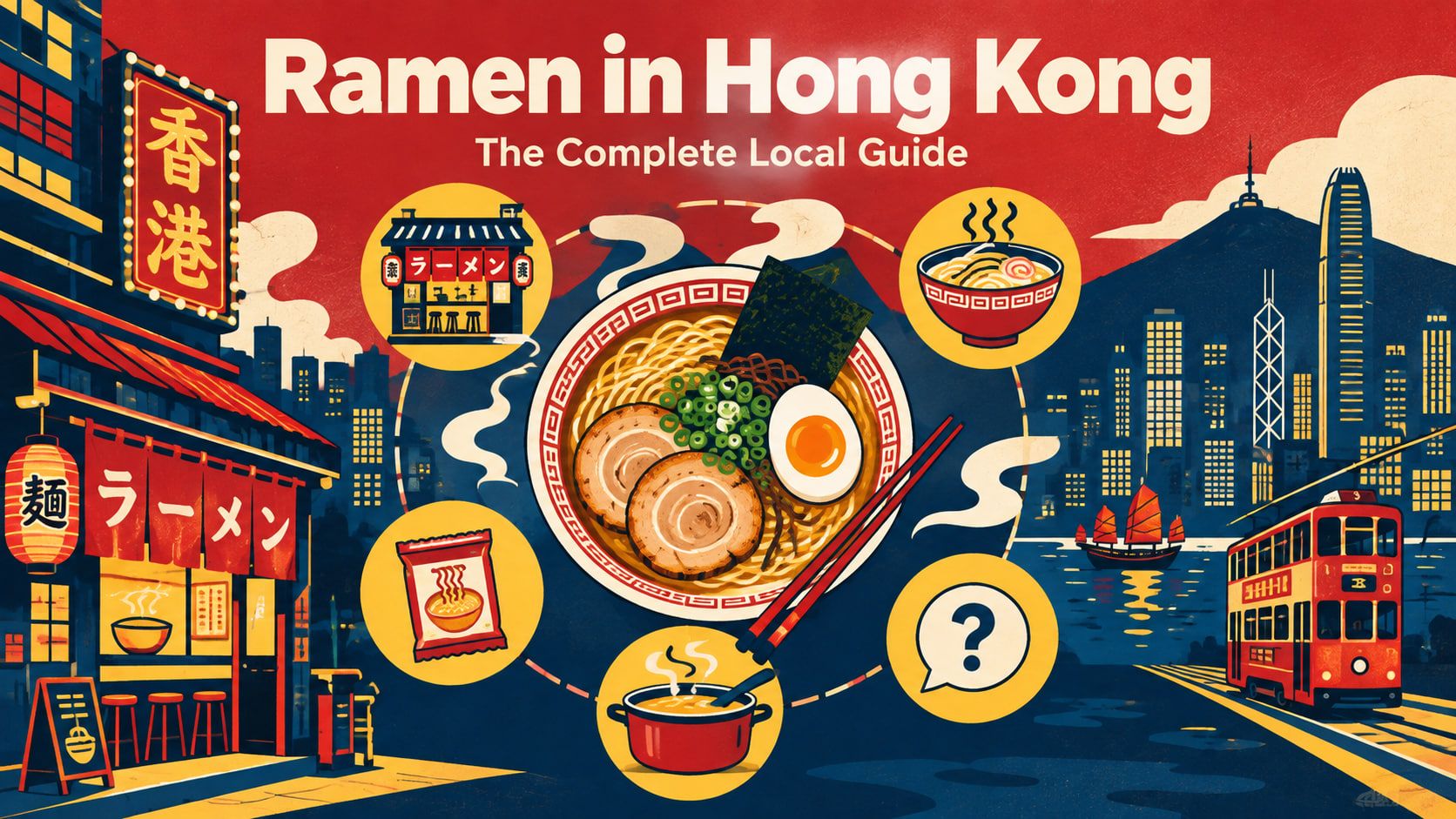
A Hong Kong-first ramen guide connecting local restaurants, Japanese styles, instant noodles, home cooking and the practical questions people ask before choosing a bowl.

Use this location-first guide to choose an area, plan around an MTR exit and avoid arriving at a closed or over-queued ramen shop.

Choose ramen according to the moment: late shift, tight budget, solo lunch, family outing or rainy-night delivery.

Understand why ramen is eaten fast, slurped loudly, ordered by ticket and discussed with Japanese vocabulary.
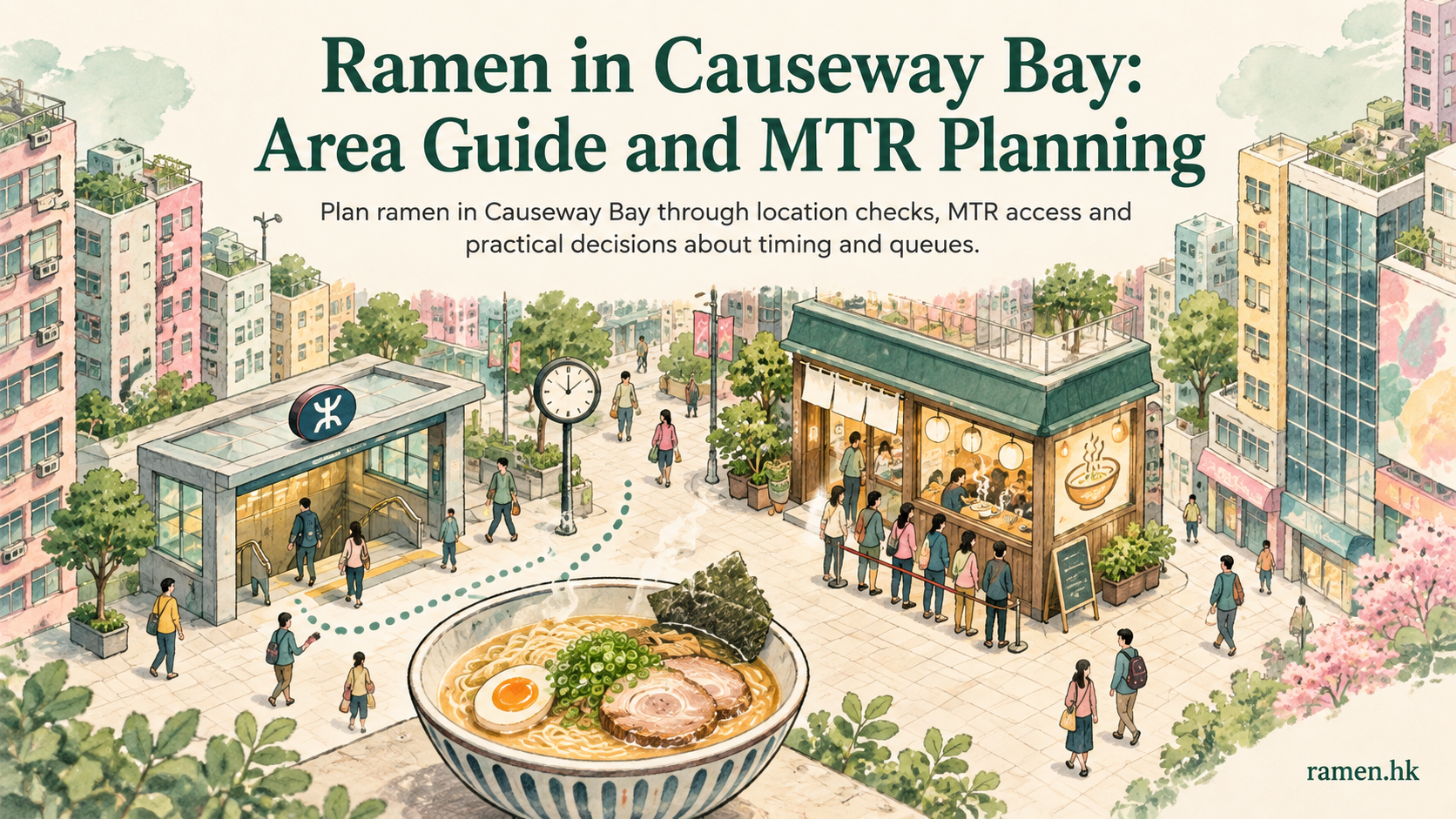
Plan ramen in Causeway Bay through location checks, MTR access and practical decisions about timing and queues.

Plan a Central ramen meal around your route, available time and the operator details to confirm before travelling.
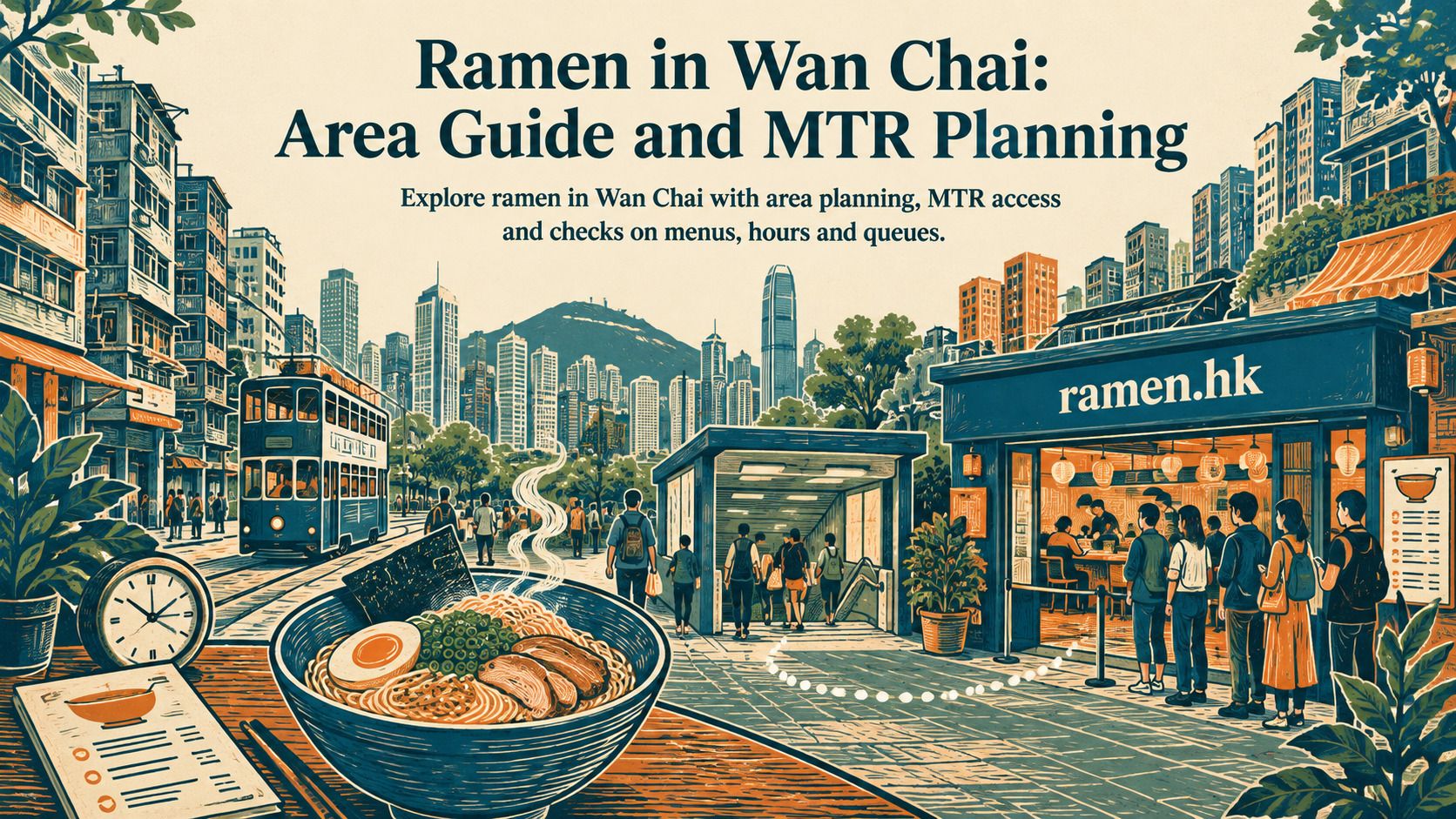
Explore ramen in Wan Chai with area planning, MTR access and checks on menus, hours and queues.
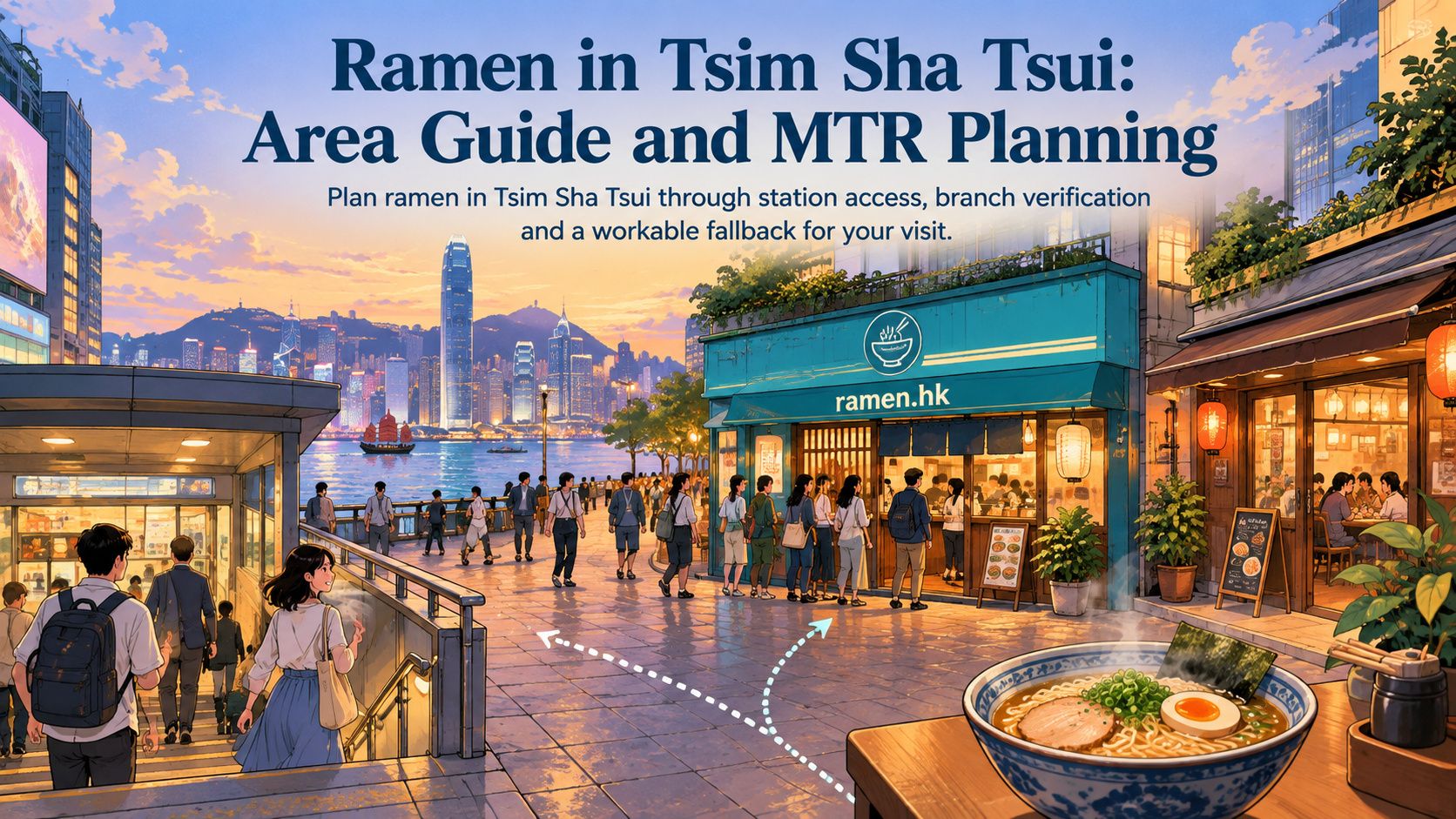
Plan ramen in Tsim Sha Tsui through station access, branch verification and a workable fallback for your visit.
Explore Mong Kok ramen with attention to the actual address, building access, opening arrangements and waiting time.
Plan a Sheung Wan ramen visit by checking the location, menu and service window before walking over.