Ramen in Anime: Naruto, Ichiraku and Beyond
Read ramen in anime and manga as cultural representation, distinguishing fictional scenes from real-world food claims.
Ramen in Anime: Naruto, Ichiraku and Beyond
Anime turned ramen from an everyday Japanese meal into a global visual shorthand for warmth, friendship, late nights and a hungry hero. Naruto’s regular visits to the fictional Ichiraku Ramen are the most internationally recognised example, but anime uses ramen in many ways: a quick student meal, a salaryman reset, an isekai comfort food and a signal that a scene is set in a lived-in neighbourhood. It is cultural shorthand, not a guide to how every ramen shop works.
This page is for viewers who want the references explained and for Hong Kong visitors planning anime-linked food stops in Japan. It sits under ramen culture and history and connects to ramen in anime only as this page itself; for real Japanese dining practice, see ramen etiquette.
The fiction-versus-shop rule. Anime bowls are drawn for story impact: oversized toppings, endless seats and no queue are narrative devices. In a real Japanese shop, check the ticket machine, seating rule, published hours and last order before travelling.
🍥 1. Naruto and Ichiraku
In Masashi Kishimoto's Naruto, Naruto Uzumaki treats Ichiraku Ramen as a favourite refuge and meets friends and mentors there throughout the series. Ichiraku is fictional, though its design draws on the counter-style ramen shops found around Japan. The name means roughly a bowl of happiness, a fitting literary device rather than a claim about a real restaurant. Fan guides point to Ramen Ichiraku-inspired venues in Fukuoka and themed attractions, but no independent official Naruto restaurant operates as the definitive original; verify any collaboration directly before travelling.
🎬 2. Other ways anime uses ramen
- Slice-of-life series use it as an inexpensive meal after school or work.
- Sports and action series use a bowl after training to show appetite and recovery, not nutrition advice.
- Food anime uses ramen to explain regional styles, noodle texture and broth craft, often with exaggerated reactions.
- Isekai and historical fantasy use it as a recognisable modern Japanese taste transplanted into another world.
- Late-night scenes use ramen counters as a place for brief conversation between strangers.
The visual language is grounded in the actual bowl's components, which are explained on the anatomy of a ramen bowl, and its regional diversity, covered in ramen styles.
🗾 3. Anime tourism: plan carefully
Japan does host official, temporary food collaborations, but they are date-bound and reservation or ticket rules may change. Do not travel to a district based on an old TikTok, fan wiki or image search. Check the official anime, venue or operator page on the day. For the practical Tokyo side, see ramen in Tokyo; for importing food souvenirs home, see ramen souvenirs from Japan.
🍜 4. Anime bowls versus real bowls
- Portion: animation often exaggerates bowl size and topping height.
- Steam: artists draw it constantly; real ramen arrives hot, but visible steam depends on humidity and lighting.
- Queue: fictional counters empty when a character needs to talk; popular real shops may have rules and waits.
- Ordering: shows rarely pause for ticket machines, cash, allergies or last orders.
- Nutrition: a dramatic post-training bowl is storytelling, not a health claim; see is ramen healthy.
🇭🇰 5. The Hong Kong connection
Hong Kong anime culture, Japanese bookshops, conventions and streaming have helped make ramen imagery familiar even for viewers who have not travelled to Japan. Local Japanese restaurants sometimes run licensed collaborations, but a character on a poster does not verify that a menu, branch or promotion is current. Treat it as a lead and check with the operator.
Fan information ages quickly. Collaboration cafes, pop-ups and character menus often close after a short run. Do not rely on an old anime episode, fan map or social post for a current address, price, opening hour or reservation rule. Check the official venue and licensing partner before travelling.
❓ 7. FAQ
Is Ichiraku Ramen a real restaurant? The Ichiraku in Naruto is fictional. Real venues may use the name or run licensed collaborations, but none is the canonical shop.
Why does Naruto eat ramen so often? It functions as a comfort food and a recurring place where relationships develop, as well as an easily recognisable Japanese meal.
Which anime is best for learning about ramen? Food-focused series can introduce styles and techniques, but use them for inspiration rather than factual instruction; recipes and shop rules require separate checking.
Can I find anime-themed ramen in Tokyo? Sometimes, through temporary official collaborations. Check official announcements immediately before travel.
Is ramen in anime realistic? The bowl elements are often recognisable, but portions, service speed and reactions are stylised for storytelling.
history of ramen ramen history Hong Kong ramen etiquette why slurp ramen ramen in anime ramen Japanese vocabulary ramen Cantonese terms ramen museum Michelin ramen
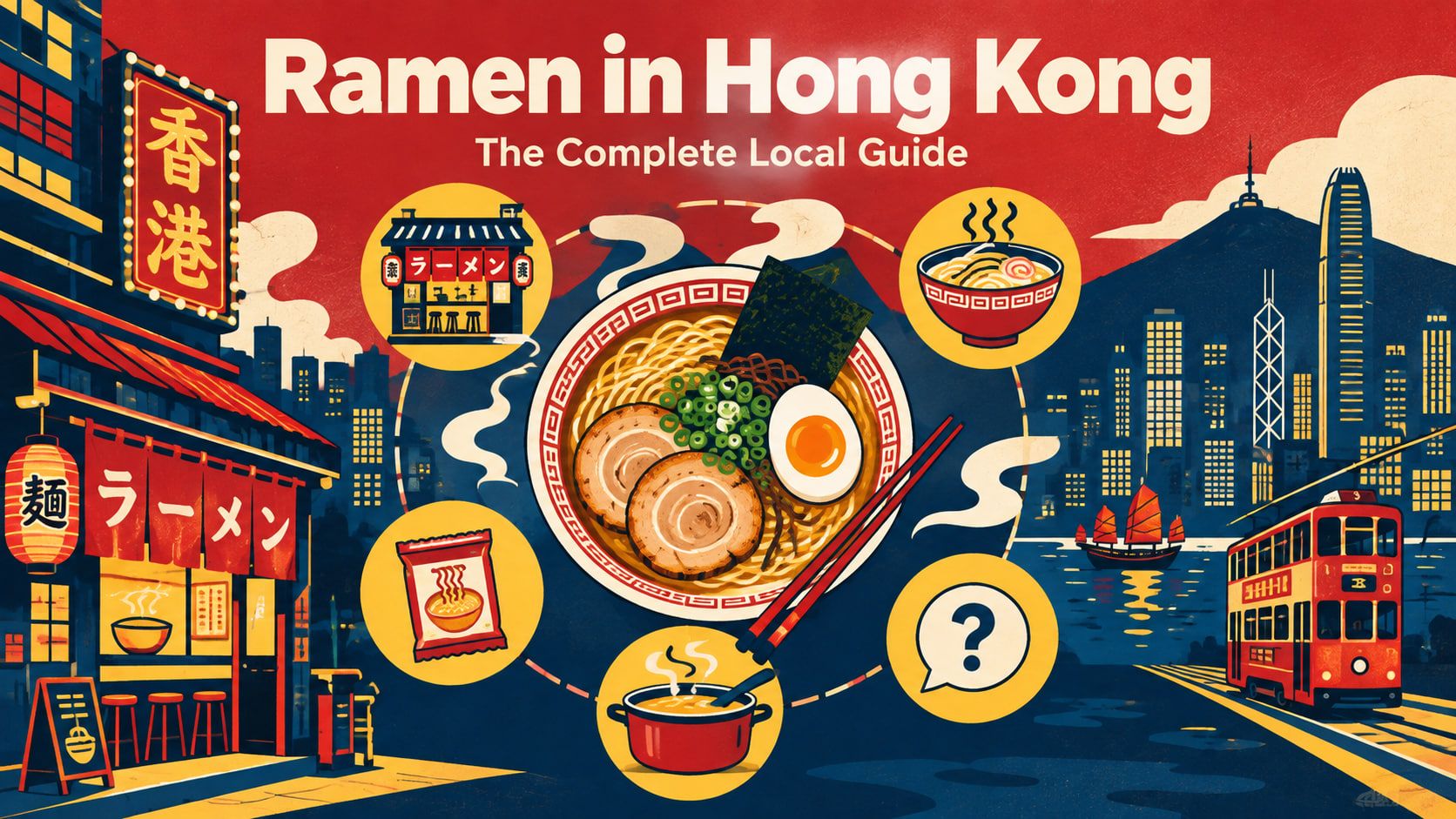
A Hong Kong-first ramen guide connecting local restaurants, Japanese styles, instant noodles, home cooking and the practical questions people ask before choosing a bowl.
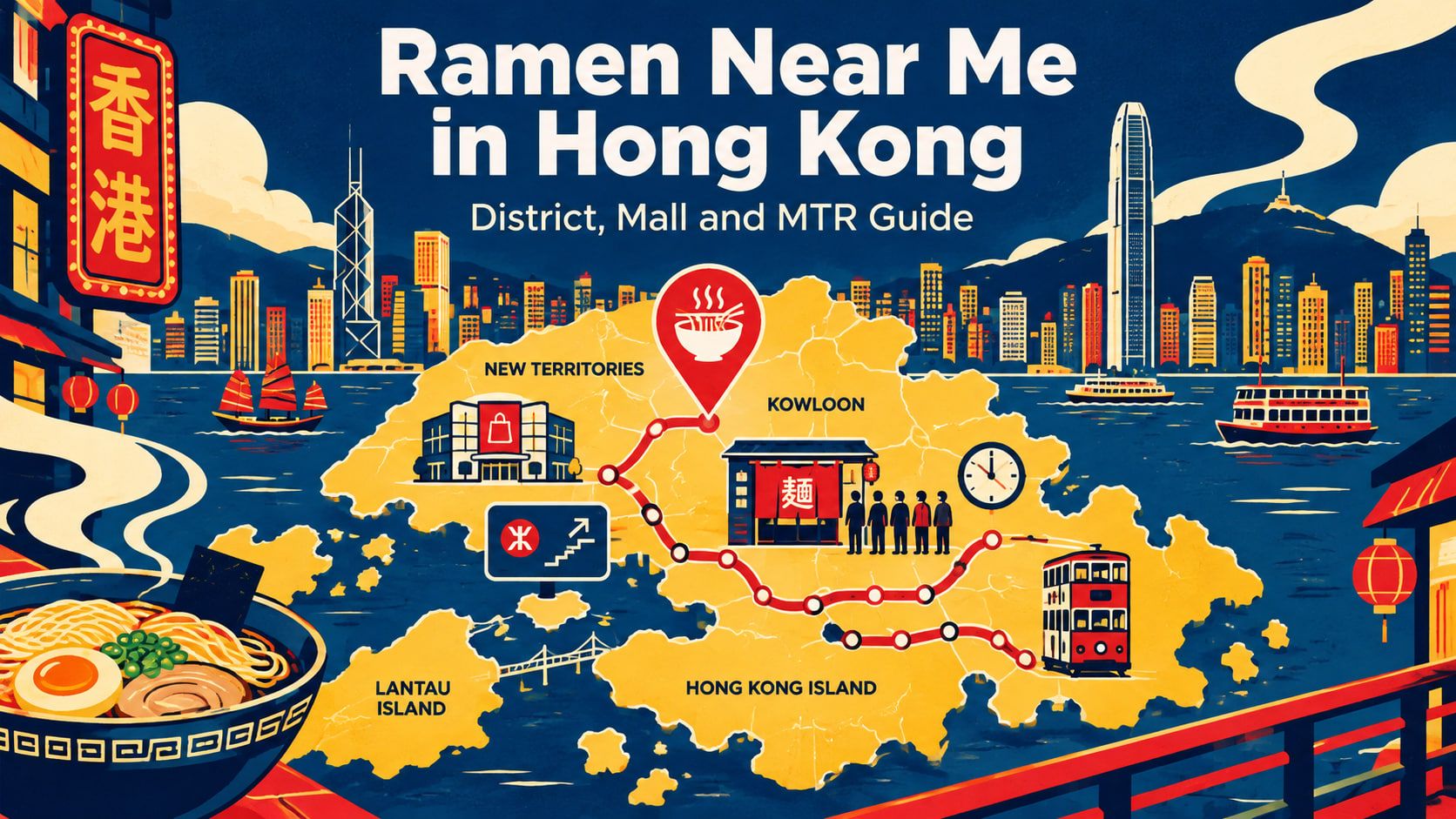
Use this location-first guide to choose an area, plan around an MTR exit and avoid arriving at a closed or over-queued ramen shop.

Choose ramen according to the moment: late shift, tight budget, solo lunch, family outing or rainy-night delivery.

Understand why ramen is eaten fast, slurped loudly, ordered by ticket and discussed with Japanese vocabulary.
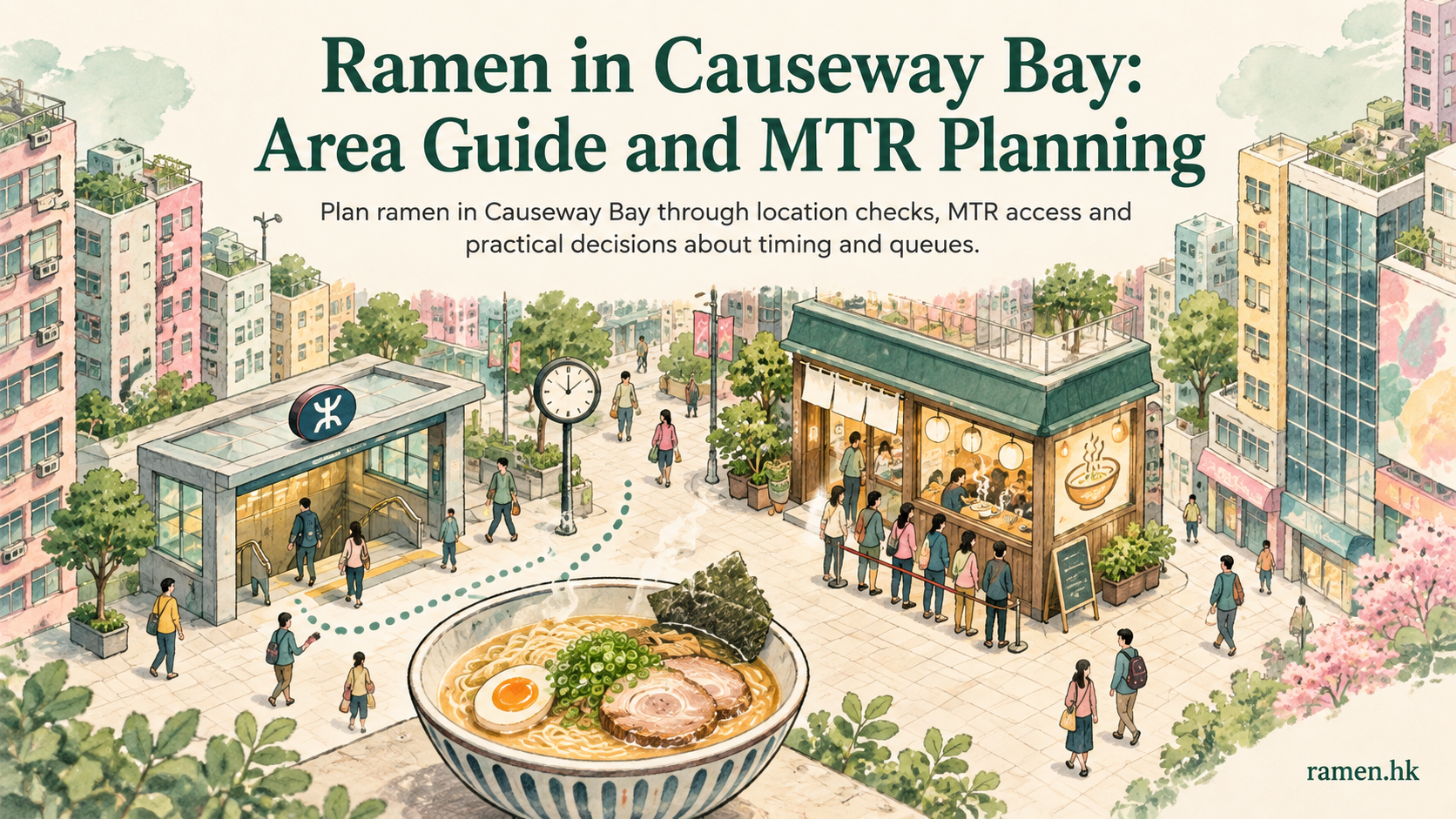
Plan ramen in Causeway Bay through location checks, MTR access and practical decisions about timing and queues.
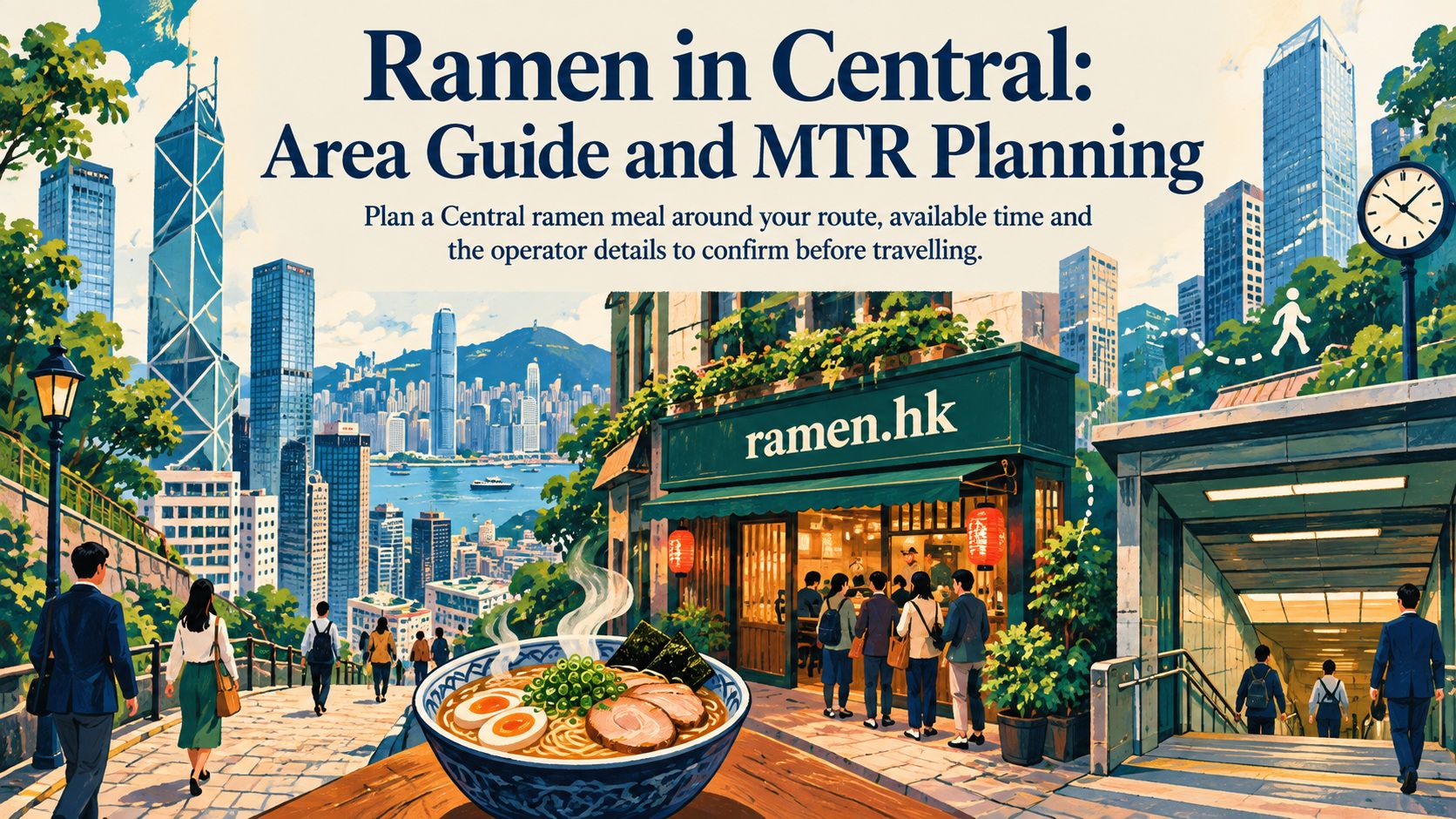
Plan a Central ramen meal around your route, available time and the operator details to confirm before travelling.
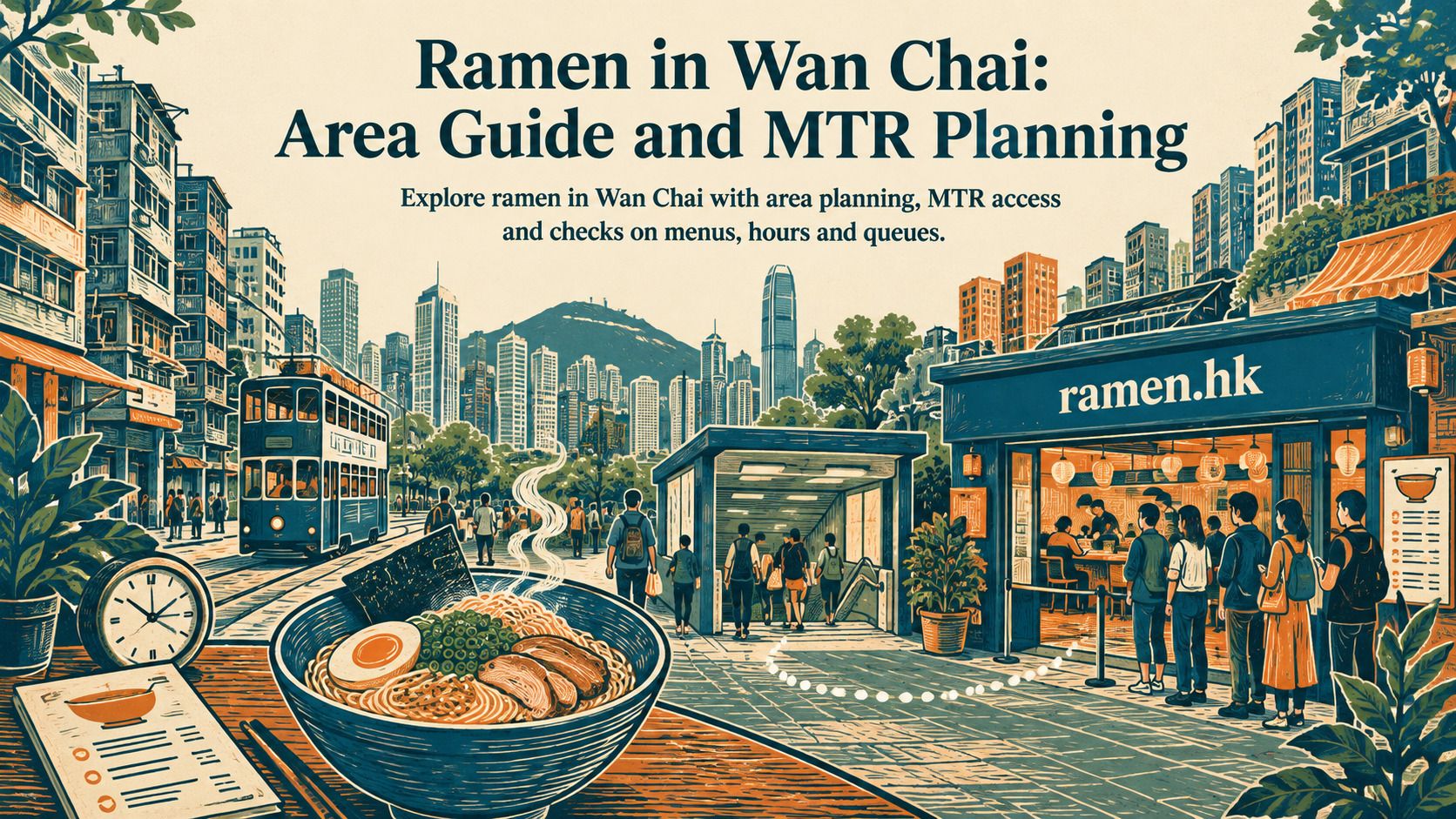
Explore ramen in Wan Chai with area planning, MTR access and checks on menus, hours and queues.
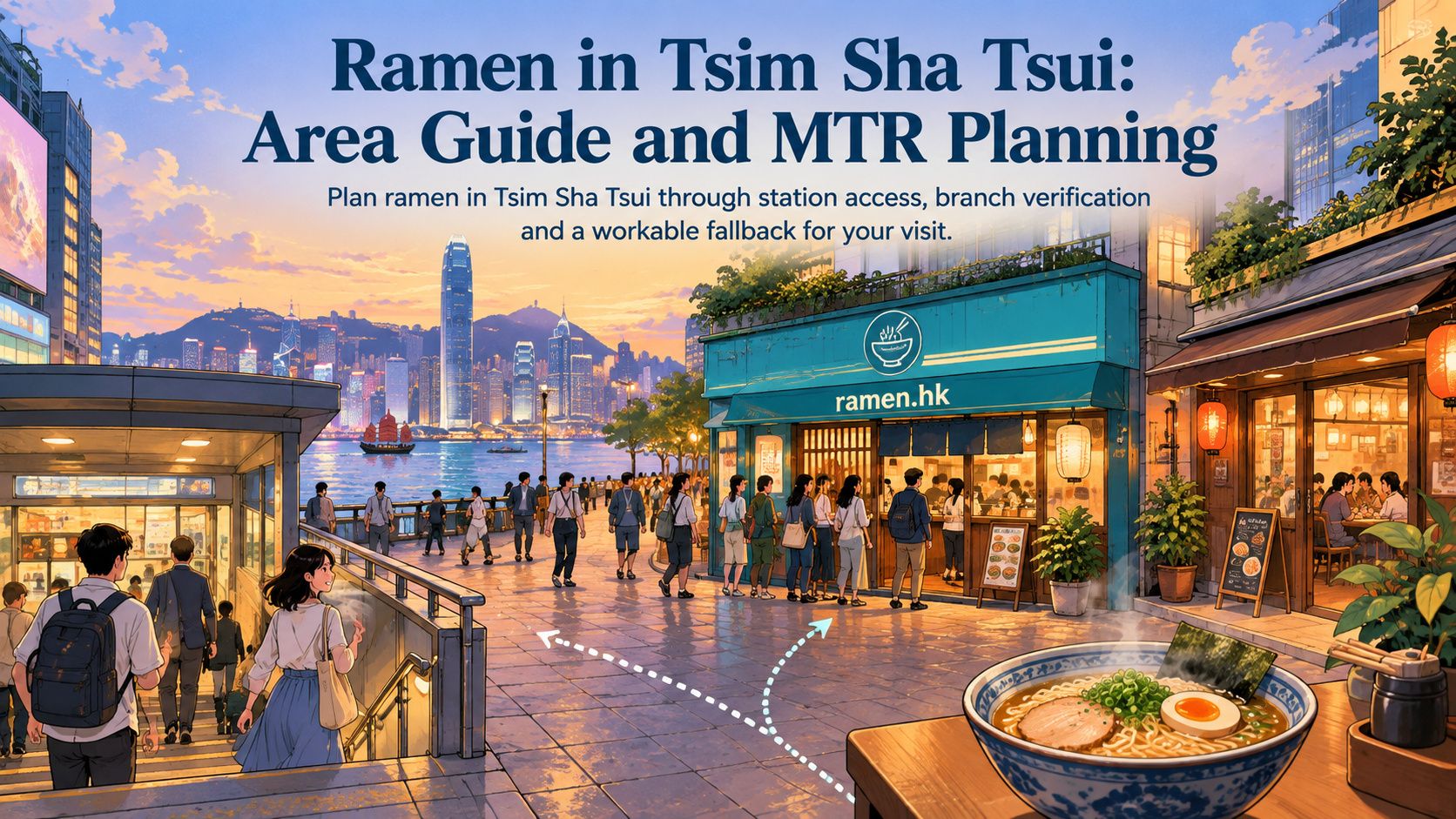
Plan ramen in Tsim Sha Tsui through station access, branch verification and a workable fallback for your visit.
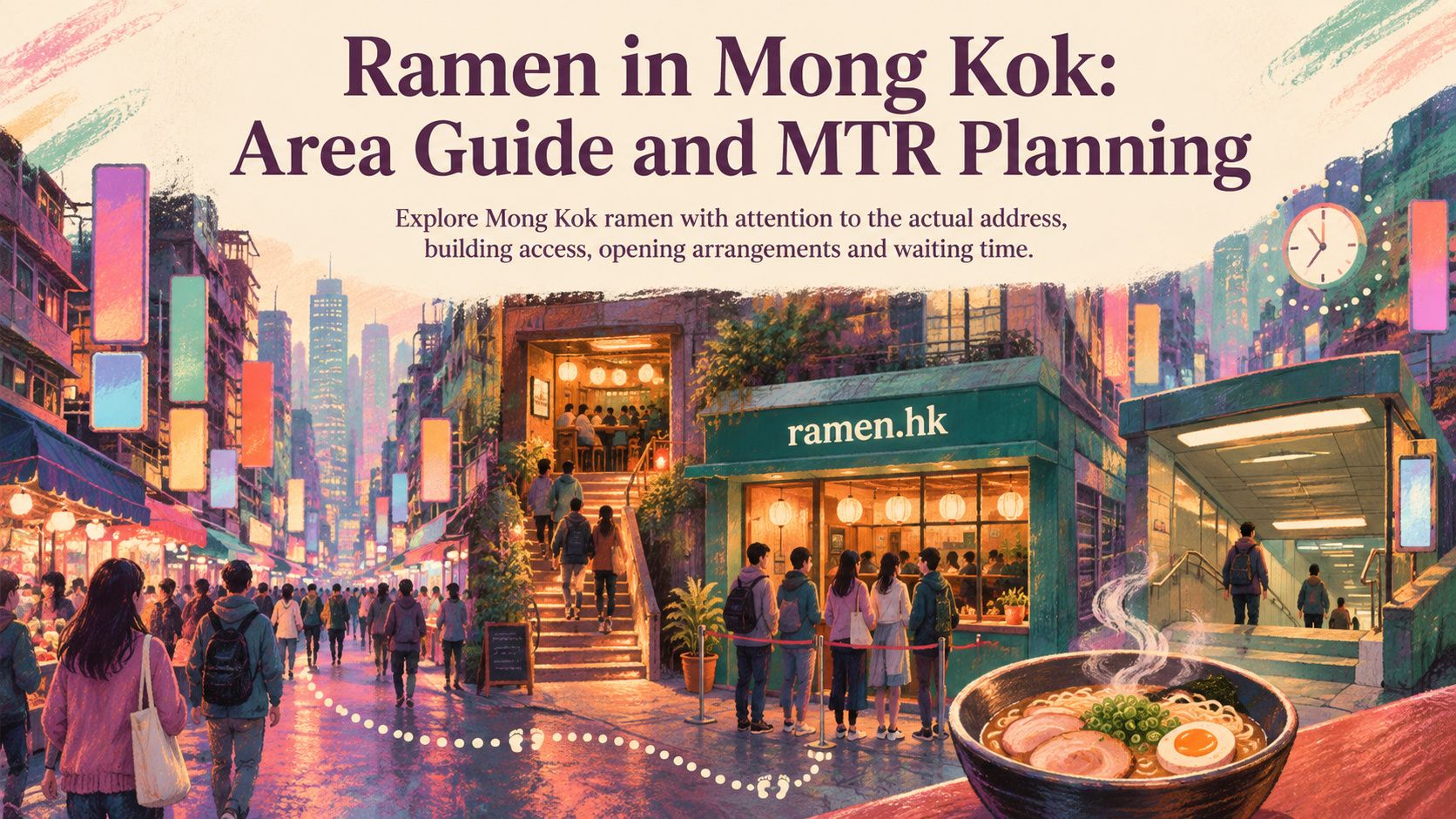
Explore Mong Kok ramen with attention to the actual address, building access, opening arrangements and waiting time.
Plan a Sheung Wan ramen visit by checking the location, menu and service window before walking over.