Ramen Bowls Wholesale in Hong Kong: Tableware and Ordering
Source wholesale ramen bowls through serving capacity, handling, cleaning suitability and replacement availability.
Wholesale Ramen Bowls in Hong Kong: Sizes, Materials and Ordering
A ramen bowl for a Hong Kong shop is a specification decision before it is a design decision: it has to hold the broth volume your recipe serves with room for noodles and toppings, survive a commercial dishwasher many times a day, stack in a small kitchen and arrive at the counter without burning the server's hands. The practical rule is to decide bowl capacity from your recipe, typically in the 900 millilitre to 1.4 litre range for a full-size bowl depending on style, then choose material and shape, and only then look at pattern and price. Breakage and replacement are part of the running cost, not a one-off.
This page is for Hong Kong operators placing an opening order or replacing stock, and for anyone building the tableware line in a budget. It sits under opening a ramen shop in Hong Kong and sits alongside ramen suppliers in Hong Kong. It explains specifications and sourcing routes; it does not endorse suppliers or quote current prices.
The style rule. Match the bowl shape to the style. A deep, narrow tonkotsu bowl keeps thin noodles hot and concentrates aroma; a wider, shallower shoyu or shio bowl shows off clear broth and toppings; tsukemen needs a small dipping bowl and a separate plate or basket. One shape for every style is a compromise customers notice.
📏 1. Capacity and shape
- Capacity: measure your finished bowl, broth plus noodles plus toppings, and add headroom; the measured volume decides the catalogue size, not the other way round.
- Depth versus width: deep bowls hold heat and suit rich broths; wide bowls cool faster but present clear broths and toppings better.
- Rim and foot: a flared rim helps serving and slurping; a solid, wide foot resists tipping on narrow counters.
- Weight: a 1.2-litre stoneware bowl full of broth is heavy; servers carrying two at a time on a busy Causeway Bay lunch need a weight they can manage.
- Side dishes: small bowls for rice and gyoza plates, dipping bowls for tsukemen and plates for mazesoba toppings; see tsukemen and mazesoba for format differences.
🏺 2. Materials
Porcelain and stoneware are the standard for dine-in: heat-retentive, dishwasher-stable and available in Japanese-style glazes, with porcelain lighter and stoneware more rustic. Melamine is light, almost unbreakable and much cheaper, but it cannot go in a microwave, can stain and may be read by customers as a lower price tier. Lacquered or plastic bowls suit takeaway display rather than hot service. For delivery and takeaway, insulated paper or polypropylene bowls with vented lids are a separate line; Hong Kong's rules on disposable plastic tableware affect what may be supplied, so check the Environmental Protection Department's current position before ordering. Tableware for home use is covered on ramen bowls in Hong Kong.
🏭 3. Where to source
- Hong Kong restaurant-supply wholesalers: showrooms and warehouses concentrated in areas such as Shanghai Street in Yau Ma Tei and industrial districts, offering stock Japanese-style ranges and quick replacement.
- Japanese tableware importers: brand-name porcelain from kilns such as Mino, Arita and Hasami at a higher tier, with longer lead times and minimum orders.
- Mainland manufacturers: custom shapes, logos and glazes at lower unit cost, but with sampling, minimum quantities, shipping and quality-control time.
- Online marketplaces: fast for small top-ups; inconsistent for matching an existing set.
- Second-hand restaurant equipment dealers: useful for opening on a tight budget, with mixed sets the trade-off.
💵 4. Cost tiers and ordering quantities
Price per bowl ranges from low-cost melamine and stock porcelain through mid-tier imported Japanese stoneware to custom-made or named-kiln pieces; tiers rather than figures are given here because wholesale prices depend on quantity, shipping and exchange rates. Order at least two full seatings' worth of main bowls plus a breakage reserve, because a 20-seat shop turning tables through lunch can have 40 bowls in use or in the wash at once. Keep the pattern in continuous production so top-ups match. Set the line in ramen shop start-up costs and the replacement rate in ramen shop profit margins.
🧼 5. Practical checks before buying
- Run a sample through your dishwasher cycle 50 times and check glaze crazing and chips.
- Fill with boiling broth and check handling temperature at the rim and foot after one minute.
- Stack ten and measure shelf height against your kitchen racks.
- Confirm the glaze is food-safe and the supplier can provide a test certificate.
- Check lid and spoon fit if you serve delivery from the same bowl design.
- Confirm reorder lead time and minimum quantity in writing.
🎨 6. Design that serves the brand
Ramen bowls carry the brand in photographs and on delivery platforms, so a consistent pattern or colour is worth more than variety. Traditional motifs such as the red-and-white spiral or dragon pattern read instantly as ramen; plain glazes photograph cleanly and suit a modern counter. Whatever the choice, the bowl should make the broth look its best under your lighting; test with a finished bowl of each style you serve, drawing on the visual conventions discussed on ramen toppings.
Supply is limited for matching sets. Patterns are discontinued, kilns change glazes and minimum orders rise without notice. Order a breakage reserve at the start, record the exact product code and confirm continued availability before building a menu photo library around one design. Prices change with shipping and exchange rates; treat any figure you are quoted as valid only for that order.
❓ 7. FAQ
What size should a ramen bowl be? Measure your finished bowl and add headroom. Full-size bowls commonly fall in the 900 millilitre to 1.4 litre range depending on style.
Porcelain or melamine? Porcelain and stoneware for dine-in heat retention and presentation; melamine where breakage and weight matter more than image.
How many bowls do I need to open? At least two full seatings' worth plus a breakage reserve, so that bowls in use and in the wash never run short.
Where do Hong Kong shops buy bowls? Local restaurant-supply wholesalers, Japanese tableware importers, mainland manufacturers for custom orders, and second-hand dealers.
Can I use the same bowl for delivery? Usually not. Delivery needs insulated disposable bowls with lids, subject to Hong Kong's disposable plastic tableware rules.
how to open a ramen shop Hong Kong ramen shop startup cost ramen franchise Hong Kong ramen franchise cost ramen restaurant business plan restaurant licence Hong Kong ramen noodle machine ramen supplier Hong Kong ramen bowls wholesale Hong Kong ramen shop rent Hong Kong
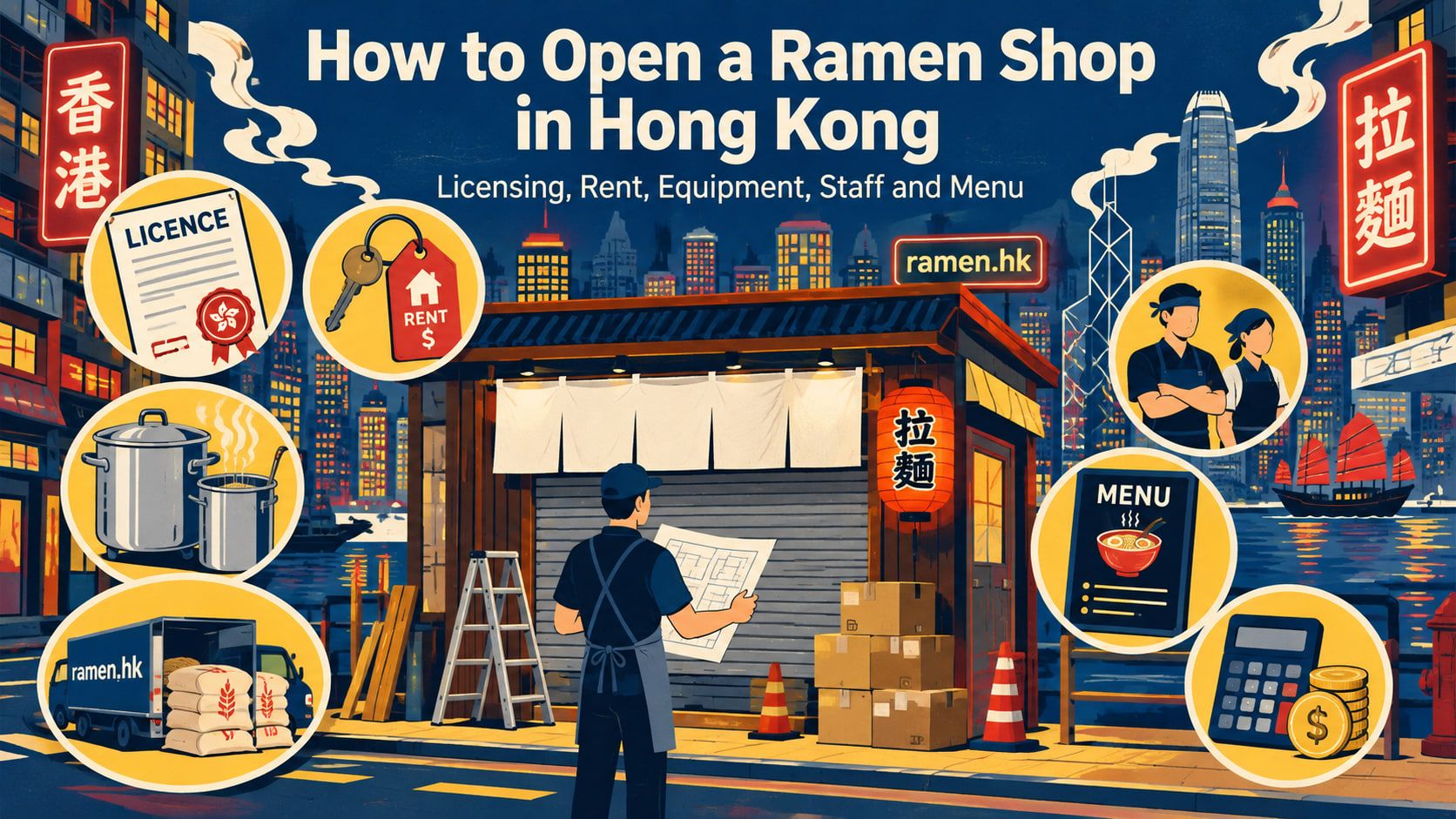
Plan a ramen business with licensing, rent, equipment, suppliers, staffing and menu decisions explained for Hong Kong reality.
Build ramen shop start-up costs from premises-specific quotes, licence needs, equipment and working-capital assumptions.
Understand Hong Kong restaurant licence options and premises checks before committing to a ramen shop lease.
Assess ramen shop rent through the actual lease, works, recurring charges and realistic seating and trading assumptions.
Evaluate a Hong Kong ramen franchise through fees, support, supply obligations and professional agreement review.
Build a Hong Kong ramen business plan with traceable costs, clear assumptions and tests for operational risk.
Assess a ramen noodle machine through model-specific space, power, training, maintenance and production needs.
Choose Hong Kong ramen suppliers through specifications, traceability, delivery terms and contingency supply.
Model ramen shop margins through actual purchasing, staffing, occupancy and turnover assumptions rather than borrowed percentages.
Explore why ramen shops close through operational risks while avoiding speculation about any individual business’s finances.